
.png)

How to Calculate SBA Loan Payments for Restaurants
Running a successful restaurant often requires strategic financing, and SBA loans have become a popular choice for restaurant owners seeking growth capital. Understanding how to calculate SBA loan payments for restaurants is crucial for making informed financial decisions that align with your business's cash flow and expansion goals. This comprehensive guide will walk you through the essential steps to estimate your monthly payment obligations, evaluate different term lengths, and assess the overall affordability of SBA financing for your restaurant venture.
Gather Your Essential Loan Information
Before you can calculate SBA loan payments for restaurants, you'll need to collect the fundamental loan parameters that directly impact your monthly payment estimate. This initial step sets the foundation for accurate calculations and helps you understand exactly what information lenders will use to determine your payment obligations.
- Determine your loan amount: Calculate the total funding needed for your restaurant, including equipment purchases, working capital, or expansion costs. This principal amount serves as the base for all payment calculations.
- Research current interest rates: SBA loan rates fluctuate based on market conditions and your creditworthiness. Contact multiple lenders to get current rate quotes, as even small differences can significantly impact your monthly payments.
- Identify applicable fees: SBA loans typically include guarantee fees and other charges that may be rolled into your loan amount. Understanding these upfront costs helps ensure your payment calculations reflect the true borrowing amount.
- Consider your preferred term length: SBA loans offer various repayment periods, from shorter terms with higher monthly payments to longer terms that spread costs over more years but increase total interest paid.
Choose the Right Calculation Method
Once you've gathered your loan information, selecting the appropriate calculation method ensures you get accurate monthly payment estimates tailored to your restaurant's specific situation. Different approaches work better for different scenarios and levels of detail needed.
- Use online SBA loan calculators: These tools provide quick estimates by entering your loan amount, interest rate, and term length. Many calculators also generate amortization schedules showing how payments are split between principal and interest over time.
- Apply the standard loan formula: For manual calculations, use the monthly payment formula that considers principal, interest rate, and number of payments. This method gives you complete control over the variables and helps you understand the mathematical relationship between terms.
- Factor in variable rates: Some SBA loans have adjustable rates that change over time. Consider calculating payments for different rate scenarios to understand how potential increases might affect your restaurant's budget.
- Include all loan-related costs: Beyond principal and interest, factor in any monthly servicing fees or insurance requirements that add to your total monthly obligation.
Evaluate Different Term Length Options
Term length significantly impacts both your monthly payment amount and total cost of borrowing, making it essential to evaluate different options when learning how to calculate SBA loan payments for restaurants. The right choice depends on your restaurant's cash flow patterns and long-term financial strategy.
- Compare short-term scenarios: Calculate payments for 5-7 year terms to see how higher monthly payments might fit into your budget while minimizing total interest costs. This approach works well for restaurants with strong, consistent cash flow.
- Analyze medium-term options: Explore 10-15 year terms that balance reasonable monthly payments with moderate total interest costs. Many restaurant owners find this range provides good flexibility for managing seasonal revenue fluctuations.
- Consider long-term benefits: Calculate payments for 20-25 year terms to see how lower monthly obligations might provide breathing room for other business investments or unexpected expenses.
- Account for business lifecycle: Consider how your restaurant's revenue might grow over the loan term, potentially making higher initial payments more manageable as your business matures and stabilizes.
Key Factors That Impact Payment Calculations
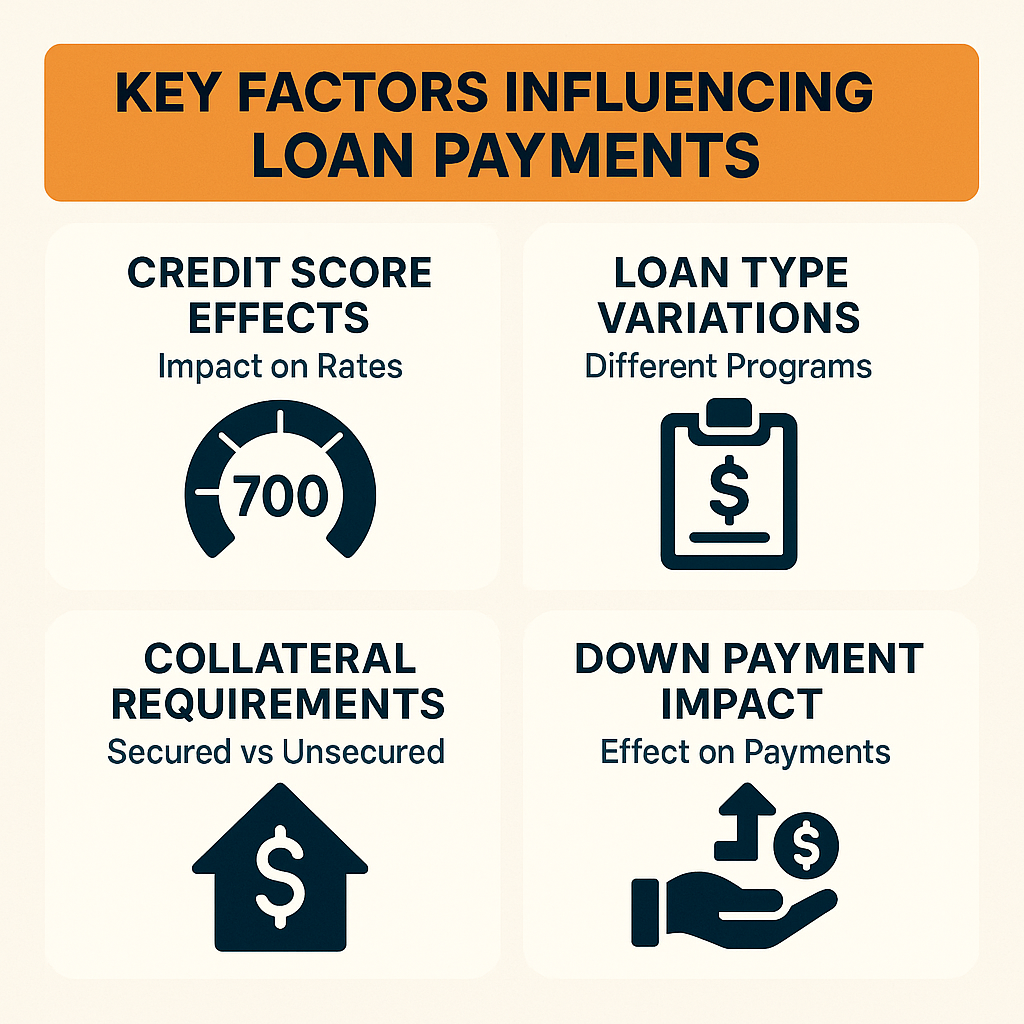
Several variables influence your final payment calculations beyond the basic loan amount and interest rate. Understanding these factors helps restaurant owners get more accurate estimates and prepare for the complete financial commitment of SBA financing.
- Credit score effects: Your personal and business credit scores directly impact the interest rate you'll qualify for, with higher scores typically securing lower rates and reduced monthly payments.
- Loan type variations: Different SBA loan programs like 7(a) or 504 loans have varying terms, rates, and fee structures that affect your monthly payment calculations and overall borrowing costs.
- Collateral requirements: Secured loans might offer better rates than unsecured options, potentially reducing your monthly payment obligations while requiring asset pledges.
- Down payment impact: Larger down payments reduce the borrowed amount and subsequently lower monthly payments, though this requires more upfront capital investment.
Assess Monthly Payment Affordability for Your Restaurant
Calculating potential payments is only the first step - you must also evaluate whether those payments fit comfortably within your restaurant's financial structure. This affordability assessment helps prevent overextension and ensures sustainable debt management.
- Analyze cash flow patterns: Review your restaurant's monthly revenue and expense cycles to identify the best payment amounts that align with seasonal variations and typical business fluctuations.
- Apply debt-to-income ratios: Lenders typically prefer that total debt payments don't exceed certain percentages of your restaurant's income, so calculate whether your proposed payments meet these requirements.
- Plan for contingencies: Factor in a buffer for unexpected expenses or revenue shortfalls that are common in the restaurant industry, ensuring loan payments remain manageable during challenging periods.
- Consider growth projections: Evaluate how the loan investment might increase your restaurant's revenue over time, potentially making higher initial payments more affordable as your business expands.
Learning how to calculate SBA loan payments for restaurants empowers you to make confident financing decisions that support your business goals without straining your cash flow. By gathering essential loan information, using appropriate calculation methods, evaluating different term options, and thoroughly assessing affordability, you can determine the optimal SBA loan structure for your restaurant's unique situation. Remember that accurate payment calculations serve as the foundation for successful loan management, helping ensure your financing becomes a strategic tool for growth rather than a financial burden. Take time to explore different scenarios and consult with experienced SBA lenders who can provide personalized guidance based on your restaurant's specific needs and circumstances.