.png)

Managing cash flow effectively can make the difference between a thriving business and one that struggles to stay afloat. For growing businesses, particularly Los Angeles entrepreneurs facing competitive markets and fluctuating demands, implementing solid cash flow planning tips for growing businesses becomes even more critical. Poor cash flow management often stifles expansion plans and creates unnecessary financial stress, while strategic planning opens doors to sustainable growth opportunities.
The key lies in understanding how money moves through your business and developing systems that support both current operations and future expansion. When you can accurately predict cash needs, time expenses strategically, and forecast revenue patterns, you're positioned to make informed decisions that fuel growth rather than hinder it.
Why Cash Flow Planning Matters for Business Growth
Q: What makes cash flow planning so crucial for growing businesses?
Cash flow planning provides the financial foundation that supports sustainable business expansion. Without proper planning, businesses might find themselves unable to take advantage of growth opportunities or, worse, struggling to meet basic operational expenses during critical periods. Effective cash flow management helps reduce money-related stress and creates a clearer picture of your company's financial health, allowing you to make strategic decisions with confidence.
Q: How does poor cash flow planning impact business growth?
When businesses lack proper cash flow planning, they often face disruptions that can stifle growth initiatives. Common issues include inability to invest in new opportunities, difficulty meeting payroll during slow periods, and challenges securing additional funding when needed. These problems can prevent businesses from scaling effectively and may even threaten their long-term viability.
Essential Revenue Forecasting Strategies
Revenue forecasting forms the backbone of effective cash flow planning, helping businesses anticipate income patterns and prepare for various scenarios. Developing accurate forecasting strategies can significantly improve your ability to manage cash flow proactively.
- Analyze historical performance data to identify seasonal trends and growth patterns that might repeat in future periods
- Consider market conditions and economic factors that could influence your revenue streams in the coming months
- Create multiple forecast scenarios including conservative, realistic, and optimistic projections to prepare for different outcomes
- Review and adjust forecasts regularly based on actual performance and changing business conditions
For Los Angeles entrepreneurs operating in dynamic markets, these forecasting strategies become particularly valuable. Market fluctuations and seasonal variations can significantly impact revenue streams, making accurate predictions essential for maintaining healthy cash flow throughout different business cycles.
Smart Expense Timing Techniques
Strategic expense management can dramatically improve cash flow management by aligning outgoing payments with incoming revenue. This approach helps businesses maintain better financial stability while supporting growth initiatives.
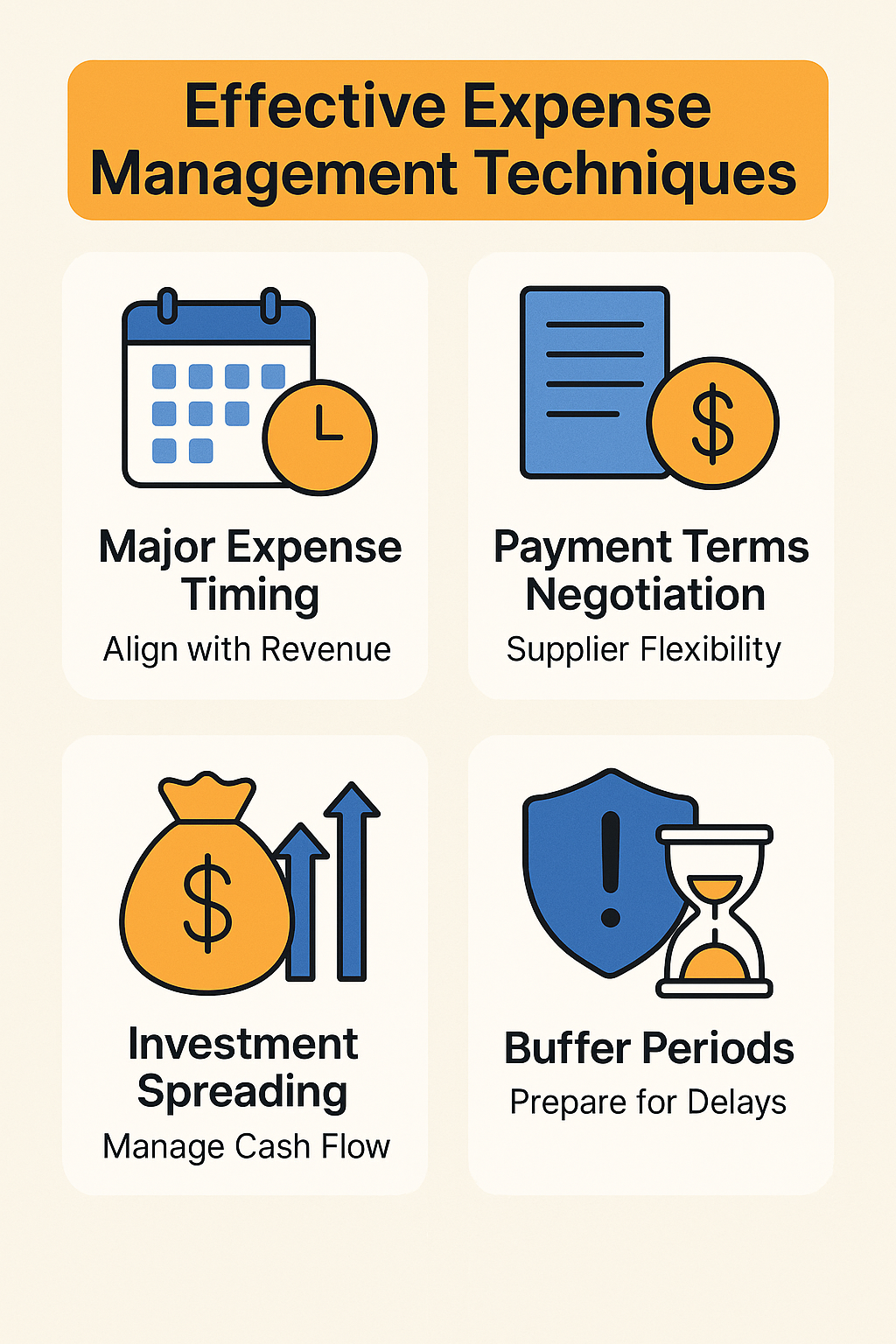
- Schedule major expenses during periods when revenue typically peaks to ensure adequate cash availability
- Negotiate payment terms with suppliers that align better with your cash flow cycles
- Consider spreading large investments across multiple periods rather than making single large payments
- Build buffer periods around major expenses to account for unexpected delays in receivables
Controlling costs through strategic timing doesn't mean cutting essential expenses. Instead, it involves optimizing when payments occur to maintain steady cash flow. This technique proves especially beneficial for businesses experiencing rapid growth, where cash demands can fluctuate significantly from month to month.
Optimizing Payment Collections
Improving how quickly you collect payments from customers can have an immediate positive impact on cash flow. Streamlining your accounts receivable processes helps ensure money flows into your business more predictably.
- Implement clear payment terms and communicate them upfront to avoid confusion and delays
- Offer incentives for early payments such as small discounts for payments made within specific timeframes
- Establish systematic follow-up procedures for overdue accounts to maintain consistent collection efforts
- Consider requiring deposits or partial payments upfront for larger projects or orders
These collection strategies work particularly well for service-based businesses and companies with longer sales cycles. By reducing the time between completing work and receiving payment, businesses can maintain more consistent cash flow patterns that support ongoing operations and growth investments.
Building Financial Safety Nets
Creating financial safety nets helps growing businesses weather unexpected challenges while maintaining their expansion momentum. These protective measures provide stability during uncertain periods and create confidence for making strategic investments.
- Establish emergency cash reserves equivalent to several months of operating expenses to handle unexpected downturns
- Set up lines of credit before you need them, as approval processes become more challenging during financial stress
- Diversify revenue sources to reduce dependence on single income streams that might fluctuate
- Develop relationships with multiple funding sources including banks, alternative lenders, and other financial institutions
Having these safety nets in place allows businesses to take calculated risks that support growth. When you know you can handle temporary setbacks, you're more likely to pursue opportunities that might otherwise seem too risky. This approach proves especially valuable for businesses in competitive markets where quick decision-making can provide significant advantages.
Monitoring and Adjusting Your Cash Flow Plan
Regular monitoring and adjustment of your cash flow plan ensures it remains effective as your business grows and market conditions change. This ongoing process helps identify potential issues before they become serious problems.
- Review actual cash flow against projections monthly to identify patterns and variances that need attention
- Update forecasts based on new information about market conditions, seasonal changes, or business developments
- Adjust payment terms and collection procedures based on what works best for your specific customer base
- Reassess expense timing strategies as your business grows and cash flow patterns evolve
- Evaluate the effectiveness of your financial safety nets and expand them as your business scales
This monitoring process becomes increasingly important as businesses grow larger and more complex. What works for a small startup might not be sufficient for a rapidly expanding company. Regular reviews help ensure your cash flow planning evolves alongside your business needs and continues supporting your growth objectives effectively.
Implementing effective cash flow planning tips for growing businesses creates a solid foundation for sustainable expansion and long-term success. By focusing on accurate revenue forecasting, strategic expense timing, optimized payment collections, and robust financial safety nets, businesses can navigate growth challenges with greater confidence and stability.
Remember that cash flow planning isn't a one-time activity but an ongoing process that requires regular attention and adjustment. As your business grows and market conditions change, your cash flow strategies should evolve accordingly. The time invested in developing and maintaining these systems typically pays dividends through reduced financial stress, better decision-making capabilities, and enhanced growth opportunities.
Whether you're a Los Angeles entrepreneur facing competitive market pressures or a business owner in any growing market, these fundamental principles can help you build the financial stability needed to support your expansion goals while maintaining healthy operations along the way.