
.png)

When your business needs quick access to capital, the last thing you want is a funding application that gets stuck in review or worse, gets denied entirely. Unfortunately, many merchants unknowingly sabotage their own chances by making preventable errors during the application process.
These common mistakes in funding applications aren't just minor oversights. They can mean the difference between securing the capital you need to grow your business and watching opportunities slip away while you scramble to fix avoidable problems. Whether you're applying for a merchant cash advance or exploring other financing options, understanding these pitfalls can save you time, frustration, and potentially thousands of dollars.
The good news? Most of these errors are completely preventable once you know what to look for. Let's dive into the most frequent stumbling blocks that trip up business owners and how you can steer clear of them.
Documentation Preparation Tips
Documentation preparation tips can make or break your funding application before it even reaches the underwriter's desk. Missing documents represent one of the most frequent reasons applications get delayed or rejected outright.
- Create a comprehensive checklist: Most funding providers require bank statements, tax returns, and business licenses. Double-check that you have complete copies of each required document before hitting submit.
- Ensure document clarity and accuracy: Blurry scans or incomplete pages can trigger immediate rejections. Take time to review every page and make sure all information is clearly visible and matches across different documents.
- Organize files systematically: Label your documents clearly and arrange them in the order requested by the lender. This simple step shows professionalism and makes the review process smoother for everyone involved.
Revenue Reporting Best Practices
Revenue reporting best practices help you present your business's financial picture accurately and consistently. Revenue inconsistency between different documents often raises red flags that can derail your application.
- Maintain consistent reporting across all documents: Your tax returns, bank statements, and application forms should tell the same story about your business income. Any discrepancies will likely trigger additional questions or delays.
- Account for seasonal fluctuations properly: If your business experiences seasonal changes, provide context and explanations rather than hoping reviewers will figure it out on their own. Clear communication prevents misunderstandings about your revenue patterns.
- Include supporting documentation for unusual entries: Large deposits, transfers between accounts, or one-time payments should be explained with supporting paperwork. This transparency builds trust and speeds up the approval process.
Application Accuracy Tips
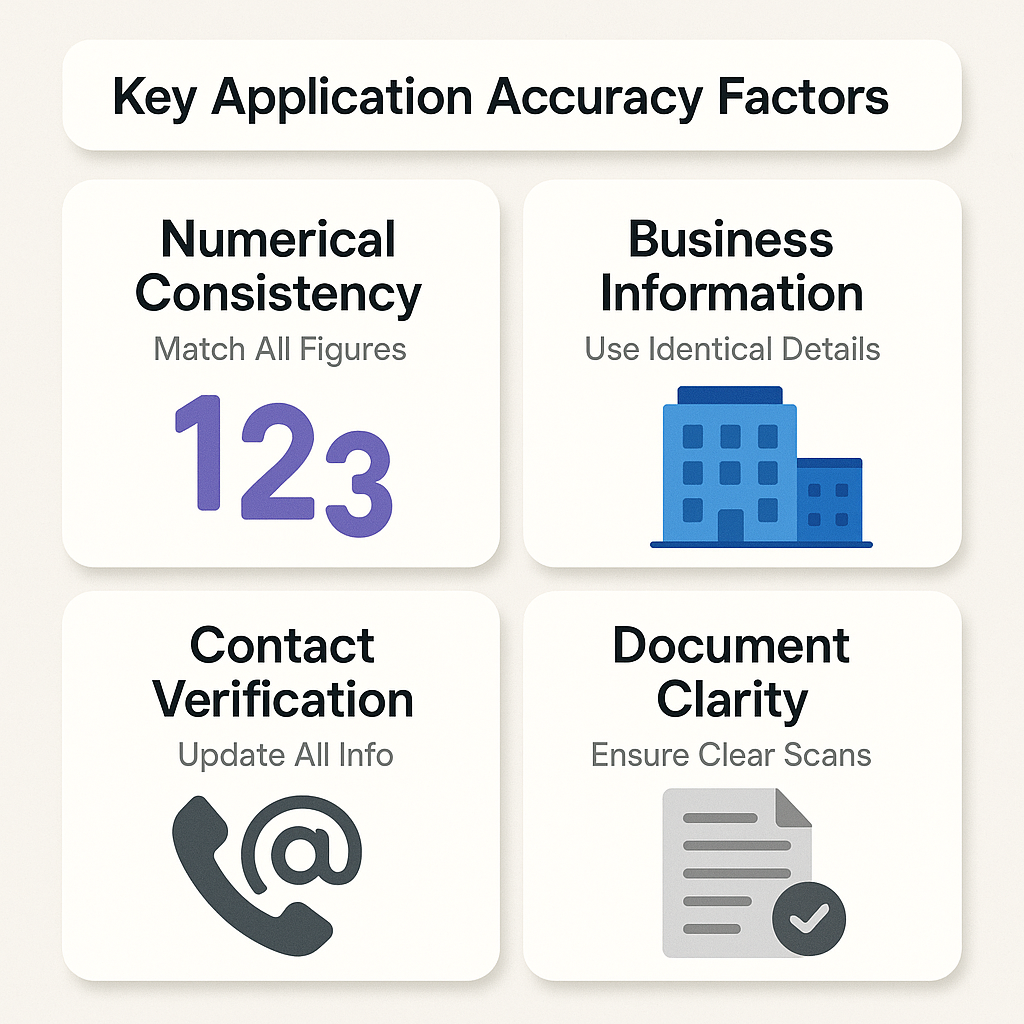
Application accuracy tips focus on getting the details right the first time around. Small errors in your application can create big problems down the line, especially when they contradict other parts of your submission.
- Review all numerical entries twice: Revenue figures, employee counts, and business start dates should match exactly across all forms and supporting documents. Even small discrepancies can cause unnecessary delays while reviewers seek clarification.
- Use consistent business information everywhere: Your business name, address, and contact details should appear identically on every document. Variations in how you write your business name or address can confuse the review process.
- Verify contact information is current: Outdated phone numbers or email addresses can prevent lenders from reaching you for important questions or updates. This simple oversight can stall your application indefinitely.
Essential Document Requirements
Essential document requirements vary by funding type, but certain documents appear on almost every application checklist. Understanding what's typically needed helps you gather everything upfront.
- Recent bank statements: Most lenders want to see three to six months of business bank statements to verify your cash flow patterns and daily operations.
- Tax returns and financial statements: Business tax returns from the past one to two years provide verification of your reported income and business legitimacy.
- Business registration documents: Your business license, articles of incorporation, or DBA registration prove your business operates legally in your jurisdiction.
- Identification and ownership verification: Personal identification for all owners plus documentation showing ownership percentages and business structure details.
Repayment Plan Structure Guidelines
Repayment plan structure guidelines help you present a realistic and achievable path to paying back your advance. An unclear repayment plan signals to lenders that you haven't thought through the financial implications of your funding applications.
- Calculate realistic payment amounts: Base your projections on actual cash flow data rather than optimistic estimates. Lenders can easily spot unrealistic projections that don't align with your historical performance.
- Account for seasonal variations: If your business experiences slow periods, factor these into your repayment timeline and explain how you'll manage payments during lean months.
- Include contingency planning: Address potential challenges and how you'd handle them. This proactive approach demonstrates business maturity and realistic planning.
- Align with your business model: Your repayment structure should make sense given how your business generates revenue. A restaurant's repayment plan should look different from a consulting firm's plan.
Credit Score Improvement Strategies
Credit score improvement strategies can significantly boost your funding prospects, though the timeline for seeing results varies depending on your starting point and specific circumstances.
- Address outstanding issues promptly: Resolve any outstanding tax liens, judgments, or collection accounts that appear on your business credit report. These negative marks can lead to rejections from many lenders.
- Establish business credit relationships: Open accounts with suppliers and vendors who report to business credit bureaus. Consistent on-time payments to these accounts gradually build your business credit profile.
- Monitor your credit reports regularly: Check both personal and business credit reports for errors or outdated information. Disputing inaccuracies can sometimes provide quick improvements to your credit standing.
- Maintain low credit utilization: Keep your business credit card balances well below their limits. High utilization rates signal financial stress to potential lenders and can hurt your approval chances.
Avoiding these common mistakes in funding applications doesn't guarantee approval, but it certainly improves your odds of getting a fair review. The key is treating your application like the important business document it is, complete with careful preparation, accurate information, and professional presentation.
Remember that lenders want to approve qualified applications. They make money when businesses succeed with their funding, so they're looking for reasons to say yes rather than reasons to reject you. By avoiding these pitfalls and presenting a complete, accurate application, you're giving yourself the best possible chance of securing the capital your business needs.
Take the time to get it right the first time. Your future business growth may depend on the care and attention you put into this critical process.