
.png)

How Auto Repair Shops Stabilize Revenue Dips with Funding
Auto repair shops face unique challenges when it comes to maintaining consistent revenue streams. From seasonal fluctuations to unexpected inventory demands, these businesses often experience periods of financial uncertainty. Understanding how auto repair shops stabilize revenue dips with funding can make the difference between thriving and merely surviving in today's competitive automotive service market.
Revenue instability affects many aspects of shop operations, from maintaining adequate parts inventory to ensuring sufficient technician hours during busy periods. When unexpected repairs require specialized equipment or additional resources, having access to flexible funding solutions becomes crucial for maintaining service quality and customer satisfaction.
Strategic Budget Planning for Revenue Stability
Strategic budget planning serves as the foundation for how auto repair shops stabilize revenue dips with funding. Effective budgeting practices help shop owners anticipate challenges and prepare for periods of reduced income.
- Cash Flow Forecasting: Developing accurate projections helps identify potential revenue gaps before they become critical, allowing shop owners to secure funding proactively rather than reactively.
- Capital Expenditure Planning: Strategic planning for major equipment purchases and facility improvements ensures shops can invest in growth during stable periods while maintaining reserves for slower times.
- Performance Tracking: Implementing key performance indicators helps monitor financial health and identify trends that might signal upcoming revenue challenges.
- Emergency Fund Allocation: Setting aside resources during profitable periods creates a buffer that can help smooth out temporary revenue fluctuations without requiring external funding.
These budgeting strategies typically work best when combined with flexible funding options that can bridge gaps during unexpected downturns. Many shop owners find that having pre-approved funding arrangements provides peace of mind and operational flexibility.
Managing Parts Inventory During Slow Periods
Parts inventory management represents one of the most significant challenges in maintaining stable cash flow for auto repair businesses. Effective inventory strategies often require careful balance between having necessary components available and managing cash tied up in stock.
- Just-in-Time Ordering: Developing relationships with reliable suppliers enables shops to reduce inventory holding costs while maintaining service capabilities during revenue dips.
- Seasonal Adjustments: Planning inventory levels based on seasonal demand patterns helps optimize cash flow by reducing excess stock during slower periods.
- High-Demand Focus: Concentrating inventory investments on frequently needed parts ensures better cash pacing and reduces the risk of obsolete stock.
- Supplier Credit Terms: Negotiating favorable payment terms with parts suppliers can help manage cash flow without compromising inventory availability.
When traditional inventory management isn't sufficient, funding solutions can help shops maintain optimal stock levels without straining working capital. This approach allows businesses to continue serving customers effectively even during temporary revenue shortfalls.
Optimizing Technician Hours and Labor Costs
Balancing technician hours with fluctuating demand requires careful planning and often benefits from strategic funding support. Labor represents a significant portion of operating expenses for most auto repair shops.
- Cross-Training Programs: Investing in technician skill development creates flexibility to handle various types of repairs, potentially increasing revenue per employee during busy periods.
- Flexible Scheduling: Implementing adaptive scheduling systems allows shops to adjust labor costs based on current demand while maintaining service quality.
- Productivity Incentives: Performance-based compensation structures can help align technician productivity with business revenue goals.
During periods when unexpected repairs require additional technician hours, having access to flexible funding can help shops meet increased labor demands without compromising profitability. This approach ensures customer satisfaction while maintaining operational efficiency.
Steps to Implement Effective Cash Flow Management
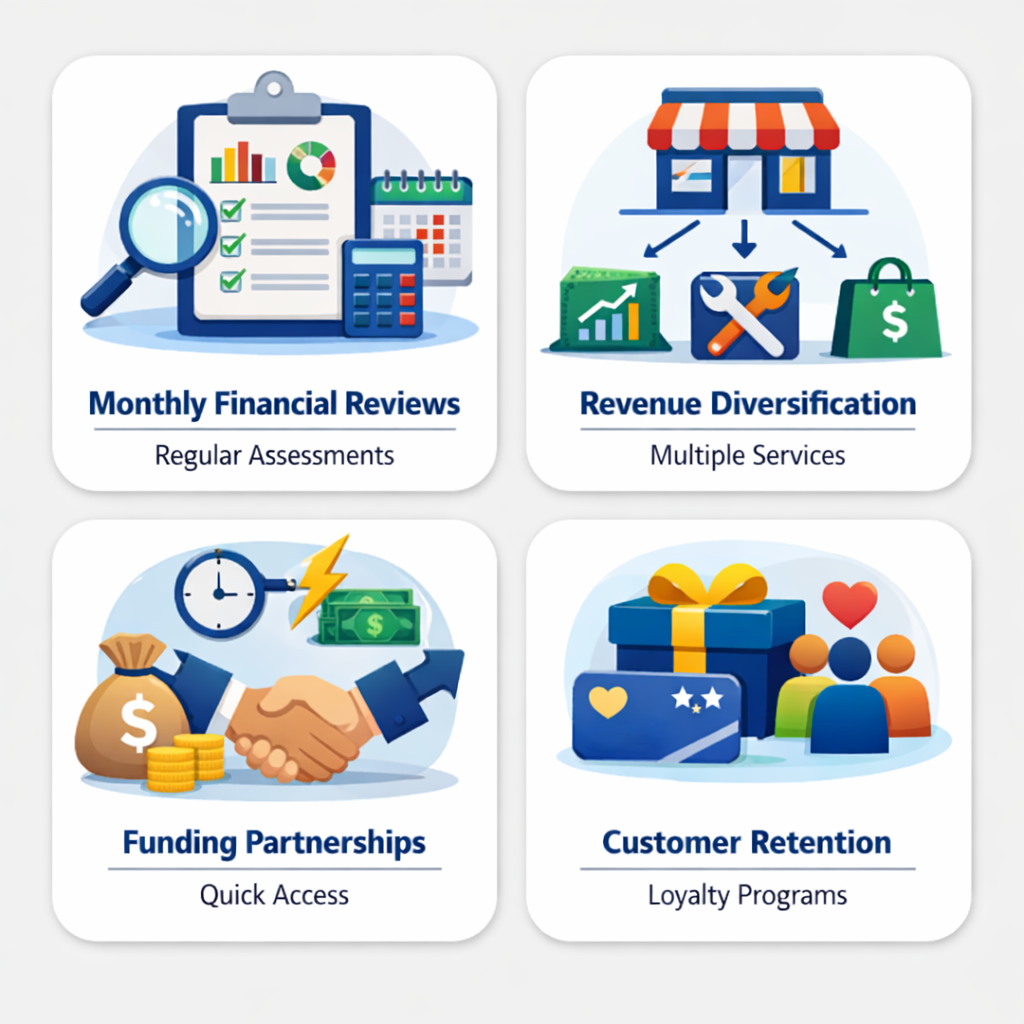
Implementing effective cash flow management requires systematic approaches that help auto repair shops navigate revenue fluctuations successfully.
- Establish Monthly Financial Reviews: Regular assessment of revenue patterns, expenses, and cash flow trends helps identify potential issues early and allows for proactive planning.
- Create Revenue Diversification Strategies: Developing multiple service offerings, such as maintenance contracts or specialized repairs, can help stabilize income streams throughout the year.
- Build Relationships with Funding Partners: Establishing connections with alternative lenders before funding is needed ensures quick access to capital when revenue dips occur unexpectedly.
- Develop Customer Retention Programs: Implementing loyalty programs and regular maintenance reminders helps maintain steady cash flow during typically slower periods.
These systematic approaches work particularly well when combined with flexible funding solutions that can adapt to changing business needs. Many successful shop owners find that preparation and partnership are key elements in maintaining financial stability.
Technology Investment Strategies for Long-term Stability
As vehicles become increasingly sophisticated, auto repair shops face new challenges that require strategic technology investments to maintain competitive advantage and revenue stability.
- Equipment Modernization: Investing in advanced diagnostic tools and repair equipment enables shops to service newer vehicles and command higher service rates.
- Staff Training Programs: Providing ongoing education for technicians ensures they can handle complex repairs on modern vehicles, potentially reducing referral losses to competitors.
- Digital System Integration: Implementing modern management software can improve operational efficiency and customer communication, leading to better retention and referral rates.
- Preventive Maintenance Scheduling: Using technology to track customer service history and send automated reminders can help generate consistent revenue streams throughout the year.
These technology investments often require significant upfront capital that may not be available during revenue dips. Strategic funding can help shops make necessary upgrades without compromising daily operations or depleting cash reserves needed for immediate expenses.
Understanding how auto repair shops stabilize revenue dips with funding requires recognizing that financial challenges are often temporary while investment opportunities can create lasting benefits. From maintaining adequate parts inventory to ensuring sufficient technician hours during peak demand, strategic funding solutions enable shops to navigate uncertainty while positioning themselves for growth.
Successful shop owners typically combine careful cash pacing with flexible funding options that can adapt to changing business needs. Whether addressing unexpected repairs that require additional resources or investing in technology to serve evolving vehicle requirements, the right funding approach can help maintain stability and competitiveness.
The key lies in preparing for revenue fluctuations before they occur, building relationships with funding partners, and implementing systems that support both immediate operational needs and long-term business growth. With proper planning and strategic funding support, auto repair shops can transform revenue challenges into opportunities for strengthening their market position.