
.png)

Understanding how boutiques estimate cash flow before restocking inventory can mean the difference between thriving through seasonal changes and struggling with cash shortfalls. Boutique owners face unique challenges when planning inventory purchases, especially when dealing with seasonal cycles that dramatically affect customer demand and product costs. The timing of restocking decisions often determines whether a boutique maintains healthy cash flow or faces financial strain during slower periods. Smart cash flow estimation involves analyzing past sales patterns, forecasting seasonal demand, and carefully calculating the true cost of new inventory. This strategic approach helps boutique owners make informed decisions about when and how much to invest in new stock.
Understanding Your Seasonal Sales Patterns
Understanding your seasonal sales patterns forms the foundation of accurate cash flow estimation before restocking. Most boutiques experience predictable fluctuations throughout the year, with certain seasons bringing higher sales volumes while others may see significant drops in customer traffic.
- Track Historical Data: Analyze at least two years of sales data to identify consistent seasonal trends and peak shopping periods. This historical perspective helps predict when cash flow might be strongest or weakest during upcoming cycles.
- Identify Peak and Valley Periods: Document which months typically generate the highest revenue and which periods tend to be slower for your specific boutique niche. Understanding these patterns allows for better timing of major inventory purchases and helps avoid restocking during cash-poor periods.
- Monitor Customer Behavior Changes: Pay attention to how customer shopping habits shift throughout different seasons and economic conditions. These insights can help refine your cash flow projections and ensure you're stocking the right products at optimal times.
Calculating True Product Costs and Margins

Calculating true product costs and margins ensures boutiques have accurate information when estimating cash flow needs for restocking. Many boutique owners focus only on wholesale prices but miss hidden costs that can significantly impact their cash flow calculations.
- Include All Hidden Expenses: Factor in shipping costs, customs fees, storage expenses, and any other charges that add to your actual product cost. These often-overlooked expenses can dramatically affect your cash flow projections and profitability margins.
- Account for Markup and Turnover Rates: Calculate realistic markup percentages based on your market positioning and determine how quickly different product categories typically sell. Slower-moving items tie up cash longer and should be factored into your cash flow timeline.
- Plan for Seasonal Price Variations: Some suppliers may charge different rates during peak ordering seasons or offer early-bird discounts for advance orders. Understanding these pricing patterns helps optimize both cash flow timing and overall profitability.
Implementing Smart Forecasting Techniques
Implementing smart forecasting techniques allows boutiques to predict cash flow needs with greater accuracy when planning restocking activities. Real-time accounting and data-driven forecasting methods help boutique owners make more informed decisions about inventory investments.
- Use Rolling Forecasts: Create monthly rolling forecasts that combine historical sales data with current market trends and upcoming seasonal factors. This approach provides a dynamic view of expected cash flow and helps adjust restocking plans based on changing conditions.
- Monitor Market Trends and External Factors: Stay informed about fashion trends, economic conditions, and local events that might affect customer spending patterns. These external factors can significantly impact your sales projections and cash flow estimates.
- Apply Conservative Estimates: Build cushions into your forecasts by using slightly conservative sales projections, especially when planning major inventory purchases. This approach helps protect against unexpected cash flow shortfalls during slower periods.
Essential Financial Planning Steps
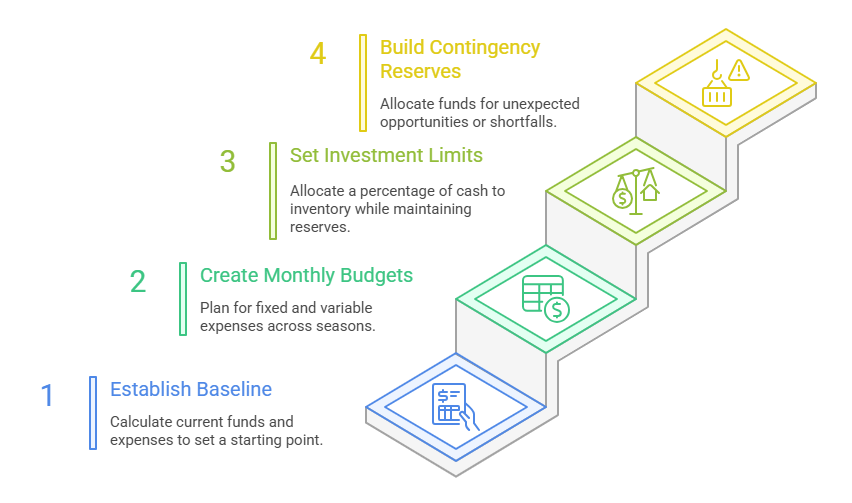
Essential financial planning steps help boutique owners create systematic approaches to cash flow estimation before making restocking decisions. Following these structured steps reduces guesswork and improves the accuracy of financial projections.
- Establish a cash flow baseline by calculating your current available funds, outstanding receivables, and upcoming expenses. This baseline provides the starting point for determining how much capital you can allocate to new inventory purchases.
- Create detailed monthly budgets that account for both fixed and variable expenses throughout different seasons. Include rent, utilities, payroll, marketing costs, and other operational expenses that continue regardless of sales volume.
- Set inventory investment limits based on your cash flow capacity and avoid overcommitting funds to new stock. Establish clear guidelines about what percentage of available cash can be allocated to inventory while maintaining adequate reserves.
- Build contingency reserves of at least 10-15% of your projected inventory budget to handle unexpected opportunities or cover shortfalls. These reserves provide flexibility when market conditions change or unexpected expenses arise.
Timing Your Inventory Purchases
Timing your inventory purchases strategically helps maximize cash flow efficiency and ensures adequate stock levels during peak selling periods. The timing of restocking decisions often determines whether boutiques can take advantage of bulk discounts and avoid cash flow crunches.
- Plan purchases during high cash flow periods when your boutique has recently collected revenue from strong sales months. This timing reduces the need for external financing and preserves cash reserves for slower periods.
- Negotiate extended payment terms with suppliers to align payment schedules with your expected sales cycles. Many suppliers offer net-30 or net-60 terms that can help bridge the gap between inventory investment and sales revenue.
- Coordinate with seasonal demand patterns by purchasing spring merchandise during winter months when cash flow from holiday sales is strong. This approach ensures you're ready for the next selling season without straining current cash reserves.
- Consider staggered purchasing schedules that spread inventory investments across multiple months rather than making large one-time purchases. This approach helps maintain steadier cash flow and reduces the risk of overcommitting funds.
Tools and Resources for Better Forecasting
Tools and resources for better forecasting help boutique owners streamline their cash flow estimation processes and make more accurate projections before restocking. Modern technology offers various solutions that can simplify complex financial planning tasks.
- Point-of-sale systems with reporting features can automatically track sales patterns, inventory turnover rates, and seasonal trends. These systems provide real-time data that supports more accurate cash flow projections and helps identify optimal restocking timing.
- Spreadsheet templates and cash flow modeling tools allow boutique owners to create customized forecasting models based on their specific business patterns. These tools help visualize different scenarios and plan for various market conditions.
- Industry benchmarking resources provide comparative data about typical seasonal patterns and financial ratios for similar boutiques. Understanding industry standards helps validate your own projections and identify potential improvement opportunities.
- Professional accounting software may offer advanced forecasting features that integrate with your existing financial records. These solutions can automate many calculations and provide more sophisticated analytical capabilities for growing boutiques.
Mastering how boutiques estimate cash flow before restocking requires a combination of data analysis, strategic planning, and realistic forecasting. By understanding seasonal cycles, calculating true product costs, and implementing smart timing strategies, boutique owners can make more informed inventory decisions that support healthy cash flow throughout the year. The key lies in developing systematic approaches that account for both predictable seasonal patterns and unexpected market changes. Remember that accurate cash flow estimation is an ongoing process that improves with experience and consistent data collection. When cash flow challenges do arise, exploring financing options like merchant cash advances or revenue-based financing can provide the working capital needed to maintain optimal inventory levels during slower periods. With proper planning and the right tools, boutiques can navigate seasonal fluctuations while maintaining the financial flexibility needed for long-term success.