
.png)

Understanding Business Line of Credit Interest
When you're considering a business line of credit, understanding how interest works on a business line of credit can save you thousands of dollars. Unlike traditional financing, these flexible funding tools only charge interest on the amount you actually use, not your entire credit limit. However, the way that interest gets calculated and compounded can vary significantly between lenders, affecting your total borrowing costs in ways you might not expect.
The mechanics behind interest calculations involve several key factors: the interest rate itself, how often it compounds, your average daily balance, and the repayment terms. These elements work together to determine your actual cost of borrowing, making it crucial to understand each component before you sign on the dotted line.
Essential Interest Calculation Components
Essential interest calculation components form the foundation of understanding how much you'll pay for your business line of credit. These key elements work together to determine your borrowing costs and can significantly impact your cash flow planning.
- Interest Rate Range: Business lines of credit typically carry interest rates between 7% to 60%, depending on your creditworthiness and lender requirements
- Principal Balance: Only the amount you actually draw from your credit line accrues interest, not your total available limit
- Compounding Frequency: Interest may compound daily or monthly, affecting your total cost over time
- Average Daily Balance Method: Most lenders calculate interest based on your average outstanding balance throughout the billing cycle
- Repayment Terms: Longer repayment periods might reduce monthly payments but increase total interest costs
Daily Versus Monthly Interest Compounding
Daily versus monthly interest compounding represents one of the most important factors in determining your total borrowing costs. The frequency of compounding can create noticeable differences in what you pay over time, especially if you carry balances for extended periods.
- Daily Compounding: Interest gets calculated and added to your balance every single day, creating a compound effect that can increase costs
- Monthly Compounding: Interest calculations occur once per month, typically resulting in slightly lower total costs compared to daily compounding
- Impact on Costs: The difference becomes more pronounced with larger balances and longer repayment periods
- Lender Variations: Different financial institutions may use either method, making it essential to ask about compounding frequency before signing
Average Balance Calculation Methods
Average balance calculation methods determine exactly how lenders figure out what you owe in interest charges. Understanding these methods helps you predict costs and manage your credit line more effectively throughout each billing cycle.
- Daily Balance Method: Your balance gets tracked every day, then averaged across the entire billing period for interest calculations
- Previous Balance Method: Some lenders might use your balance from the end of the previous billing cycle as the basis for interest charges
- Adjusted Balance Method: Takes your previous balance and subtracts any payments made during the current cycle before calculating interest
- Impact of Timing: When you make payments during the month can affect your average balance and total interest costs
Steps to Calculate Your Interest Costs
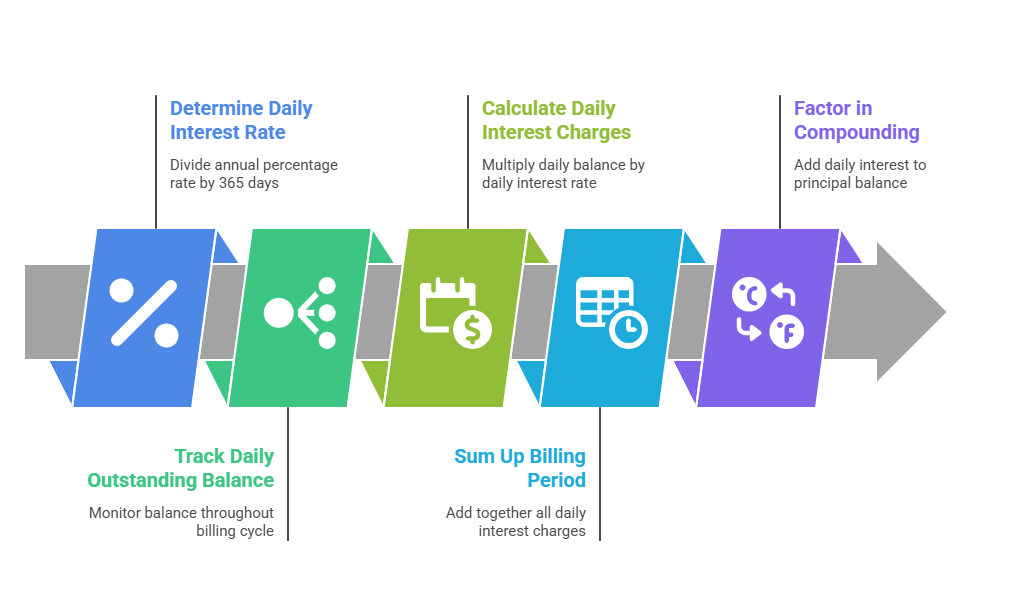
Steps to calculate your interest costs provide a clear roadmap for understanding exactly what you'll pay on your business line of credit. Following this systematic approach helps you budget accurately and compare different financing options.
- Determine Your Daily Interest Rate: Divide your annual percentage rate by 365 days to get your daily rate (for example, 12% APR ÷ 365 = 0.033% daily)
- Track Your Daily Outstanding Balance: Monitor how much you owe each day throughout the billing cycle, including any draws or payments
- Calculate Daily Interest Charges: Multiply your daily balance by your daily interest rate to determine each day's interest cost
- Sum Up the Billing Period: Add together all daily interest charges to get your total interest for that cycle
- Factor in Compounding: If interest compounds daily, each day's interest gets added to your principal balance for the next day's calculation
Smart Cost Planning Strategies
Smart cost planning strategies can help you minimize interest expenses while maximizing the benefits of your business line of credit. These approaches focus on timing, usage patterns, and repayment tactics that work in your favor.
- Draw Funds Only When Needed: Since interest accrues only on borrowed amounts, avoid drawing unnecessary funds that sit unused in your account
- Make Payments Early in the Cycle: Reducing your balance early in the billing period lowers your average daily balance and total interest costs
- Pay Down High-Interest Debt First: If you have multiple credit facilities, prioritize paying down the highest-rate obligations to minimize overall costs
- Monitor Your Usage Patterns: Track when you typically need funds and plan draws accordingly to optimize your average balance
Factors That Influence Your Interest Rate
Factors that influence your interest rate determine where you'll fall within the typical range of business line of credit rates. Understanding these elements can help you improve your borrowing position and secure more favorable terms.
- Personal and Business Credit Scores: Higher credit scores typically qualify for lower interest rates, while poor credit may result in rates toward the higher end of the range
- Business Financial Health: Strong revenue, profitability, and cash flow can help you negotiate better rates with lenders
- Time in Business: Established businesses with longer operating histories often receive more favorable interest rates than newer ventures
- Industry Risk Assessment: Some industries are considered higher risk, which may result in higher interest rates regardless of other factors
- Relationship with Lender: Existing banking relationships and account history can sometimes lead to preferential pricing
Key Takeaway for Business Owners
The most important thing to remember about how interest works on a business line of credit is that every detail matters when it comes to your total costs. The difference between daily and monthly compounding, combined with your average balance management and repayment timing, can add up to significant savings or expenses over time. Smart business owners take the time to understand these mechanics before committing to any credit facility, allowing them to make informed decisions that support their financial goals rather than drain their resources unnecessarily.
Understanding how interest works on a business line of credit empowers you to make smarter financing decisions for your company. The key lies in recognizing that these flexible funding tools offer significant advantages when used strategically, but they require careful management to optimize costs. By paying attention to compounding frequency, managing your average daily balance, and timing your draws and payments effectively, you can harness the power of a business line of credit while keeping interest expenses under control.
Remember that rates can vary dramatically between lenders, and the cheapest option isn't always the best fit for your specific needs. Focus on finding a credit facility that offers competitive rates, favorable compounding terms, and the flexibility your business requires to thrive in today's dynamic marketplace.