.png)

Many small business owners face cash flow challenges that traditional bank financing can't address quickly enough. When you need working capital fast, understanding how merchant cash advance works might provide the solution you're looking for. Unlike traditional financing, merchant cash advances operate as the sale of future receivables rather than debt instruments.
This financing option has evolved significantly, with new technological advancements and regulatory changes shaping how businesses access and repay these advances in 2025. The process involves a daily remittance system based on your actual sales performance, which means repayment fluctuates with your business revenue.
Let's explore the complete process and what you need to know about this alternative financing solution.
Essential Tips for Understanding Merchant Cash Advance Structure
Understanding how merchant cash advance works starts with recognizing that it's structured as a sale of future receivables rather than a traditional financing arrangement. This fundamental difference affects how the advance is treated legally and what obligations you have as a business owner.
- Receivables Assignment: You're selling a portion of your future credit card sales to the advance provider. This means the provider purchases your future receivables at a discount, giving you immediate access to capital.
- Legal Structure: Since this is technically a sale rather than borrowing, different regulations may apply depending on your state. The legal framework around these transactions varies significantly across all 50 states.
- No Fixed Monthly Payments: Unlike traditional financing, you don't have set monthly payment amounts. Instead, repayment is tied directly to your actual sales performance through the daily remittance process.
Key Factors That Influence Advance Approval
When evaluating how merchant cash advance works for your business, providers typically focus on your sales history and processing patterns rather than traditional credit scores.
- Sales Volume History: Providers analyze your credit card processing statements to understand your typical monthly revenue. Consistent sales patterns over several months strengthen your application.
- Processing Time in Business: Most providers require at least 6-12 months of credit card processing history. This demonstrates business stability and provides data for calculating your advance amount.
- Industry Type: Certain industries may face different terms due to seasonal fluctuations or regulatory considerations. Retail, restaurants, and service businesses often see favorable terms due to consistent processing patterns.
Smart Planning Tips for Daily Remittance Management
The daily remittance system is central to how merchant cash advance works, and proper planning can help you maintain healthy cash flow throughout the repayment period.
- Cash Flow Forecasting: Plan your cash flow carefully to manage the rapid payback requirements. Since a percentage of each day's sales goes toward repayment, you need to ensure sufficient funds remain for daily operations.
- Seasonal Considerations: If your business experiences seasonal fluctuations, the sales-based repayment structure might work in your favor during slow periods, as payments automatically adjust to lower sales volumes.
- Banking Integration: The remittance process typically integrates directly with your payment processor, making collections automatic. Understanding this process helps you plan for the actual cash available each day.
Step-by-Step Application Process for Merchant Cash Advances
The application process for merchant cash advances has become more streamlined with technological improvements, though understanding each step helps ensure faster approval.
- Initial Application: Complete the basic application with business information, processing history, and funding needs. Most providers offer online applications that can be completed in minutes.
- Documentation Review: Submit recent bank statements and credit card processing statements. Providers typically need 3-6 months of processing history to evaluate your application.
- Underwriting and Approval: The provider analyzes your sales patterns and determines the advance amount and factor rate. This process may take 24-48 hours for most applications.
- Agreement Execution: Review and sign the advance agreement, which outlines the purchase amount, remittance percentage, and total amount to be collected through future sales.
- Funding: Once agreements are signed, funds are typically deposited within 1-2 business days, providing quick access to working capital.
Daily Remittance Process and Sales-Based Repayment
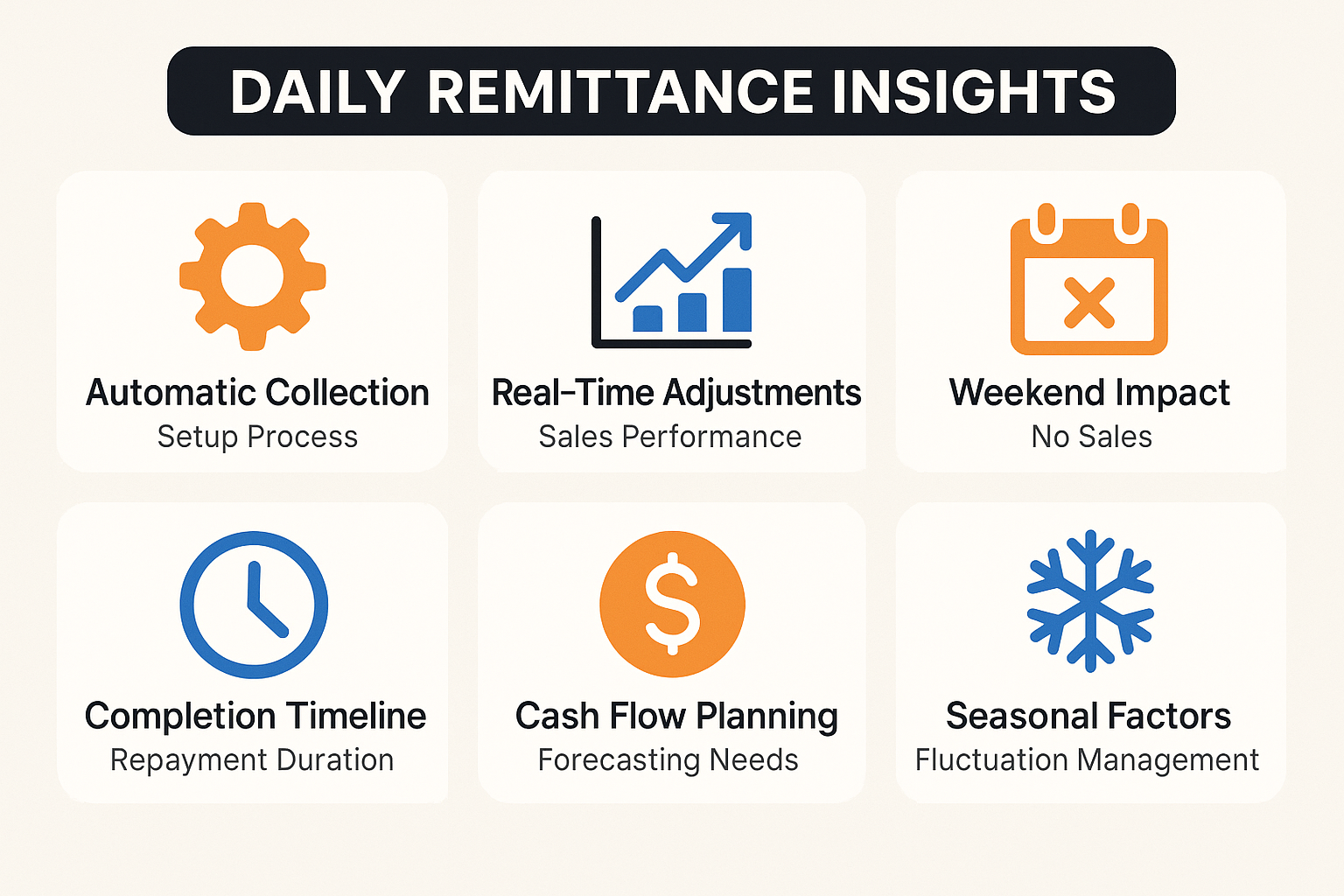
Understanding how the daily remittance system operates is crucial to grasping how merchant cash advance works in practice.
- Automatic Collection Setup: The provider integrates with your payment processor to automatically collect the agreed-upon percentage of daily credit card sales. This typically ranges from 10-20% of daily processing volume.
- Real-Time Processing: Collections happen automatically as transactions are processed, meaning the remittance adjusts daily based on your actual sales performance rather than fixed amounts.
- Weekend and Holiday Adjustments: On days with no sales, no collections occur. This means the advance naturally adjusts to your business rhythm, though it may extend the overall collection period.
- Completion Timeline: The advance is considered satisfied once the total contracted amount has been collected through daily remittances, which typically takes 6-18 months depending on sales volume.
Understanding how merchant cash advance works gives you the knowledge to make informed decisions about this financing option. The process involves selling future receivables rather than taking on debt, with repayment occurring through daily remittance based on your actual sales performance.
The key to success with merchant cash advances lies in careful cash flow planning and understanding the sales-based repayment structure. While this financing option provides quick access to capital, the rapid payback requirements need careful consideration to avoid disrupting your daily operations.
As regulations continue evolving and technology improves the process, merchant cash advances may become an even more accessible option for businesses needing flexible working capital solutions. Consider consulting with financial professionals to determine if this financing structure aligns with your business needs and cash flow patterns.