.png)

Understanding How SBA Loan Rates Affect Monthly Payments
Small business owners often wonder how SBA loan rates affect monthly payments when considering financing options. With the Prime rate recently decreasing from 7.00% to 6.75%, many merchants are seeing corresponding reductions in their SBA rate caps by 0.25%. This shift might lead to lower maximum interest rates on SBA financing, potentially benefiting monthly payment calculations for businesses that rely on these funding solutions.
Understanding the relationship between interest rates and payment amounts becomes crucial for effective cash flow management. Rate changes don't just affect new applicants, they could impact existing borrowers through refinancing opportunities and future financial planning decisions.
Key Factors That Determine SBA Payment Amounts
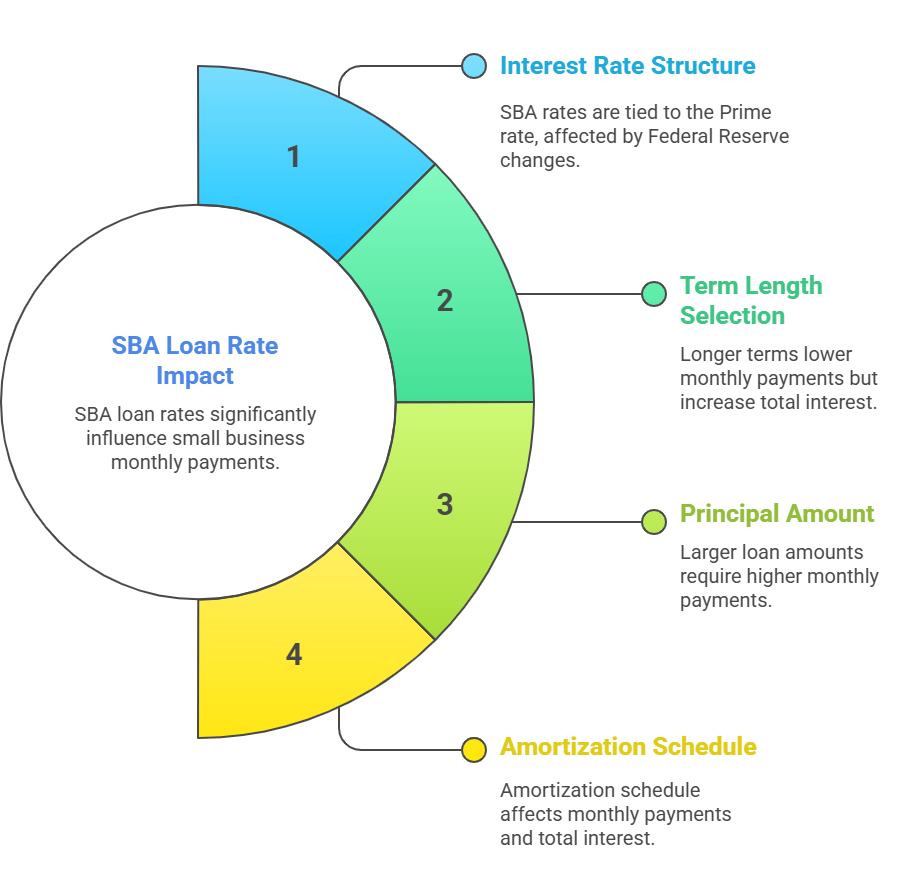
Several critical elements influence how SBA loan rates affect monthly payments for small businesses. Understanding these factors helps merchants make informed decisions about their financing strategies.
- Interest Rate Structure: SBA rates typically tie to the Prime rate, meaning Federal Reserve changes may directly impact your payment calculations through rate adjustments.
- Term Length Selection: Longer repayment terms often result in lower monthly obligations, though they might increase total interest costs over the financing period.
- Principal Amount: The size of your advance naturally affects monthly payments, with larger amounts requiring higher monthly contributions regardless of rate changes.
- Amortization Schedule: How payments are structured over time influences both monthly amounts and total interest paid throughout the repayment period.
Federal Reserve Impact on Business Financing
Changes in Federal Reserve policy directly influence how SBA loan rates affect monthly payments across the small business landscape. When the Fed adjusts rates, these modifications typically flow through to SBA financing products.
- Direct Rate Connection: SBA interest rates often follow Federal Reserve adjustments, meaning monetary policy changes could impact your existing or future payment obligations.
- Market Timing Benefits: Rate decreases may create opportunities for refinancing existing obligations at more favorable terms, potentially reducing monthly expenses.
- Planning Considerations: Understanding Fed policy trends helps business owners anticipate potential changes in their financing costs and budget accordingly.
- Economic Indicators: Federal Reserve decisions reflect broader economic conditions that might affect your business's ability to manage payment obligations effectively.
Rate Shifts and Cash Flow Management
Understanding how rate shifts affect your monthly obligations becomes essential for maintaining healthy cash flow in your business operations. Recent market changes demonstrate the practical impact these adjustments can have.
- Immediate Payment Relief: The recent 0.25% reduction in Prime rate could translate to meaningful monthly savings for businesses with variable-rate SBA financing.
- Budgeting Flexibility: Lower rates may free up cash flow for other business expenses, equipment purchases, or expansion opportunities that support growth.
- Refinancing Opportunities: Rate decreases might make refinancing existing obligations attractive, potentially lowering monthly commitments significantly.
- Strategic Planning: Improved payment terms could enable businesses to take on additional financing for mergers, acquisitions, or other growth initiatives.
Amortization Impact on Payment Calculations
The amortization impact on how SBA loan rates affect monthly payments varies significantly based on the repayment structure chosen for your financing. Different approaches offer distinct advantages depending on your business's cash flow needs.
- Payment Distribution: Early payments typically include more interest and less principal, with this ratio shifting over time as the balance decreases.
- Term Length Trade-offs: Extending repayment periods generally reduces monthly payment obligations but may increase total interest costs throughout the financing period.
- Rate Change Effects: Variable rates mean your amortization schedule could adjust with market conditions, affecting both monthly amounts and total repayment costs.
- Early Payment Benefits: Making additional principal payments during low-rate periods might reduce total interest costs and shorten repayment terms effectively.
Strategic Steps for Rate Environment Navigation

Successfully managing your financing obligations requires a systematic approach to understanding how changing rates might affect your monthly commitments. These strategic steps can help optimize your position.
- Monitor Rate Trends: Keep track of Federal Reserve announcements and Prime rate changes, as these often signal potential adjustments to SBA financing costs that could affect your payments.
- Evaluate Refinancing Options: When rates decrease significantly, calculate whether refinancing existing obligations might reduce monthly payments enough to justify associated costs and procedures.
- Review Terms Regularly: Assess your current repayment structure periodically to ensure it still aligns with your business's cash flow patterns and growth objectives.
- Plan for Rate Increases: Build financial cushions that can accommodate potential payment increases if rates rise, protecting your business from cash flow disruptions.
Budgeting Strategies for Variable Rate Environments
Effective budgeting strategies help small business owners prepare for how changing rates might impact their monthly financial obligations. Smart planning can minimize disruption from rate fluctuations.
- Create Rate Scenarios: Develop budget projections based on different interest rate levels, helping you understand potential payment ranges and prepare accordingly for various economic conditions.
- Establish Payment Reserves: Set aside additional funds during low-rate periods to cushion against potential payment increases when rates rise in future economic cycles.
- Optimize Cash Flow Timing: Align major expenses and revenue collection with payment due dates, ensuring adequate funds are available regardless of rate-driven payment adjustments.
- Consider Fixed-Rate Options: Evaluate whether fixed-rate alternatives might provide payment predictability that better suits your business model and risk tolerance levels.
Understanding how SBA loan rates affect monthly payments empowers small business owners to make informed financing decisions and maintain healthy cash flow management. With recent Prime rate decreases creating opportunities for reduced payment obligations, now might be an ideal time to evaluate your current financing structure.
Rate shifts will continue affecting business financing costs, making it essential to stay informed about Federal Reserve policy changes and their potential impact on your monthly commitments. Whether you're considering new financing or managing existing obligations, understanding these relationships helps you navigate changing economic conditions successfully.
Smart budgeting strategies and careful attention to amortization impacts can help your business take advantage of favorable rate environments while preparing for future changes. By staying proactive about rate trends and their effects on payment calculations, you can maintain financial stability and position your business for continued growth.