.png)

In today's competitive marketplace, understanding how to build long-term customer loyalty has become essential for business survival and growth. Customer loyalty goes beyond single transactions, creating lasting relationships that generate consistent revenue and positive word-of-mouth marketing. While attracting new customers might grab attention, retaining existing ones typically proves more cost-effective and profitable.
Building genuine customer loyalty requires a strategic approach that combines personalized service, meaningful engagement, and consistent value delivery. Businesses that master these elements often see increased customer lifetime value, reduced marketing costs, and stronger market positioning. The foundation of loyalty lies in understanding what motivates customers to return and recommend your business to others.
Essential Tips for Creating Personalized Customer Experiences
Creating personalized customer experiences forms the cornerstone of how to build long-term customer loyalty effectively. When customers feel recognized and valued as individuals, they're more likely to develop emotional connections with your brand.
- Understand individual preferences: Track customer purchase history, communication preferences, and feedback patterns. This information helps tailor future interactions to match their specific needs and expectations.
- Customize communication approaches: Some customers prefer email updates while others favor phone calls or text messages. Adapting your communication style shows respect for their preferences and increases engagement likelihood.
- Remember important details: Note special occasions, previous concerns, or specific requests in customer records. Referencing these details during future interactions demonstrates genuine care and attention to their experience.
- Offer relevant recommendations: Use purchase history and behavior patterns to suggest products or services that align with their interests. Well-timed, appropriate suggestions feel helpful rather than pushy.
Implementing Effective Rewards Programs That Drive Retention
Rewards programs serve as powerful tools in learning how to build long-term customer loyalty by providing tangible benefits for continued engagement. Well-designed programs create anticipation and give customers compelling reasons to choose your business repeatedly.
- Design tiered reward structures: Create multiple levels that customers can achieve through increased spending or engagement. Higher tiers should offer progressively better benefits, encouraging customers to increase their involvement with your business.
- Offer meaningful rewards: Ensure rewards provide genuine value that customers actually want and use. Survey your customer base to understand what types of benefits would motivate them most effectively.
- Make redemption simple: Complex reward systems frustrate customers and reduce participation rates. Design straightforward processes that allow easy earning and redemption of benefits.
- Communicate progress clearly: Keep customers informed about their current status, points earned, and available rewards. Regular updates maintain engagement and encourage continued participation in the program.
Key Strategies for Gathering and Acting on Customer Feedback

Effective feedback systems play a crucial role in how to build long-term customer loyalty by demonstrating your commitment to continuous improvement and customer satisfaction. Regular feedback collection shows customers that their opinions matter and influence your business decisions.
- Create multiple feedback channels: Offer various ways for customers to share their thoughts, including surveys, suggestion boxes, online reviews, and direct conversations. Different customers prefer different communication methods for providing feedback.
- Follow up on feedback received: Acknowledge customer input promptly and explain how you plan to address their concerns or suggestions. This response shows that you value their time and opinions seriously.
- Implement visible improvements: When possible, make changes based on customer feedback and communicate these improvements to your customer base. Seeing their suggestions implemented reinforces the value of providing feedback.
- Close the feedback loop: Circle back with customers who provided specific feedback to show them how their input influenced positive changes. This personal touch strengthens the relationship and encourages future engagement.
Building Trust Through Consistent Branding and Messaging
Consistent branding creates the reliable foundation necessary for understanding how to build long-term customer loyalty successfully. When customers know what to expect from every interaction, they develop confidence in your business and feel comfortable recommending you to others.
- Maintain visual consistency: Use the same colors, fonts, logos, and design elements across all customer touchpoints. This consistency helps customers immediately recognize your brand and builds familiarity over time.
- Deliver consistent messaging: Ensure your core values, promises, and brand personality come through clearly in all communications. Mixed messages confuse customers and weaken their trust in your reliability.
- Train staff thoroughly: Every team member should understand and embody your brand values during customer interactions. Inconsistent service experiences can damage relationships even when products meet expectations.
- Monitor brand representation: Regularly review how your brand appears across different channels and locations. Address any inconsistencies quickly to maintain the professional image that supports customer confidence.
Creating Emotional Connections That Last
Emotional connections often determine the difference between customers who simply make purchases and those who become loyal advocates. Understanding how to build long-term customer loyalty means recognizing that people make decisions with both their heads and hearts.
- Share your business story: Help customers understand your mission, values, and the people behind your business. Personal stories create emotional bridges that pure transactions cannot match.
- Celebrate customer milestones: Acknowledge birthdays, anniversaries, or business achievements when appropriate. These gestures show that you see customers as people rather than just revenue sources.
- Support causes they care about: When your business supports community initiatives or charitable causes, customers who share those values feel more connected to your brand and mission.
- Create memorable experiences: Go beyond meeting expectations to create moments that surprise and delight customers. These positive memories often influence future purchasing decisions more than price comparisons.
Measuring and Improving Customer Loyalty Metrics
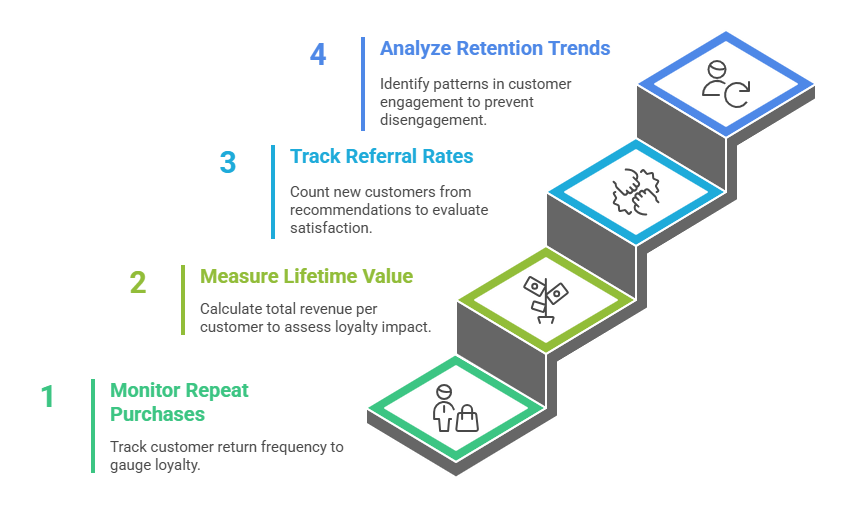
Tracking loyalty metrics provides essential insights for refining your approach to how to build long-term customer loyalty effectively. Without measurement, it's difficult to know whether your strategies are working or where improvements might be needed.
- Monitor repeat purchase rates: Track how often customers return and the time between purchases. Increasing frequency or shorter intervals between purchases often indicate growing loyalty levels.
- Measure customer lifetime value: Calculate the total revenue each customer generates over their relationship with your business. Higher lifetime values suggest successful loyalty-building efforts that encourage continued engagement.
- Track referral rates: Count how many new customers come from existing customer recommendations. High referral rates indicate strong satisfaction and trust in your business offerings.
- Analyze retention trends: Look at how long customers stay active and identify patterns in when they might disengage. Understanding these patterns helps you intervene before losing valuable relationships.
Learning how to build long-term customer loyalty requires commitment, consistency, and genuine care for the customer experience. The strategies outlined above work best when implemented together as part of a comprehensive approach rather than isolated tactics. Personalized service, effective rewards programs, responsive feedback systems, and consistent branding all contribute to creating the trust and emotional connections that drive lasting loyalty.
Remember that building loyalty is an ongoing process that requires patience and persistence. Results may not appear immediately, but businesses that consistently deliver value and demonstrate genuine care for their customers typically see stronger relationships and better financial performance over time. Start with one or two strategies that align best with your business model and customer base, then gradually expand your loyalty-building efforts as you see positive results.