
.png)

Understanding how to estimate inventory-related working capital can make or break your business's financial health. When you're juggling daily operations, customer demands, and supplier relationships, knowing exactly how much capital you'll need tied up in inventory becomes crucial for maintaining smooth cash flow.
Small business owners often struggle with this balancing act, finding themselves either sitting on too much stock or scrambling to fulfill orders during peak periods. The key lies in developing a systematic approach that accounts for your unique business patterns, seasonal spikes, and customer behavior.
This comprehensive guide will walk you through proven methods to accurately estimate your inventory-related working capital needs, helping you make smarter financial decisions that support sustainable growth.
Essential Components of Inventory Working Capital
Essential components of inventory working capital form the foundation of accurate financial planning. Understanding these elements helps you build a comprehensive picture of your capital requirements.
- Raw materials and supplies: Calculate the average value of materials needed to maintain production or service delivery without disruption
- Work-in-progress inventory: Account for partially completed products or services that tie up capital during the production cycle
- Finished goods ready for sale: Estimate the optimal stock levels needed to meet customer demand while avoiding overstock situations
- Safety stock buffers: Include additional inventory reserves to handle unexpected demand spikes or supply chain delays
Key Metrics for Accurate Capital Planning
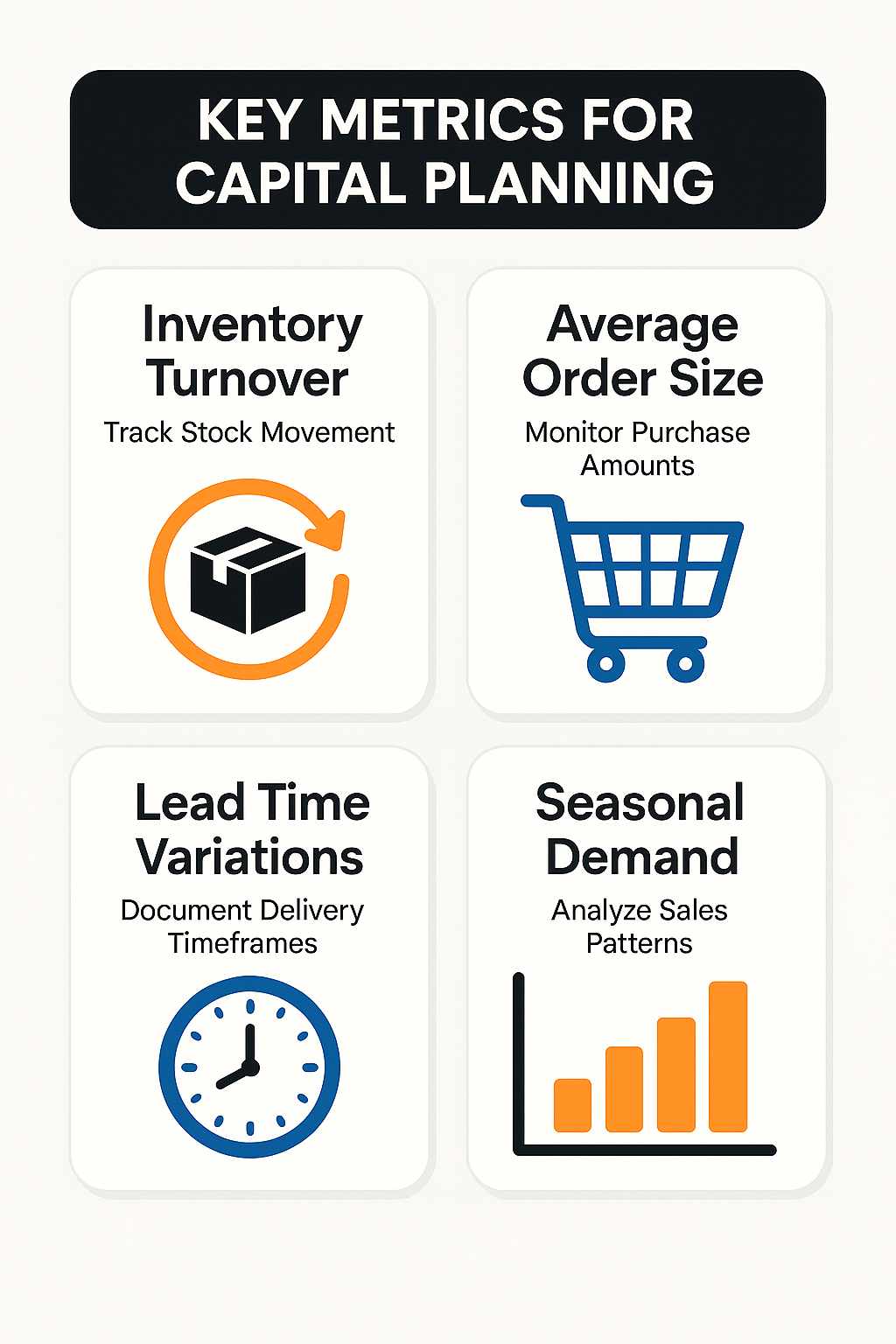
Key metrics for accurate capital planning provide the data foundation you need to make informed inventory decisions. These measurements help you understand your business's unique patterns and requirements.
- Inventory turnover ratios: Track how quickly your stock moves to identify slow-moving items and optimize purchasing decisions
- Average order size trends: Monitor typical customer purchase amounts to predict inventory needs and cash flow timing
- Lead time variations: Document supplier delivery timeframes to calculate appropriate buffer stock levels
- Seasonal demand patterns: Analyze historical sales data to identify recurring spikes that require additional working capital preparation
Forecasting Tools and Techniques
Forecasting tools and techniques enable you to predict future inventory needs with greater accuracy. By utilizing demand forecasting tools, merchants can better align their inventory levels with anticipated sales patterns.
- Historical sales analysis: Review past performance data to identify trends, seasonality, and growth patterns that inform future inventory needs
- Market trend integration: Incorporate industry developments and economic indicators that might affect customer demand and purchasing behavior
- Customer behavior tracking: Monitor buying patterns, repeat purchase cycles, and preference shifts to refine inventory predictions
- External factor consideration: Account for supplier volatility, tariff uncertainty, and other market conditions that could impact stock requirements
Step-by-Step Capital Estimation Process
The step-by-step capital estimation process provides a systematic approach to calculating your inventory-related working capital needs. This methodical framework helps ensure you don't overlook critical factors.
- Analyze current inventory levels: Document your existing stock values across all categories and identify which items represent the largest capital investments
- Calculate average monthly consumption: Determine how much inventory you typically use or sell each month to establish baseline requirements
- Factor in lead times and safety margins: Add buffer stock calculations based on supplier delivery schedules and demand variability
- Project seasonal adjustments: Incorporate anticipated spikes or dips in demand that will require temporary increases or decreases in working capital
- Validate against sales forecasts: Cross-reference your inventory estimates with projected sales to ensure alignment and identify potential gaps
Managing Seasonal Spikes and Demand Fluctuations
Managing seasonal spikes and demand fluctuations requires strategic planning to avoid cash flow disruptions. These cyclical patterns can significantly impact how to estimate inventory-related working capital throughout the year.
- Map your seasonal patterns: Create a calendar showing when your business typically experiences high and low demand periods based on historical data
- Build flexible financing strategies: Establish credit lines or financing options that can provide additional working capital during peak inventory buildup periods
- Coordinate with suppliers: Negotiate payment terms and delivery schedules that align with your seasonal cash flow patterns
- Plan inventory reduction strategies: Develop promotional campaigns and clearance strategies to convert excess seasonal inventory back to cash quickly
Optimizing Turnover and Order Management
Optimizing turnover and order management directly impacts the amount of working capital you need to maintain in inventory. Efficient inventory management can free up significant cash that you can use for other business opportunities or operational needs. By focusing on turnover rates and order size optimization, you can minimize the capital tied up in slow-moving stock while ensuring you have adequate supplies to meet customer demand. This balance becomes particularly important when dealing with larger order sizes that require substantial upfront capital investment but may offer better unit economics.
Mastering how to estimate inventory-related working capital puts you in control of your business's financial future. By implementing these systematic approaches to forecasting, planning, and managing your inventory investments, you'll be better equipped to handle growth opportunities while maintaining healthy cash flow.
Remember that accurate estimation is an ongoing process that requires regular review and adjustment as your business evolves. Market conditions change, customer preferences shift, and seasonal patterns may vary from year to year.
Start by implementing one or two of these strategies and gradually build your inventory management capabilities. With consistent application and refinement, you'll develop the financial insight needed to optimize your working capital and support sustainable business growth.