.png)

How to Use a Term Loan Effectively for Your Business
Understanding how to use a term loan effectively can make the difference between accelerating your business growth and creating unnecessary financial strain. Term loans offer structured financing that might help business owners fund specific projects, expand operations, or invest in equipment that generates returns over time.
Unlike other financing options, term loans typically provide predictable payment schedules and fixed interest rates, making them suitable for strategic business investments. However, the key to success lies in careful planning, responsible budgeting, and aligning the loan purpose with measurable business objectives.
This guide explores practical strategies for maximizing term loan benefits while maintaining healthy cash flow and ensuring sustainable repayment.
Strategic Planning for Term Loan Success
Strategic planning forms the foundation of how to use a term loan effectively. Before accepting any financing, business owners should carefully evaluate their specific needs and potential returns on investment.
- Define clear investment objectives: Identify specific projects or purchases that could generate measurable revenue increases or cost savings over the loan term.
- Calculate potential returns: Estimate how the financed investment might impact your business income and whether projected returns justify the loan costs.
- Assess timing considerations: Ensure the loan timing aligns with your business cycle and peak revenue periods to support easier repayment.
- Evaluate alternatives: Compare term loan options with other financing methods to confirm you're choosing the most suitable solution for your situation.
Effective strategic planning also involves considering how the loan fits into your broader business goals. Rather than viewing financing as a quick fix, successful business owners often treat term loans as tools for calculated growth investments that strengthen their competitive position.
Essential Budgeting Techniques for Loan Management
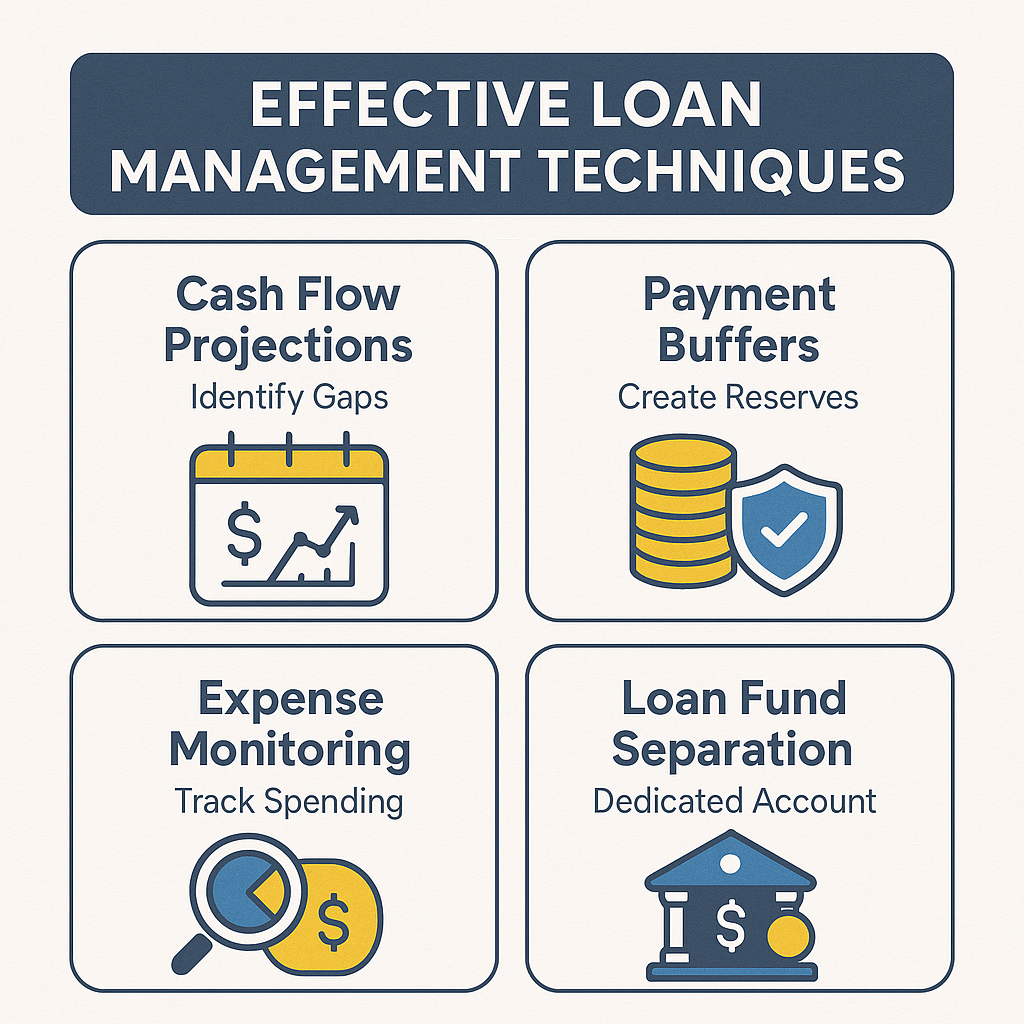
Budgeting techniques play a crucial role in responsible financing and help ensure you can manage loan payments without compromising daily operations. Meticulous financial planning may significantly improve your ability to handle the additional payment obligations.
- Create detailed cash flow projections: Map out monthly income and expenses, including the new loan payment, to identify potential cash flow gaps before they occur.
- Build payment buffers: Set aside extra funds each month to create a cushion for months when revenue might fall short of projections.
- Monitor expense categories: Track spending patterns to identify areas where costs could be reduced if needed to accommodate loan payments.
- Separate loan funds: Keep loan proceeds in a dedicated account to prevent accidental spending on non-essential items.
Smart budgeting also involves regular review and adjustment of your financial plans. Business conditions can change, so maintaining flexibility in your budget allows you to adapt while staying committed to your loan obligations.
Project Planning and Implementation Strategies
Project planning methods become especially important when learning how to use a term loan effectively, as the funded project's success directly impacts your ability to repay the financing comfortably.
- Develop realistic timelines: Create achievable project schedules that account for potential delays and allow time for the investment to start generating returns.
- Control project costs: Establish clear budgets for each project phase and implement cost controls to prevent expenses from exceeding the loan amount.
- Track progress milestones: Set measurable checkpoints to monitor whether the project is meeting expectations and delivering anticipated benefits.
- Plan for contingencies: Identify potential challenges and develop backup plans to keep projects on track even when unexpected issues arise.
Successful project implementation often requires balancing ambition with practicality. While term loans can enable significant business improvements, the most effective approach typically involves focusing on projects with proven track records of success in similar businesses.
Building Strong Repayment Preparation
Repayment preparation starts before you even accept the loan and continues throughout the entire loan term. This proactive approach helps ensure you can meet payment obligations without straining your business operations.
- Understand payment schedules: Know exactly when payments are due, how much you'll pay, and how long the repayment period lasts to plan accordingly.
- Automate payments when possible: Set up automatic transfers to prevent missed payments and protect your business credit rating.
- Create emergency payment funds: Build reserves specifically designated for loan payments during slower business periods.
- Review loan terms regularly: Stay informed about any refinancing opportunities that might improve your payment terms or reduce interest costs.
Strong repayment preparation also includes maintaining open communication with your lender. If you anticipate payment challenges, addressing them early often provides more options than waiting until payments are already overdue.
Step-by-Step Implementation Process
Following a structured implementation process can help ensure you maximize the benefits of your term loan while minimizing potential risks.
- Complete thorough financial assessment: Review your current financial position, including cash flow, existing debts, and projected income to determine appropriate loan amounts and terms.
- Research and compare lenders: Evaluate different financing options, interest rates, and repayment terms to find the most suitable match for your business needs.
- Prepare comprehensive documentation: Gather financial statements, tax returns, business plans, and other required documents to streamline the application process.
- Submit application and negotiate terms: Work with lenders to secure favorable terms that align with your repayment capacity and business objectives.
- Execute planned investments: Use loan proceeds according to your predetermined plan, avoiding the temptation to spend on unplanned purchases.
This systematic approach helps maintain focus on your original objectives while ensuring all necessary steps receive proper attention. Each phase builds upon the previous one, creating a solid foundation for successful loan utilization.
Monitoring and Optimization Techniques
Ongoing monitoring and optimization help ensure your term loan continues serving your business effectively throughout the repayment period.
- Track return on investment regularly: Measure whether your financed projects are delivering the expected benefits and generating sufficient returns to justify the loan costs.
- Review financial performance monthly: Analyze cash flow, profitability, and other key metrics to identify trends that might affect your ability to service the debt.
- Evaluate refinancing opportunities: Monitor interest rate changes and your improving credit profile for chances to refinance at better terms.
- Adjust strategies as needed: Modify your approach based on actual results, market changes, or shifts in business priorities while maintaining loan payment commitments.
- Plan for early payoff possibilities: Consider whether paying off the loan ahead of schedule makes financial sense based on your cash position and other investment opportunities.
Regular optimization ensures your financing strategy remains aligned with your evolving business needs. This ongoing attention can help identify opportunities to improve your financial position while successfully managing your loan obligations.
Learning how to use a term loan effectively requires careful planning, disciplined budgeting, and consistent execution of your financing strategy. Success typically comes from aligning loan purposes with specific business objectives that can generate measurable returns over time.
The key elements of effective term loan usage include strategic project planning, meticulous budgeting practices, and proactive repayment preparation. By implementing these approaches, business owners may improve their chances of achieving positive outcomes while maintaining healthy cash flow throughout the loan term.
Remember that responsible financing involves ongoing monitoring and adjustment of your strategies. Market conditions change, business priorities evolve, and new opportunities emerge, so staying flexible while meeting your loan obligations helps ensure long-term success.
When used strategically, term loans can serve as valuable tools for business growth and development. The difference between success and struggle often lies in the planning, preparation, and disciplined execution of your financing strategy.