
.png)

When it comes to real funding decisions and outcomes for small businesses, the difference between thriving and merely surviving often comes down to strategic planning. Today's entrepreneurs face a complex landscape of financing options, from merchant cash advances to marketplace funding, each with unique benefits and considerations.
The key to success lies not just in securing capital, but in making informed choices that align with your business goals and operational needs. Recent regulatory changes and expanded funding programs have created new opportunities, but they've also made the decision-making process more nuanced than ever before.
Understanding how to navigate these choices effectively can mean the difference between short-term relief and long-term growth. Let's explore the strategies that can help you make funding decisions that deliver measurable results for your business.
Essential Preparation Tips for Funding Applications
Essential preparation tips for funding applications can significantly impact your ability to secure favorable terms and conditions. Proper documentation and strategic planning set the foundation for successful financing outcomes.
- Organize Financial Documentation Early: Gather bank statements, tax returns, and revenue records at least six months before applying. Clean, organized financial data demonstrates professionalism and can expedite the approval process significantly.
- Research Multiple Funding Options: Don't limit yourself to one type of financing, as merchant cash advances, marketplace funding, and traditional financing each serve different business needs. Compare terms, repayment structures, and qualification requirements across various options.
- Prepare a Clear Use of Funds Statement: Clearly articulate how you'll use the capital and the expected return on investment. Lenders appreciate transparency and detailed planning when evaluating applications.
- Strengthen Your Credit Profile: Address any credit issues before applying, as a stronger credit profile typically leads to better rates and terms. Even small improvements in creditworthiness can result in significant savings over the life of your financing.
Understanding Regulatory Changes and Compliance Requirements
Understanding regulatory changes and compliance requirements helps businesses make more informed decisions about their financing options. Recent updates to federal guidelines and state regulations have created both opportunities and considerations for small business owners.
- Stay Informed About Federal Guidelines: Recent regulatory updates from federal agencies have clarified certain aspects of alternative financing without imposing rate caps. This knowledge helps you better understand your rights and options when negotiating terms.
- Know Your State-Specific Requirements: Different states have varying regulations that may impact your financing agreements and legal protections. Familiarize yourself with local laws to avoid potential compliance issues and protect your business interests.
- Understand Contract Terms and Rights: Pay special attention to provisions that could affect your business operations, such as personal guarantees or operational restrictions. Being aware of these elements helps you negotiate more favorable agreements.
Capital Strategy Development for Long-term Success
Capital strategy development for long-term success requires careful consideration of how different funding options align with your business objectives. A well-planned approach to financing can create sustainable growth opportunities rather than short-term solutions.
- Align Funding with Growth Phases: Match your financing choice to your business's current stage and growth trajectory. Early-stage businesses might benefit from flexible options, while established companies may prefer structured repayment schedules.
- Consider Seasonal Cash Flow Patterns: Choose financing options that accommodate your business's natural revenue cycles and seasonal fluctuations. This alignment can prevent cash flow strain during slower periods.
- Plan for Future Funding Needs: Develop relationships with multiple funding sources to ensure access to capital as your business grows. Having established relationships can lead to faster approvals and better terms for future financing needs.
Key Steps for Evaluating Funding Options
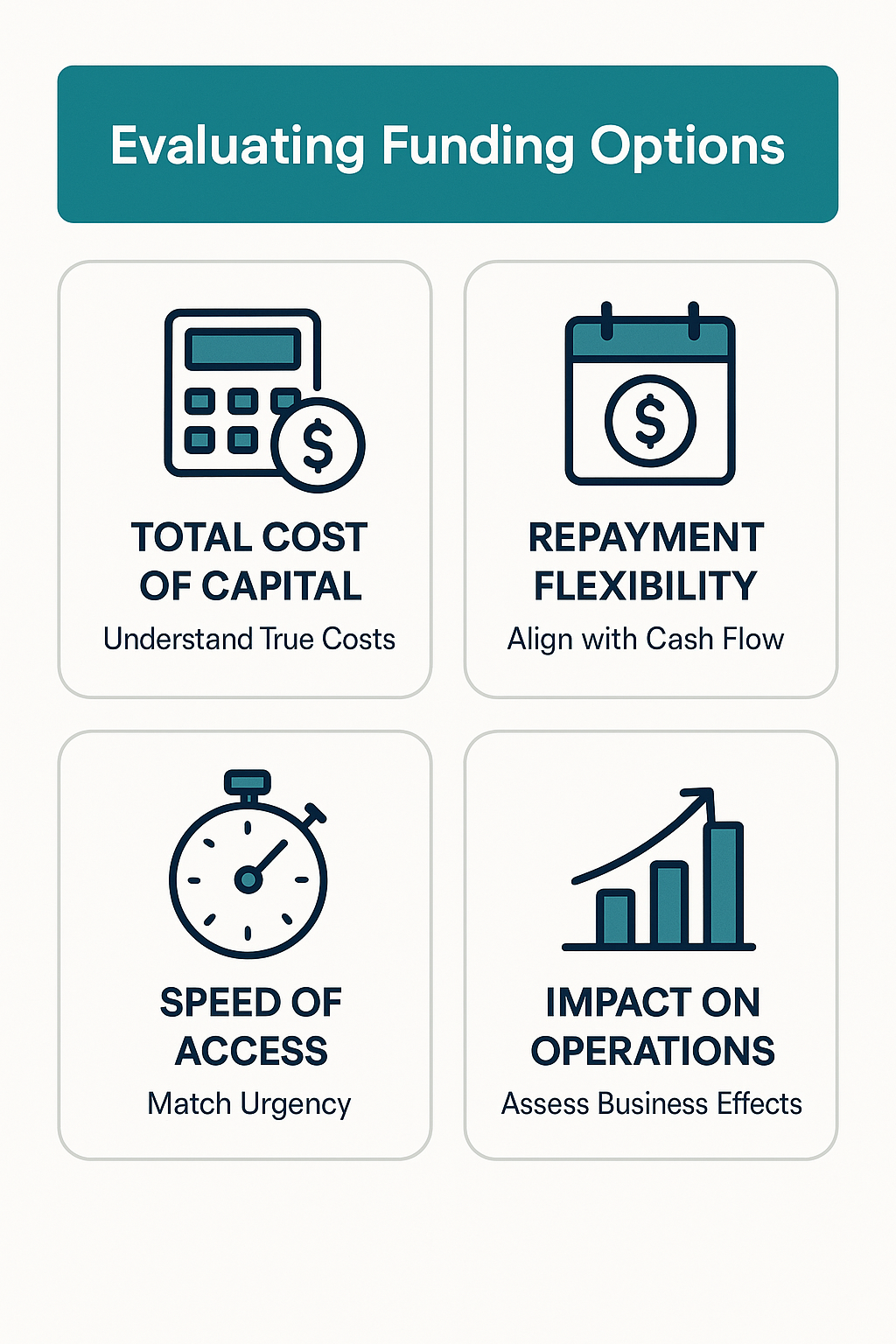
Key steps for evaluating funding options help ensure that real funding decisions and outcomes for small businesses align with strategic objectives. A systematic approach to comparison and selection can significantly improve your financing results.
- Calculate Total Cost of Capital: Look beyond interest rates to understand the true cost of financing, including fees, penalties, and opportunity costs. Compare the total expense across different options to make informed decisions.
- Assess Repayment Flexibility: Evaluate how each option's repayment structure aligns with your cash flow patterns and business operations. Some financing types offer more flexibility during slower periods than others.
- Review Speed of Access: Consider how quickly you need funds and match this with each option's typical approval and funding timeline. Emergency funding needs may require different solutions than planned growth investments.
- Analyze Impact on Business Operations: Understand how each financing option might affect your daily operations, customer relationships, and future borrowing capacity. Some agreements may include restrictions that could limit business flexibility.
Implementation and Execution Best Practices
Implementation and execution best practices ensure that your funding strategy translates into positive business outcomes. Proper execution steps can maximize the value of your chosen financing while minimizing potential risks.
- Create a Detailed Fund Deployment Plan: Develop a specific timeline and budget for how you'll use the capital, with clear milestones and success metrics. This planning helps ensure funds generate the expected return on investment.
- Monitor Cash Flow Impact Regularly: Track how the new financing affects your daily cash flow and adjust operations accordingly. Regular monitoring allows you to address issues before they become significant problems.
- Maintain Strong Lender Relationships: Keep open communication with your funding provider and provide updates on business performance. Strong relationships can lead to better terms on future financing and more flexible arrangements if challenges arise.
- Document Results and Lessons Learned: Keep detailed records of how the financing performed relative to expectations and what factors contributed to success or challenges. This documentation becomes valuable for future funding decisions.
Common Pitfalls to Avoid in Business Financing
Common pitfalls to avoid in business financing can save you from costly mistakes and help ensure better long-term results. Understanding these potential issues helps protect your business interests and improve your chances of success.
- Rushing Into Agreements Without Due Diligence: Take time to fully understand all terms and conditions before signing any financing agreement. Hasty decisions often lead to unfavorable terms that could impact your business for months or years.
- Ignoring Hidden Fees and Penalties: Carefully review all cost components, including origination fees, early payment penalties, and default charges. These additional costs can significantly increase the total expense of your financing.
- Borrowing More Than Necessary: Resist the temptation to take maximum available funding if you don't have a specific plan for the excess capital. Unnecessary financing creates additional costs without corresponding benefits.
- Failing to Plan for Repayment Challenges: Consider potential scenarios where cash flow might be affected and have contingency plans in place. Proactive planning helps prevent default situations that could harm your credit and business relationships.
Real funding decisions and outcomes for small businesses depend heavily on strategic thinking, thorough preparation, and careful execution. The landscape of business financing continues to evolve, with new regulations providing clearer guidelines while expanded programs create additional opportunities for growth-minded entrepreneurs.
Success in business financing isn't just about securing capital, it's about choosing the right type of funding at the right time and using it effectively to achieve your business objectives. By following systematic evaluation processes, understanding regulatory requirements, and implementing strong execution practices, you can significantly improve your financing outcomes.
Remember that building relationships with multiple funding sources and maintaining detailed records of your experiences creates a foundation for even better results in the future. The businesses that thrive are those that view financing as a strategic tool rather than a necessity, using each funding decision to build toward long-term success and sustainability.