.png)

Cash flow problems can cripple even the most successful medical practices. The top 10 cash flow issues facing medical clinics have become increasingly complex in 2026, with new regulations and evolving billing challenges creating additional financial strain. From billing delays that stretch collections to equipment costs that drain reserves, these issues require immediate attention and strategic planning.
Medical clinics today must navigate a challenging landscape where insurance lag times have extended and payroll stress affects daily operations. Understanding these critical cash flow challenges is the first step toward building a financially resilient practice that can weather industry uncertainties and continue providing quality patient care.
Revenue Cycle Management Problems
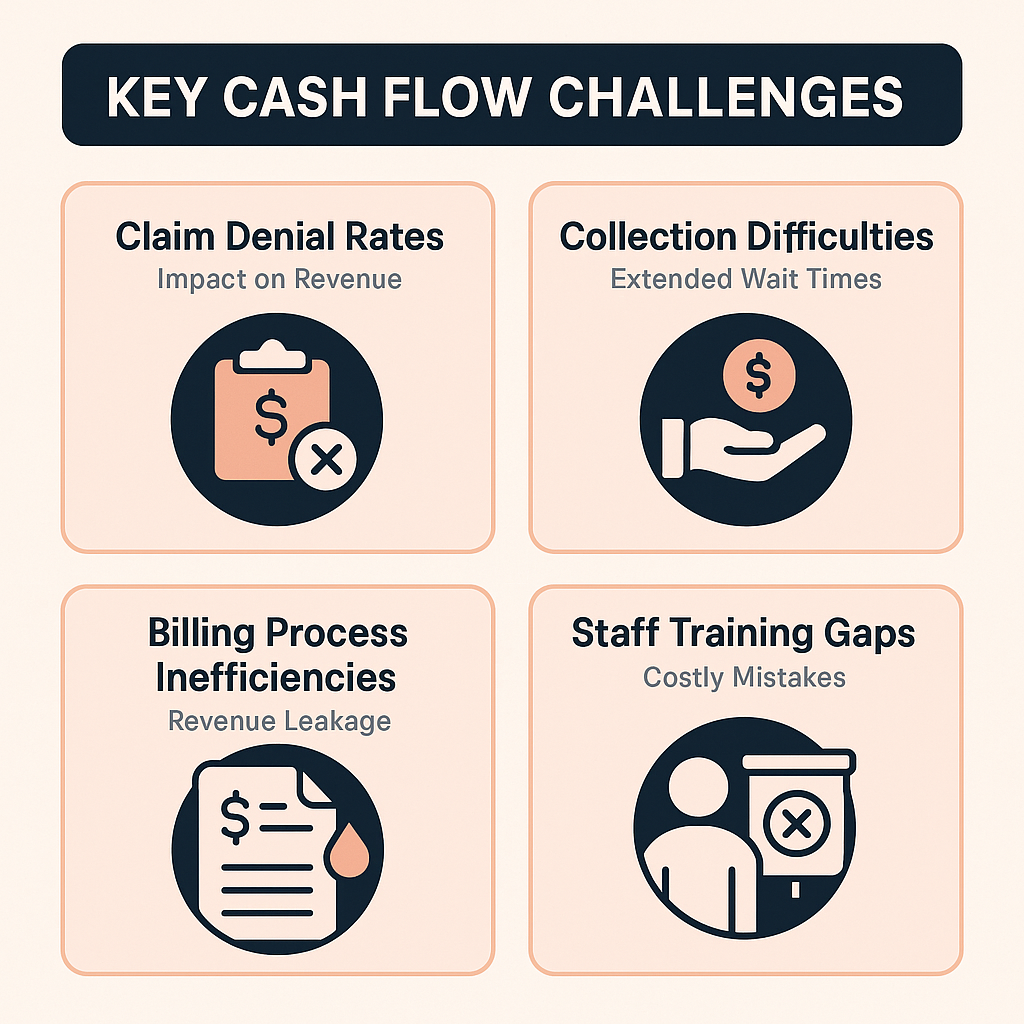
Revenue cycle management problems represent some of the most significant cash flow challenges medical clinics face today. These issues often create a domino effect that impacts every aspect of clinic operations and financial stability.
- Claim denial rates: Increased billing denials in 2026 have made it harder for clinics to predict revenue streams, with new regulations contributing to higher rejection rates that delay payments for weeks or months.
- Collection difficulties: Extended collection timeframes mean clinics wait longer for payments, creating gaps between service delivery and revenue receipt that strain operating budgets.
- Billing process inefficiencies: Manual billing processes often lead to errors and delays, while outdated systems may not align with current payer requirements, resulting in revenue leakage.
- Staff training gaps: Insufficient training on billing procedures and regulatory changes can lead to costly mistakes that impact cash flow and require additional resources to correct.
Insurance Reimbursement Delays
Insurance reimbursement delays continue to plague medical clinics, with insurance lag creating significant cash flow disruptions that affect daily operations and long-term planning capabilities.
- Extended processing times: Insurance companies may take 30 to 90 days or longer to process claims, leaving clinics to cover operational expenses without incoming revenue during these waiting periods.
- Prior authorization requirements: Complex prior authorization processes can delay treatments and subsequent billing, creating uncertainty about when payments will arrive and complicating financial forecasting.
- Documentation requests: Additional documentation requirements from insurers can extend the reimbursement timeline, requiring staff time and resources that could be used for revenue-generating activities.
- Payer policy changes: Frequent changes in insurance policies and coverage requirements can lead to unexpected denials and delays, making it difficult to predict cash flow patterns.
Equipment Financing Challenges
Equipment costs represent a major cash flow challenge for medical clinics, as essential medical technology requires significant upfront investment while generating returns over extended periods.
- High upfront costs: Medical equipment often requires substantial initial investment that can drain cash reserves and limit available working capital for other operational needs.
- Technology obsolescence: Rapid advancement in medical technology means equipment may need replacement sooner than expected, creating ongoing financial pressure and cash flow strain.
- Maintenance expenses: Ongoing maintenance costs for sophisticated medical equipment can create unexpected cash flow demands that weren't anticipated in initial budgeting processes.
- Financing terms: Equipment financing arrangements may include terms that don't align with clinic cash flow patterns, creating payment obligations during periods of lower revenue.
Staffing and Payroll Management
Staffing and payroll management issues create immediate cash flow pressures that medical clinics must address to maintain operations. Payroll stress affects not only financial stability but also staff retention and patient care quality.
- Competitive salary demands: Healthcare professionals command higher salaries in today's market, increasing fixed costs that must be paid regardless of revenue fluctuations or collection delays.
- Benefits and insurance costs: Rising healthcare and benefits costs add to payroll expenses, creating additional fixed obligations that strain cash flow during slower revenue periods.
- Overtime and coverage needs: Unexpected staffing shortages or patient volume increases can lead to overtime expenses that weren't budgeted, creating cash flow surprises.
- Training and onboarding expenses: Staff turnover requires investment in training and onboarding new employees, creating costs that impact cash flow before new staff become fully productive.
Regulatory Compliance Costs
Regulatory compliance costs have increased significantly with new requirements, creating ongoing cash flow challenges that medical clinics must factor into their financial planning and operational budgets.
- Documentation requirements: New regulations often require additional documentation and reporting, necessitating staff time and potentially new systems that represent significant cash investments.
- Training and education: Staying compliant with evolving regulations requires ongoing staff education and training programs, creating recurring expenses that impact available cash flow.
- System upgrades: Compliance often requires technology upgrades or new software implementations, creating substantial upfront costs that must be managed alongside other operational expenses.
- Audit preparation: Maintaining audit readiness requires ongoing investment in documentation systems and staff preparation, creating costs that may not generate direct revenue but are essential for operations.
- Penalty avoidance: Non-compliance can result in costly penalties and fines, making investment in compliance systems a necessary expense to protect long-term cash flow stability.
The top 10 cash flow issues facing medical clinics require proactive management and strategic planning to overcome. From billing delays and insurance lag to equipment costs and payroll stress, these challenges demand comprehensive solutions that address both immediate needs and long-term sustainability.
Medical clinics that invest in modern billing solutions, automation technologies, and efficient revenue cycle management can better navigate these cash flow challenges. By understanding these critical issues and implementing targeted strategies, clinics can build financial resilience and maintain their ability to provide quality patient care.
Success in managing cash flow issues often depends on having access to flexible financing solutions when operational gaps occur. Consider exploring funding options that can help bridge cash flow gaps while you implement long-term improvements to your clinic's financial processes.