
.png)

Running a retail business means juggling countless moving pieces, but nothing quite compares to the stress of funding challenges. The top 5 funding challenges retail stores face today have intensified due to economic pressures, high interest rates, and supply chain disruptions. From managing inventory costs to surviving seasonal dips, these obstacles can make or break your business if not addressed properly.
Understanding these challenges isn't just about survival, it's about positioning your store for sustainable growth. Recent industry reports show that small businesses are under increasing pressure to secure capital while navigating a complex lending environment. Let's dive into the specific hurdles you might be facing and explore practical solutions to overcome them.
Essential Do's for Managing Retail Funding Challenges
When dealing with funding challenges, smart retailers focus on proactive strategies that strengthen their financial position. These essential do's can help you navigate the complex landscape of retail financing more effectively.
- Diversify your funding sources to reduce dependency on traditional financing and create multiple backup options for cash flow needs
- Implement cash flow forecasting using historical data and seasonal patterns to predict financial needs months in advance
- Build strong supplier relationships through consistent communication and payment history to negotiate better terms during tight periods
- Maintain detailed financial records that clearly demonstrate your business performance to potential lenders and investors
- Create emergency cash reserves during profitable periods to cushion against unexpected downturns or opportunities
Critical Don'ts That Worsen Funding Problems
Avoiding common mistakes is just as important as implementing good practices. These don'ts can save you from deepening your funding challenges and putting your retail business at greater risk.
- Don't ignore seasonal patterns when planning inventory purchases or cash flow, as this often leads to unnecessary financial strain
- Don't rely solely on one funding source because market conditions can change rapidly and limit your access to capital
- Don't postpone addressing cash flow issues until they become critical, as early intervention typically offers more solution options
- Don't overstock during uncertain periods without considering the carrying costs and potential for dead inventory tying up capital
- Don't neglect cybersecurity measures that could lead to costly breaches and additional financial strain on your business
Understanding Inventory Cost Pressures
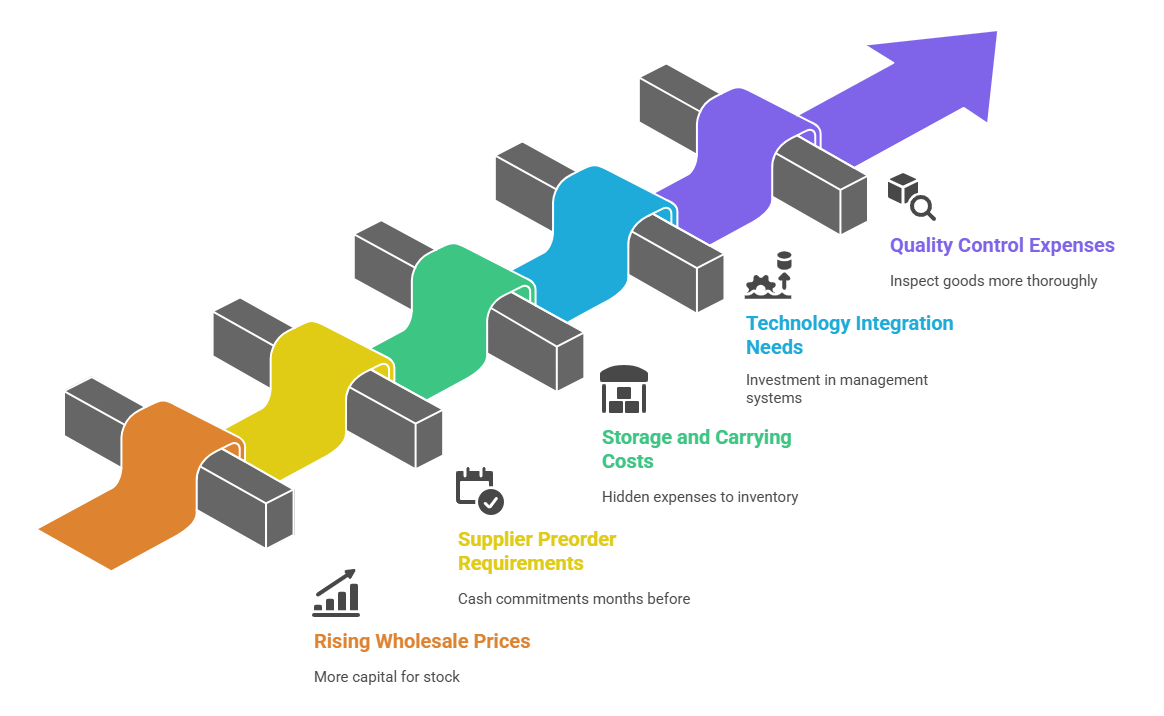
Inventory cost pressures represent one of the most significant funding challenges retail stores face today. Managing these inventory costs requires careful planning and strategic decision-making to maintain healthy cash flow.
- Rising wholesale prices have increased the capital required to maintain adequate stock levels, forcing retailers to invest more upfront for the same inventory volume
- Supplier preorder requirements often demand significant cash commitments months before products arrive, creating cash flow gaps that strain operating budgets
- Storage and carrying costs continue climbing with warehouse rent increases and insurance premiums, adding hidden expenses to inventory management
- Technology integration needs require additional investment in inventory management systems to track costs and optimize stock levels effectively
- Quality control expenses have grown as retailers face pressure to inspect goods more thoroughly before accepting shipments from suppliers
Navigating Seasonal Sales Fluctuations
Seasonal dips create predictable yet challenging funding obstacles that can severely impact cash flow if not managed properly. Smart retailers develop strategies to smooth out these inevitable ups and downs.
- Pre-season cash planning involves calculating the exact funding needed to survive slow periods while maintaining essential operations and staff
- Inventory timing optimization requires balancing stock purchases with expected demand patterns to avoid overcommitting capital during low-sales periods
- Alternative revenue streams may include online sales channels, special events, or complementary services that generate income during traditional slow seasons
- Flexible staffing models help control labor costs during seasonal fluctuations while ensuring adequate coverage when business picks up again
- Strategic marketing investments during slower periods can build customer loyalty and drive off-season sales when competition for attention is lower
Addressing Operating Expense Pressures
Operating expense pressures have intensified for retail stores as costs rise across multiple categories. These ongoing expenses create continuous demand for funding and require careful management to maintain profitability.
- Rising rent and utilities consume larger portions of revenue, requiring retailers to optimize space usage and negotiate favorable lease terms whenever possible
- Labor cost increases from minimum wage adjustments and competitive hiring markets force businesses to budget more for staffing expenses
- Insurance premium growth affects both liability and property coverage, adding significant recurring costs that must be factored into cash flow pressures
- Technology and software subscriptions have become essential but costly, requiring investment in point-of-sale systems, inventory management, and security solutions
- Marketing and advertising expenses continue growing as digital channels become more competitive and customer acquisition costs rise across platforms
The top 5 funding challenges retail stores face today require proactive planning and strategic thinking to overcome successfully. From inventory cost pressures to seasonal fluctuations, these obstacles are manageable with the right approach and preparation.
Remember that addressing these challenges early typically provides more options and better outcomes than waiting until problems become critical. Consider exploring alternative financing options that align with your cash flow patterns, such as revenue-based funding that adjusts to your seasonal business cycles.
Your retail business doesn't have to struggle alone with these funding challenges. By implementing the strategies we've discussed and staying informed about market conditions, you can build a more resilient operation that thrives regardless of economic pressures. Take action today to strengthen your financial position and secure your store's future success.