.png)

Understanding what is working capital can make or break your business's financial health. In today's competitive marketplace, small business owners need to grasp this fundamental concept to maintain smooth operations and prepare for growth opportunities. Working capital represents the lifeblood of your business operations, determining whether you can cover day-to-day expenses, handle unexpected costs, or seize new opportunities when they arise.
This financial metric might seem complex at first, but it's actually quite straightforward once you understand the basics. By the end of this guide, you'll have a clear picture of how working capital affects your business and why it deserves your attention.
Understanding Working Capital Fundamentals
Understanding working capital fundamentals starts with recognizing its role in your business operations. Working capital represents the liquidity available for your company's short-term expenses and obligations, acting as a financial cushion that keeps your business running smoothly.
- Working capital measures your ability to pay short-term debts and cover operational expenses
- It reflects the difference between current assets and current liabilities on your balance sheet
- Positive working capital indicates financial stability and operational flexibility
- Cash availability through working capital helps prevent business disruptions during challenging periods
Key Components of Cash Availability
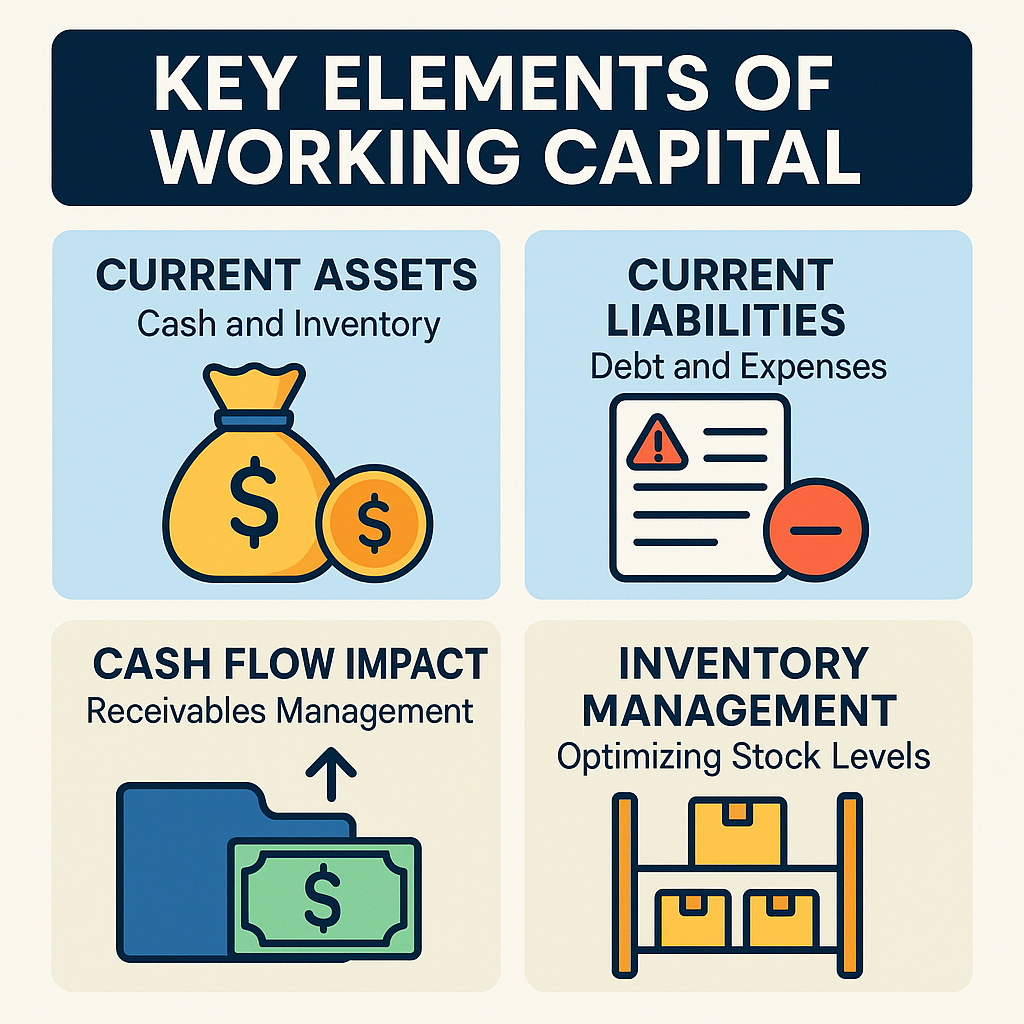
Key components of cash availability form the foundation of your working capital calculation. These elements work together to determine your business's liquidity definition and financial flexibility for meeting immediate obligations.
- Current assets include cash, inventory, accounts receivable, and short-term investments
- Current liabilities encompass accounts payable, short-term debt, and accrued expenses
- Inventory levels directly impact how much capital is tied up in goods awaiting sale
- Accounts receivable represents money owed to your business that affects immediate cash flow
- Payment terms with suppliers influence your liability timeline and cash management needs
Managing Short-Term Needs Effectively
Managing short-term needs effectively requires a strategic approach to working capital that aligns with your business operations. Proper management helps ensure you can cover unexpected expenses and maintain operational continuity.
- Monitor cash flow patterns to anticipate periods when working capital may be strained
- Establish relationships with suppliers that offer favorable payment terms
- Implement efficient inventory management to avoid tying up excessive capital in stock
- Set up systems to collect receivables promptly and reduce outstanding payment periods
Steps to Calculate Your Working Capital
Steps to calculate your working capital involve a straightforward process that provides insight into your business's financial health. This calculation helps you understand your liquidity position and make informed decisions about business operations.
- Identify all current assets including cash, accounts receivable, inventory, and short-term investments
- List all current liabilities such as accounts payable, short-term debt, and accrued expenses
- Subtract total current liabilities from total current assets to determine your working capital
- Analyze the result to understand whether your business has sufficient liquidity for short-term needs
Strategies for Optimizing Business Operations
Strategies for optimizing business operations through working capital management can significantly improve your company's financial performance. These approaches help maintain healthy cash availability while supporting growth initiatives.
- Negotiate extended payment terms with suppliers to improve cash flow timing
- Offer early payment discounts to customers to accelerate accounts receivable collection
- Implement inventory management systems to reduce excess stock and free up capital
- Consider financing options that align with your working capital needs and business cycle
- Review and adjust credit policies to balance sales growth with collection efficiency
Working Capital's Impact on Growth
Working capital's impact on growth extends far beyond basic liquidity management. When you maintain positive working capital, your business gains the financial flexibility to pursue expansion opportunities without relying heavily on external funding sources. This internal resource capacity allows you to respond quickly to market changes, invest in new inventory for seasonal demands, or take advantage of bulk purchasing discounts that improve your profit margins. Effective working capital management also strengthens your position when negotiating with suppliers and customers, as it demonstrates financial stability and operational competence.
Understanding what is working capital empowers you to make better financial decisions for your business. This fundamental concept affects everything from daily operations to long-term growth strategies, making it essential knowledge for any business owner.
Remember that working capital management isn't a one-time task but an ongoing process that requires regular attention. By monitoring your cash availability, managing short-term needs effectively, and optimizing your business operations, you'll build a stronger foundation for sustainable growth.
Take time to calculate your current working capital position and identify areas where you can improve efficiency. Whether you need to adjust payment terms, optimize inventory levels, or explore financing options, understanding your working capital gives you the insights needed to make informed decisions that support your business's success.