
.png)

Running a business without understanding your cash flow is like driving blindfolded. You might get somewhere, but you're likely to crash along the way. Knowing when to use a cash flow planner can mean the difference between thriving and merely surviving in today's competitive market.
Cash flow planning isn't just for struggling businesses. Smart entrepreneurs use these tools during specific situations to maintain control, prepare for opportunities, and navigate challenges. Whether you're dealing with seasonal fluctuations, planning expansion, or preparing for funding, the right timing for cash flow planning could transform your business trajectory.
Let's explore the key situations where implementing a cash flow planner becomes not just helpful, but essential for your business success.
Essential Cash Flow Planning Tips for New Business Owners
Essential cash flow planning tips can help new entrepreneurs avoid common financial pitfalls that derail promising businesses. Starting a business without proper cash flow planning often leads to unexpected shortfalls and missed opportunities.
- Start planning before you launch: Begin your cash flow projections during the business planning phase. This helps you understand how much capital you'll actually need and when you might expect to break even.
- Track both incoming and outgoing funds: Monitor not just when money arrives, but when bills are due. Many new businesses fail because they don't account for the timing gap between sales and collections.
- Build in buffer time: Customers may pay late, and unexpected expenses always pop up. Adding 20-30% cushion to your projections helps you stay prepared for reality's curveballs.
Smart Budgeting Strategies During Slow Seasons
Smart budgeting strategies during slow seasons help businesses maintain stability when revenue naturally dips. Many businesses experience predictable quiet periods, and preparing for these can prevent cash flow crises.
- Map your seasonal patterns: Look at historical data to identify when your business typically experiences slower periods. Understanding these cycles helps you plan ahead rather than react in panic.
- Create a seasonal reserve fund: During busy periods, set aside money specifically for slow seasons. This reserve acts as a financial bridge to carry you through lower revenue months.
- Adjust expenses proactively: Reduce variable costs during slow periods while maintaining essential operations. This might mean temporarily cutting back on marketing spend or delaying non-critical purchases.
Key Planning Tips for Business Expansion
Key planning tips for business expansion ensure you don't outgrow your cash flow capacity. Growth requires investment, and poorly timed expansion can strain even profitable businesses.
- Calculate expansion costs thoroughly: Include not just obvious expenses like equipment or rent, but also increased inventory, additional staff, and higher operating costs. Many businesses underestimate the true cost of growth.
- Project increased working capital needs: Growing sales often mean you'll need more money tied up in accounts receivable and inventory. Plan for this increased working capital requirement before you start expanding.
- Time your expansion carefully: Launch growth initiatives when your existing cash flow is strong and stable. Expanding during already tight periods can create dangerous financial pressure.
Steps to Achieve Optimal Funding Readiness
Steps to achieve optimal funding readiness position your business to secure financing when opportunities arise. Lenders and investors want to see that you understand your financial situation and have realistic projections.
- Organize historical financial data: Gather at least 12-24 months of bank statements, profit and loss statements, and cash flow records. This historical data forms the foundation of credible future projections.
- Create detailed forward-looking projections: Develop realistic 12-18 month cash flow forecasts that show how you'll use funding and when you'll be able to repay it. Include best-case, worst-case, and most likely scenarios.
- Identify specific funding needs: Clearly articulate how much money you need, when you need it, and exactly how it will be used. Vague funding requests rarely succeed.
- Demonstrate repayment capacity: Show how your projected cash flows will support debt service or provide returns to investors. This reassures funders that you can meet your obligations.
Methods to Identify Your Specific Budgeting Needs
Methods to identify your specific budgeting needs help you customize cash flow planning to your unique business situation. Not every business has the same financial challenges or opportunities.
- Analyze your business model: Different business models have different cash flow patterns. Service businesses typically have faster collections than manufacturers, while retail businesses deal with inventory cycles.
- Review your payment terms: Examine how quickly customers pay and when you must pay suppliers. The gap between these creates your working capital needs.
- Assess seasonal variations: Some businesses are steady year-round, while others experience dramatic seasonal swings. Understanding your pattern helps you plan accordingly.
- Evaluate growth stage requirements: Startup businesses need different cash flow planning than established companies. Growing businesses have different needs than stable ones.
- Consider industry-specific factors: Different industries have unique cash flow characteristics, from construction's project-based income to restaurants' daily cash cycles.
Warning Signs That Indicate Immediate Planning Needs
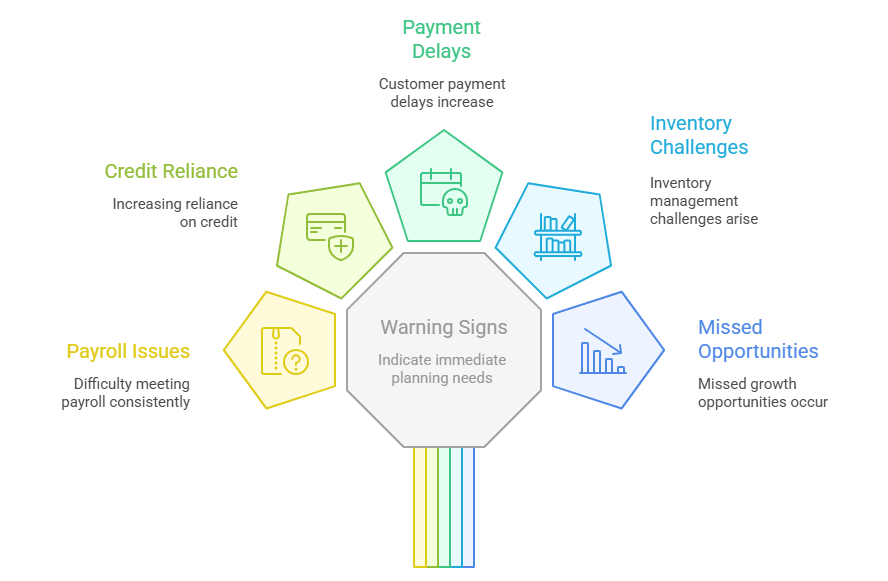
Warning signs that indicate immediate planning needs can help you recognize when cash flow planning becomes urgent rather than optional. Catching these signals early may prevent serious financial problems.
- Difficulty meeting payroll consistently: If you're struggling to pay employees on time or considering delaying payroll, immediate cash flow planning is critical to avoid bigger problems.
- Increasing reliance on credit: Using credit cards or lines of credit more frequently to cover basic operating expenses signals that your cash flow needs attention.
- Customer payment delays: When clients start paying slower or requesting extended terms, your cash flow timing changes and needs replanning.
- Inventory management challenges: Running out of popular items or carrying too much slow-moving inventory both indicate cash flow planning gaps that need addressing.
- Missed growth opportunities: Turning down profitable projects because you lack working capital suggests your cash flow planning isn't supporting your business potential.
Understanding when to use a cash flow planner isn't just about avoiding problems, it's about positioning your business for success. Whether you're preparing for seasonal changes, planning expansion, or getting ready to seek funding, proper cash flow planning provides the foundation for confident business decisions.
The key is recognizing that cash flow planning isn't a one-time activity. Your business needs change as you grow, face challenges, and pursue opportunities. Regular cash flow planning helps you stay ahead of these changes rather than constantly reacting to them.
Don't wait for cash flow problems to force your hand. Start planning now, during the good times, so you're prepared for whatever comes next. Your future self will thank you for the preparation.