
.png)

Growing your business takes more than just a great idea and determination. It requires careful financial planning and adequate working capital requirements for expansion projects. Whether you're planning to hire new staff, increase inventory, or boost your marketing efforts, understanding these capital needs can make the difference between successful growth and financial strain.
Recent data shows promising trends in small business funding, with lending increasing by 7.5% in 2025. This uptick in available capital creates new opportunities for merchants ready to scale their operations. However, knowing what funding you need and where to find it remains crucial for sustainable expansion.
Key Working Capital Components for Business Growth

Working capital components for business growth typically fall into several critical categories that every expanding business must consider. Understanding these components helps you plan more effectively and avoid cash flow shortages during crucial growth phases.
- Staff expansion costs: New hires require immediate payroll expenses, benefits, training costs, and equipment purchases before they generate revenue
- Inventory scaling: Growing businesses often need to stock more products or raw materials to meet increased demand and avoid stockouts
- Marketing investment: Expansion usually requires additional marketing spend to reach new customers and support increased sales targets
- Operational overhead: Larger spaces, additional utilities, insurance, and administrative costs that come with business expansion
- Technology upgrades: Systems, software, and equipment needed to handle increased volume and complexity
Strategic Funding Options for Expansion Projects
Strategic funding options for expansion projects have become more accessible as lending markets show improvement. The recent 6.4% month-over-month increase in small business lending suggests that merchants have better access to capital than in previous periods.
- SBA programs: The 7(a) Working Capital pilot offers flexible credit lines up to $5 million, particularly targeting inventory and supply chain needs
- Traditional bank financing: May provide competitive rates for established businesses with strong credit histories and solid financial records
- Alternative lending solutions: Often faster approval processes and more flexible requirements, suitable for businesses that need quick access to working capital
- Revenue-based financing: Allows businesses to receive funding based on future sales projections, with repayment tied to actual revenue performance
Managing Cash Flow During Expansion Phases
Managing cash flow during expansion phases requires careful attention to timing and strategic planning. Many businesses underestimate the time lag between investing in growth and seeing returns from that investment.
- Monitor accounts receivable: Faster collection of outstanding invoices improves cash flow and reduces the need for external financing
- Optimize inventory turnover: Better inventory management prevents tying up too much capital in slow-moving stock during growth periods
- Negotiate supplier terms: Extended payment terms with suppliers can help bridge the gap between expansion investments and revenue increases
- Plan for seasonal variations: Account for natural business cycles when projecting cash flow needs during expansion phases
Calculating Your Expansion Capital Needs
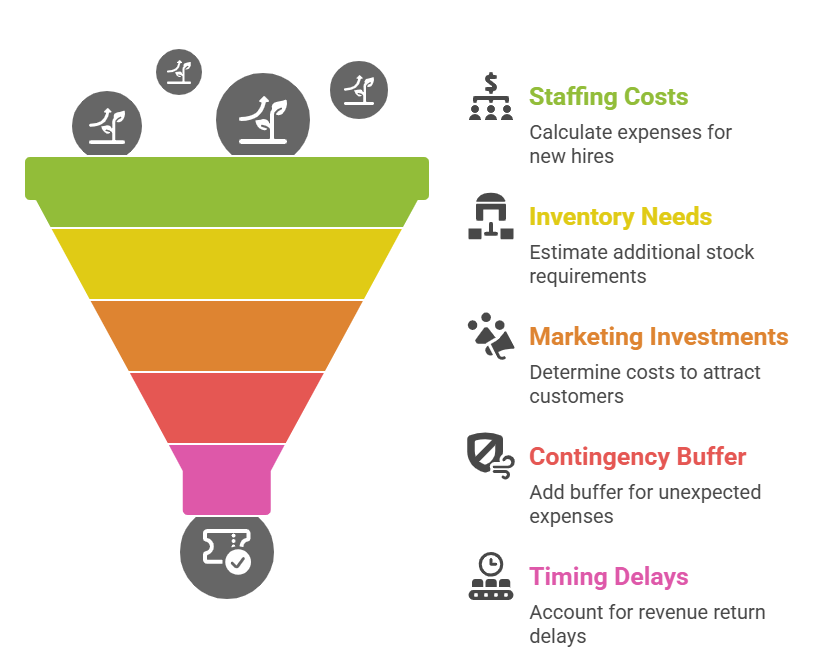
Calculating your expansion capital needs involves a systematic approach to estimating costs across all areas of growth. This step-by-step process helps ensure you secure adequate funding without borrowing more than necessary.
- Assess staffing requirements: Calculate salary, benefits, training, and equipment costs for each new hire, including the time it takes for them to become productive
- Project inventory increases: Estimate additional stock needs based on sales projections and seasonal demand patterns in your industry
- Budget marketing investments: Determine marketing costs needed to attract customers for your expanded capacity and reach new market segments
- Include contingency planning: Add 15-20% buffer for unexpected costs that commonly arise during expansion projects
- Factor in timing delays: Account for the period between making investments and seeing revenue returns from expansion efforts
Optimizing Working Capital for Sustainable Growth
Optimizing working capital for sustainable growth means implementing strategies that improve your financial flexibility while supporting expansion goals. The key is finding the right balance between growth investments and maintaining healthy cash flow.
- Implement efficient billing processes: Faster invoicing and collection procedures reduce the time between delivering services and receiving payment
- Negotiate favorable payment terms: Work with suppliers to extend payment periods while offering customers incentives for early payment
- Use technology for forecasting: Better financial planning tools help predict cash flow needs and prevent funding shortfalls during critical growth phases
- Monitor key financial ratios: Track metrics like current ratio and quick ratio to ensure your working capital requirements remain adequate throughout expansion
- Build relationships with multiple funding sources: Having various financing options available provides flexibility when expansion opportunities arise
Successfully managing working capital requirements for expansion projects requires careful planning, realistic projections, and access to appropriate funding sources. With lending trends showing improvement and programs like SBA 7(a) offering flexible options, businesses have more opportunities than ever to secure the capital needed for growth.
The key to successful expansion lies in understanding your specific needs for new hires, inventory, and marketing costs, then matching those requirements with the right financing solutions. By taking a strategic approach to working capital management and maintaining strong relationships with funding partners, your business can navigate expansion challenges and achieve sustainable growth.
Remember that expansion is a marathon, not a sprint. Focus on building solid financial foundations that support long-term success rather than just immediate growth targets.