
.png)

Calculating Cash Flow for Beauty Salons: A Complete Guide
Running a successful beauty salon requires more than just skilled stylists and quality products. Understanding your financial health through proper cash flow management can make the difference between thriving and barely surviving. Calculating cash flow for beauty salons involves tracking multiple revenue streams, managing irregular stylist payments, and navigating seasonal business cycles that affect most service-based businesses.
Beauty salons face unique financial challenges that traditional businesses might not encounter. From commission-based stylist payments to fluctuating appointment schedules, salon owners must develop a keen understanding of money flowing in and out of their business. This comprehensive approach helps identify potential cash shortages before they become critical problems.
Common Cash Flow Questions for Salon Owners
Many salon owners share similar concerns about managing their financial operations effectively. Understanding these common questions can help you identify areas that might need attention in your own business.
Q: How often should I calculate my salon's cash flow?
Most financial experts recommend reviewing cash flow weekly for service-based businesses like salons. This frequency allows you to spot trends early and make adjustments before small issues become major problems. Weekly reviews also help you prepare for upcoming expenses like rent cycles and stylist payments.
Q: What's the biggest cash flow mistake salon owners make?
The most common error is treating busy periods as permanent income levels. Salons often experience seasonal fluctuations, and failing to save during peak times can create serious cash shortages during slower months.
Essential Components of Salon Cash Flow Tracking
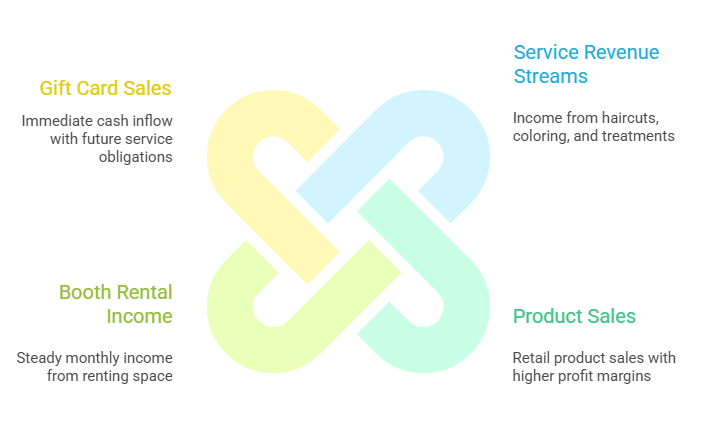
Effective cash flow tracking for beauty salons requires monitoring specific components that directly impact your business operations. These elements form the foundation of your financial health assessment.
- Service Revenue Streams: Track income from haircuts, coloring, treatments, and specialty services separately to identify your most profitable offerings
- Product Sales: Monitor retail product sales, which often provide higher profit margins than services and can smooth out cash flow variations
- Booth Rental Income: If you rent space to independent stylists, this provides steady monthly income that helps stabilize cash flow
- Gift Card Sales: These create immediate cash inflow but represent future service obligations that affect long-term planning
Managing Stylist Payments and Commission Structures
Stylist payments represent one of the most complex aspects of salon cash flow management. These payments often follow irregular patterns that can create unexpected cash outflows if not properly planned.
- Commission Timing: Establish consistent pay periods to predict when large commission payments will impact your cash position
- Performance Variations: Account for fluctuations in individual stylist performance, as high-performing months can create unexpectedly large commission expenses
- New Stylist Onboarding: Factor in the cash flow impact of training periods when new stylists generate lower revenue while still requiring full support
- Vacation and Sick Time: Plan for periods when key revenue-generating stylists are unavailable, which can significantly reduce incoming cash
Understanding Rent Cycles and Fixed Expenses
Rent cycles and other fixed expenses create predictable but substantial cash outflows that require careful planning. Beauty salons typically face higher rent costs due to location requirements in high-traffic areas.
- Monthly Rent Obligations: Prime locations often demand premium rents, making this your largest fixed expense that must be planned for regardless of revenue fluctuations
- Utility Variations: Hair dryers, styling tools, and climate control can cause significant seasonal variations in utility costs
- Insurance Premiums: Professional liability and property insurance often require quarterly or annual payments that can strain monthly cash flow
- Equipment Financing: Styling chairs, washbasins, and professional tools typically require financing payments that add to your fixed monthly obligations
Step-by-Step Cash Flow Calculation Process
Following a systematic approach to calculating cash flow for beauty salons ensures you capture all relevant financial movements and can make informed business decisions.
- Collect All Revenue Sources: Gather data from your point-of-sale system, cash payments, gift card sales, and any additional income streams like product sales or booth rentals
- Calculate Total Weekly Income: Sum all revenue sources for each week, as this timeframe typically aligns with salon appointment cycles and provides meaningful data points
- List All Expenses: Document fixed costs like rent and utilities, variable costs like stylist payments and supplies, and irregular expenses such as equipment maintenance
- Apply the Cash Flow Formula: Subtract total expenses from total income to determine your net cash flow, then analyze trends over multiple weeks to identify patterns
- Project Future Periods: Use historical data to forecast upcoming cash needs, especially during known slow periods or before major expenses like rent cycles
Tools and Systems for Effective Monitoring
Modern salon management requires efficient systems that can handle the complexity of multiple revenue streams and variable expenses. The right tools can transform time-consuming manual calculations into streamlined processes.
- Integrated POS Systems: Choose point-of-sale software that tracks services, products, and stylist performance while automatically categorizing different types of income
- Accounting Software Integration: Connect your sales data with accounting platforms that can automatically generate cash flow reports and identify trends
- Mobile Monitoring Apps: Use smartphone apps that allow you to check key financial metrics throughout the day, helping you make real-time business decisions
- Automated Reporting Features: Set up systems that generate weekly cash flow summaries, reducing the time needed for manual calculations and improving accuracy
- Cloud-Based Backup Systems: Ensure all financial data is securely stored and accessible from multiple locations, protecting against data loss that could disrupt your monitoring efforts
Successfully calculating cash flow for beauty salons requires understanding the unique challenges of the service industry, from managing irregular stylist payments to navigating seasonal fluctuations. By implementing systematic tracking methods and using appropriate tools, salon owners can gain better control over their financial health.
The key to long-term success lies in developing consistent habits around cash flow monitoring. Weekly reviews, careful attention to rent cycles, and proactive planning for slow periods can help your salon maintain financial stability even during challenging times.
Remember that cash flow management is an ongoing process, not a one-time calculation. As your salon grows and evolves, your monitoring methods should adapt to reflect new challenges and opportunities in your business.