
.png)
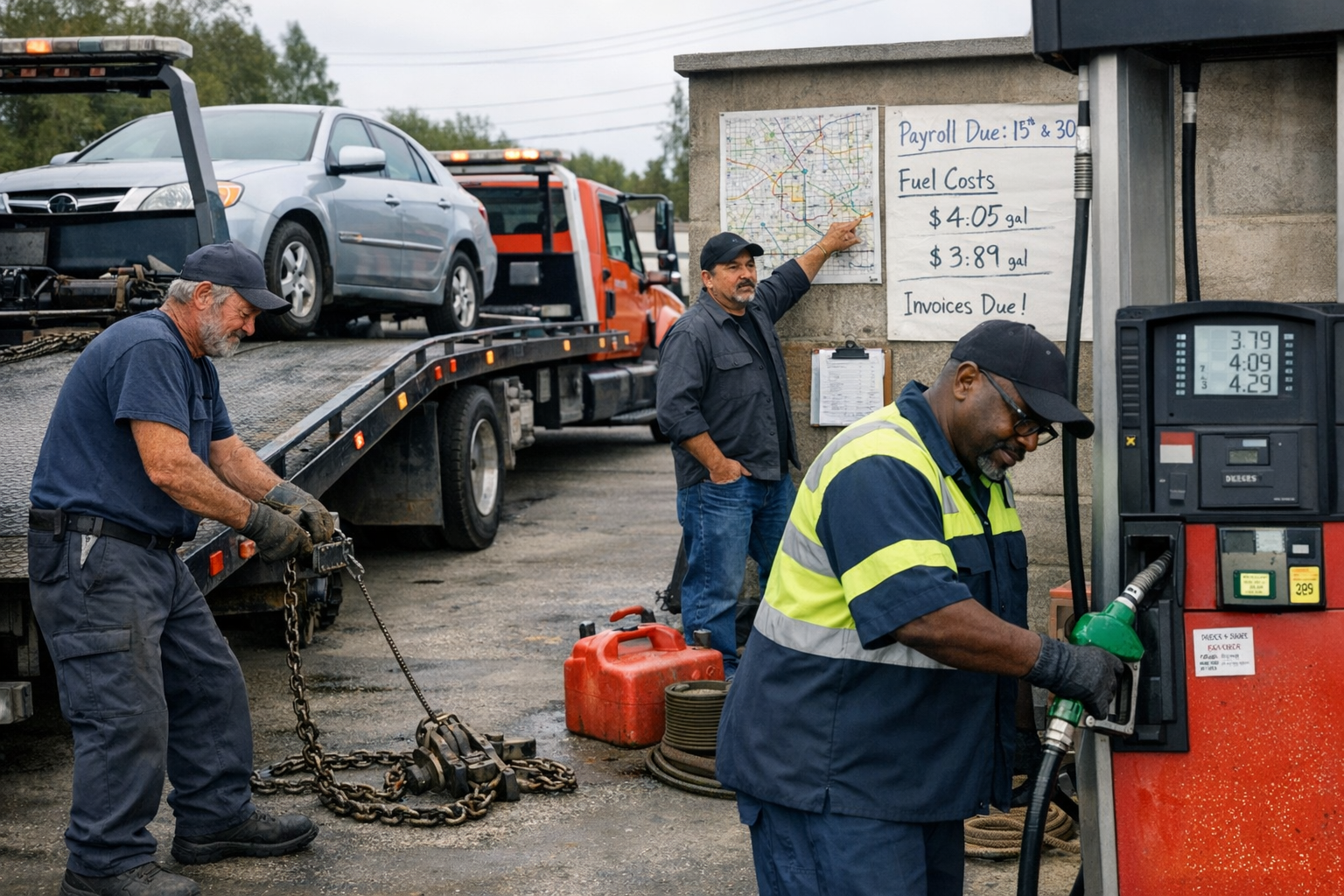
Running a successful towing operation requires more than just reliable trucks and skilled drivers. Cash flow forecasting for towing companies has become a critical practice that can make or break your business in today's competitive landscape. With fluctuating fuel prices, unpredictable route demand, and variable payroll expenses, towing operators need robust financial planning to stay profitable.
Unlike traditional businesses with steady revenue streams, towing companies face unique challenges. Emergency calls might surge during severe weather, while routine services could drop during economic downturns. This volatility makes accurate cash flow prediction essential for maintaining operations and planning growth.
Key Components of Towing Company Cash Flow
Understanding the key components of towing company cash flow is fundamental to creating accurate forecasts. These elements directly impact your financial stability and operational capacity.
- Revenue timing variations: Emergency towing calls generate immediate income, while insurance claims might take weeks to process, creating significant gaps in cash availability
- Seasonal demand fluctuations: Winter weather typically increases accident-related calls, while summer construction projects may boost commercial towing requests
- Equipment maintenance costs: Regular truck servicing, tire replacements, and unexpected repairs can create substantial unplanned expenses that affect monthly cash flow
- Insurance and licensing fees: Annual renewals for commercial vehicle insurance and operating permits require large lump-sum payments that must be anticipated
Managing Fuel Cost Variations
Fuel cost management represents one of the most volatile aspects of cash flow forecasting for towing companies. These expenses can fluctuate dramatically and directly impact your bottom line.
- Price tracking systems: Monitor local fuel prices weekly and establish relationships with fuel suppliers who offer commercial discounts or volume pricing
- Route optimization strategies: Use GPS routing software to minimize unnecessary mileage and reduce fuel consumption during both emergency and scheduled calls
- Fuel budget allocation: Reserve 15-20% of gross revenue specifically for fuel costs, adjusting this percentage based on seasonal demand patterns
- Alternative fuel considerations: Evaluate hybrid or alternative fuel vehicles for specific routes to reduce long-term fuel dependency
Route Demand Forecasting Strategies

Predicting route demand helps towing companies allocate resources effectively and maintain consistent cash flow throughout different periods.
- Historical data analysis: Review past three years of service calls to identify patterns in different neighborhoods, times of day, and seasonal trends
- Geographic service mapping: Focus on high-demand corridors near major highways, shopping centers, and residential areas with older vehicle populations
- Weather correlation tracking: Document how different weather conditions affect call volume to better predict busy periods and staffing needs
- Partnership development: Establish contracts with auto repair shops, dealerships, and insurance companies to create predictable revenue streams
Payroll Planning and Workforce Management
Effective payroll management ensures you can maintain adequate staffing while controlling labor costs during slow periods.
- Develop flexible scheduling systems that allow you to adjust driver hours based on anticipated call volume, using part-time drivers during peak periods
- Create performance-based compensation models that reward drivers for efficiency and customer service while managing fixed payroll expenses
- Establish emergency staffing protocols for severe weather events or major accidents that require additional drivers on short notice
- Plan for seasonal payroll adjustments by setting aside funds during busy months to cover slower periods without reducing staff
Technology Tools for Financial Tracking
Modern towing companies can leverage technology to improve their cash flow forecasting accuracy and operational efficiency.
- Implement dispatch management software that tracks job completion times, mileage, and revenue per call to identify profitable service areas
- Use accounting software specifically designed for service businesses to automate invoicing and track receivables from insurance companies
- Deploy mobile payment systems that allow immediate collection from customers, reducing accounts receivable and improving cash flow timing
- Install fleet tracking systems that monitor fuel consumption, maintenance needs, and driver productivity to optimize operational costs
- Create automated reporting dashboards that provide real-time visibility into key financial metrics and cash flow trends
Mastering cash flow forecasting for towing companies requires attention to multiple variables that affect your financial stability. By focusing on fuel cost management, route demand patterns, and strategic payroll planning, you'll create a more predictable revenue stream that supports business growth.
The key is developing systems that adapt to your local market conditions while maintaining the flexibility to handle unexpected opportunities or challenges. Regular monitoring and adjustment of your forecasting methods will help you stay ahead of cash flow issues before they impact operations.
Remember that accurate financial forecasting isn't just about surviving slow periods - it's about positioning your towing company to capitalize on growth opportunities when they arise. With proper planning and the right tools, you can build a financially stable operation that serves your community reliably.