
.png)

Medical spas face unique financial challenges when it comes to growth and expansion. Between costly equipment upgrades, staff training requirements, and the need for constant rebranding to stay competitive, traditional financing options don't always fit the bill. That's where revenue-based funding comes into play, offering flexible alternatives that align with the seasonal and variable nature of the medical spa industry. Understanding the 5 ways medical spas use revenue-based funding can help business owners make informed decisions about their growth strategies and cash flow management.
Essential Equipment and Technology Upgrades
Essential equipment upgrades and technology upgrades represent one of the most common uses of revenue-based funding in medical spas. The aesthetic industry constantly evolves with new technologies, making regular equipment updates crucial for staying competitive.
- Laser upgrades often require significant capital investment, with newer models offering better results and faster treatment times
- Advanced skincare devices and body contouring equipment can expand service offerings and attract new clientele
- Digital infrastructure improvements, including booking systems and customer management platforms, may enhance operational efficiency
- Maintenance and replacement of existing equipment helps ensure consistent service quality and reduces unexpected downtime
Professional Training and Certification Programs
Professional training and certification programs are essential investments that medical spas typically finance through revenue-based funding to maintain high service standards and expand treatment offerings.
- Advanced aesthetic training courses enable staff to perform new procedures and operate sophisticated equipment safely
- Continuing education requirements help maintain professional licenses and certifications in the rapidly evolving medical aesthetics field
- Specialized technique workshops may improve treatment outcomes and client satisfaction rates
- Cross-training programs allow staff versatility, potentially improving scheduling flexibility and service capacity
Rebranding and Marketing Investment Strategies
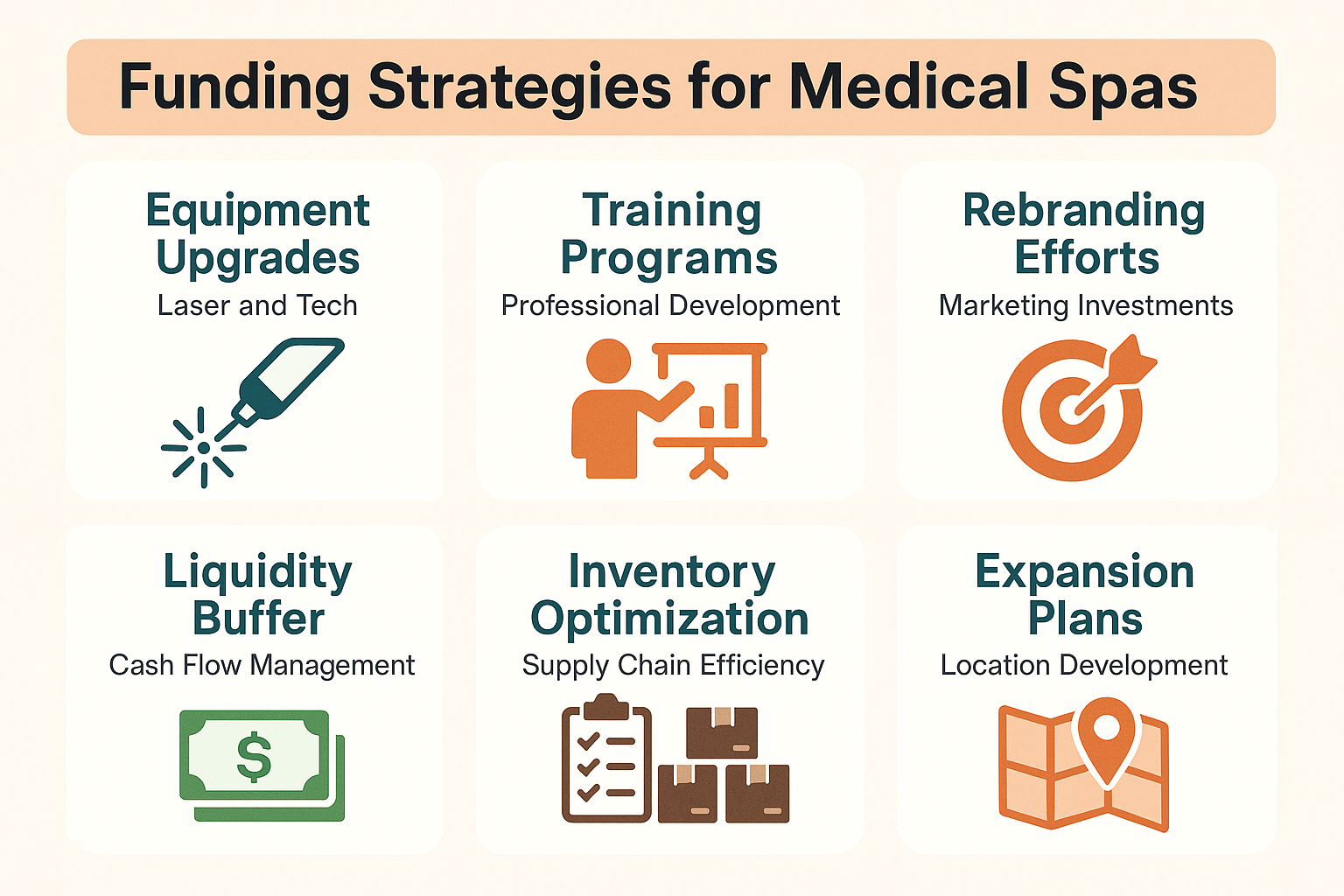
Rebranding and marketing investment strategies often require substantial upfront costs that revenue-based funding can help medical spas manage effectively while maintaining cash flow for operations.
- Website redesigns and digital marketing campaigns can attract new demographics and improve online presence
- Interior renovations and aesthetic updates may create more appealing treatment environments for clients
- Professional photography and marketing materials help showcase new services and equipment investments
- Social media advertising and influencer partnerships might expand reach in competitive local markets
- Brand identity updates, including logos and signage, could refresh the spa's image and market positioning
Building a Robust Liquidity Buffer
Building a robust liquidity buffer through revenue-based funding helps medical spas navigate seasonal fluctuations and unexpected challenges while maintaining steady operations throughout the year.
- Seasonal cash flow management becomes more predictable when spas have access to flexible funding that adjusts with revenue patterns
- Emergency equipment repairs or replacements can be handled without disrupting daily operations or depleting working capital
- Staff retention during slower periods may be easier to maintain with adequate cash reserves for payroll and benefits
- Market opportunities, such as bulk supply purchases or limited-time equipment deals, can be seized when liquidity is readily available
Inventory Management and Supply Chain Optimization
Inventory management and supply chain optimization represent strategic areas where medical spas commonly deploy revenue-based funding to ensure consistent product availability and cost efficiency.
- Bulk purchasing of skincare products and consumables often provides significant cost savings but requires upfront capital investment
- Premium product lines and exclusive brands may attract higher-paying clients while requiring substantial initial inventory investments
- Backup supplies for critical treatments help prevent service interruptions and maintain client satisfaction during supply chain disruptions
- Seasonal inventory planning allows spas to stock popular treatments and products before peak demand periods
- Diversified supplier relationships might reduce dependency risks but require maintaining relationships with multiple vendors
Expansion and Location Development
Expansion and location development projects often benefit from revenue-based funding structures that align repayment with the gradual revenue growth typical of new medical spa locations.
- New location buildouts require significant capital for leasehold improvements, equipment, and initial staffing before revenue generation begins
- Market research and feasibility studies help identify optimal expansion opportunities but represent upfront costs without immediate returns
- Multi-location management systems and standardized protocols may require technology investments to maintain quality across facilities
- Additional treatment rooms or service areas can increase capacity at existing locations while requiring construction and equipment investments
Strategic Financial Planning Considerations
Strategic financial planning considerations become crucial when medical spas evaluate revenue-based funding options for their growth initiatives. This funding approach aligns repayment schedules with actual business performance rather than fixed payment structures that might not match seasonal revenue patterns. Medical spa owners should carefully assess their historical revenue trends, projected growth rates, and cash flow cycles when considering this financing option. The flexibility of revenue-based funding may provide breathing room during slower periods while allowing accelerated growth investments during peak seasons. Understanding these dynamics helps spa owners make informed decisions about timing their investments and managing their financial obligations effectively.
Revenue-based funding offers medical spas a flexible approach to financing growth initiatives that traditional financing might not accommodate. From laser upgrades and professional training to rebranding efforts and liquidity buffers, this funding option aligns with the unique revenue patterns of the medical spa industry. The key lies in understanding how each investment area contributes to long-term sustainability and growth. Medical spa owners who strategically leverage revenue-based funding for these five essential areas may find themselves better positioned to compete in an increasingly sophisticated market while maintaining the financial flexibility needed for continued success.