
.png)

The retail landscape is changing fast, and boutique owners need to stay ahead of the curve to thrive in 2026. With technology reshaping customer expectations and economic factors influencing shopping behavior, smart boutique owners are looking for proven strategies to grow their businesses. The top 10 growth opportunities for retail boutiques focus on leveraging emerging trends while building stronger connections with customers. From AI-powered personalization to sustainable packaging, these opportunities can help your boutique stand out in a competitive market. Understanding which strategies align with your business goals and customer base is key to making informed decisions about where to invest your time and resources.
Technology Integration Strategies for Modern Boutiques
Technology integration strategies for modern boutiques are becoming essential as consumer expectations evolve rapidly. Boutique owners who embrace digital solutions may find themselves better positioned to compete with larger retailers while maintaining their unique character.
- AI-powered inventory management systems that could help track popular items and predict demand patterns, reducing overstock and stockouts
- Customer personalization tools that might analyze shopping behavior to recommend products tailored to individual preferences
- Digital point-of-sale systems that typically streamline transactions while capturing valuable customer data for future marketing efforts
- Mobile-friendly websites and apps that often enhance the shopping experience by allowing customers to browse and purchase from anywhere
Online Expansion and Digital Growth Methods
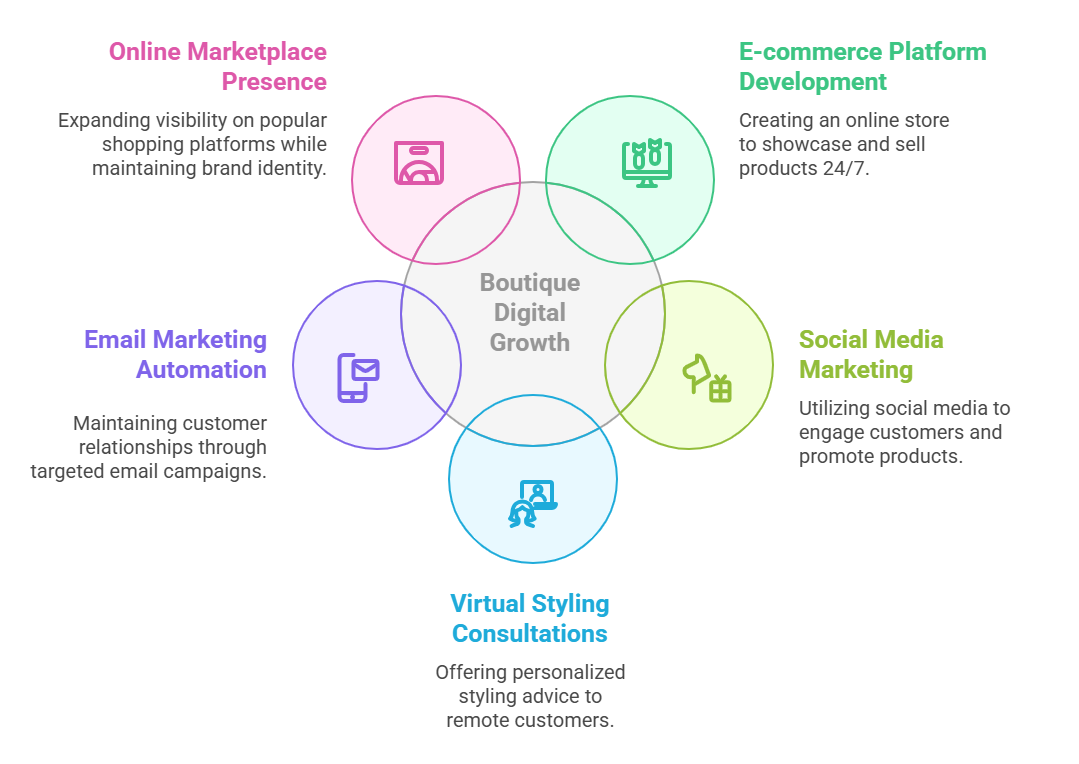
Online expansion and digital growth methods represent significant opportunities for boutiques looking to reach broader markets. The shift toward connected customer experiences means boutiques can extend their reach far beyond their physical locations.
- E-commerce platform development that could allow customers to shop your entire inventory online, increasing sales potential during off-hours
- Social media marketing campaigns that might showcase your unique products through engaging content and influencer partnerships
- Virtual styling consultations that typically provide personalized service to customers who can't visit in person
- Email marketing automation that often helps maintain customer relationships through targeted promotions and new arrival announcements
- Online marketplace presence that may expand your visibility on popular shopping platforms while maintaining brand identity
Product Diversification and Market Adaptation
Product diversification and market adaptation strategies can help boutiques weather economic changes while appealing to evolving customer preferences. Smart inventory decisions based on market trends may position your boutique for sustained growth.
- Seasonal product lines that could capitalize on trending themes or local events, creating urgency and excitement among customers
- Sustainable and eco-friendly options that might attract environmentally-conscious shoppers willing to pay premium prices for ethical products
- Exclusive or limited-edition items that typically create buzz and encourage repeat visits from collectors and fashion enthusiasts
- Complementary services such as personal styling or alterations that often increase customer lifetime value and differentiate from online competitors
Strategic Partnerships and Collaboration Opportunities
Strategic partnerships and collaboration opportunities can amplify your boutique's reach while sharing resources and risks. Building relationships with other businesses may create mutually beneficial arrangements that growth strategies for retail for all parties involved.
- Local business cross-promotions that could introduce your boutique to new customer segments through joint events or shared marketing campaigns
- Designer collaborations that might result in exclusive pieces that generate media attention and customer excitement
- Pop-up partnerships with complementary brands that typically allow you to test new products or reach different demographics without long-term commitments
- Influencer and brand ambassador programs that often extend your marketing reach through authentic endorsements from trusted voices
- Wholesale relationships with other retailers that may provide additional revenue streams while expanding your brand's geographic presence
Customer Experience and Retention Enhancement
Customer experience and retention enhancement focuses on building lasting relationships that drive repeat business and word-of-mouth referrals. Investing in customer satisfaction may yield higher returns than constantly pursuing new customers.
- Loyalty programs with meaningful rewards that could encourage repeat purchases while gathering valuable data about customer preferences
- Personalized shopping experiences that might include styling services, private shopping hours, or curated product recommendations based on past purchases
- Community engagement initiatives that typically position your boutique as a local gathering place through events, workshops, or charitable partnerships
- Enhanced customer service training that often transforms casual browsers into loyal customers through knowledgeable and friendly interactions
- Flexible return and exchange policies that may reduce purchase anxiety and demonstrate confidence in your product quality
The retail boutique industry continues to evolve, presenting both challenges and opportunities for growth-minded business owners. Success in 2026 may depend on your ability to blend traditional boutique charm with modern technology and customer expectations. Whether you choose to focus on AI integration, online expansion, strategic partnerships, or enhanced customer experiences, the key lies in selecting opportunities that align with your brand identity and customer base. Remember that growth doesn't happen overnight, and monitoring economic indicators can help you make informed decisions about timing and investment levels. By staying adaptable and customer-focused, your boutique can thrive in an increasingly competitive marketplace while maintaining the personal touch that sets you apart from larger retailers.