
.png)

Running a successful business requires more than just operational know-how. It demands strategic financial thinking, especially when it comes to securing capital. What experienced business owners consider before funding often separates thriving companies from those that struggle under financial strain.
Unlike first-time entrepreneurs who might rush into the first available financing option, seasoned business owners approach funding with a methodical mindset. They weigh multiple factors, from the immediate cost of capital to its ripple effects on profit margins years down the line. This careful consideration isn't about being overly cautious. Rather, it's about making informed decisions that align with both current needs and future goals.
Understanding these critical considerations can help any business owner, regardless of experience level, make smarter funding choices. Let's explore the key factors that shape these important financial decisions.
Common Questions About Strategic Funding Decisions
Common questions about strategic funding decisions help clarify what experienced business owners consider before funding. Addressing these foundational concerns sets the stage for more detailed exploration.
Q: Why does timing matter so much in funding decisions?
Timing can make or break a funding strategy. When business owners seek capital during strong cash flow periods rather than during emergencies, they typically secure better terms and avoid the desperation that leads to costly agreements. Strategic timing means planning funding needs in advance to leverage opportunities instead of reacting under pressure. This approach helps businesses access capital when they can use it most effectively, such as during high-demand periods or when expansion opportunities arise.
Q: How do experienced owners evaluate funding flexibility?
Flexibility refers to how well a funding option adapts to changing business conditions. Experienced owners look for financing structures that won't trap them in rigid payment schedules when revenue fluctuates. This consideration becomes especially important during business slowdowns or unexpected market shifts, when maintaining operational stability matters more than aggressive growth.
The Critical Role of Timing in Capital Decisions
The critical role of timing in capital decisions cannot be overstated when examining what experienced business owners consider before funding. Proper timing influences not just the availability of capital, but also its cost and strategic value.
- Planning ahead reduces pressure: Business owners who map out funding needs months in advance can shop for the best terms without the stress of immediate cash shortages. This proactive approach typically results in lower costs and more favorable conditions.
- Aligning with business cycles: Understanding your company's seasonal patterns or growth cycles helps you time capital infusions when they'll have maximum impact. Securing funding before peak season allows you to stock inventory, hire staff, and capture revenue opportunities that might otherwise slip away.
- Avoiding crisis funding: Seeking capital when cash flows are already tight often leads to increased risk and higher costs. Lenders and funding providers view desperate businesses as riskier, which translates to less favorable terms or even rejection.
- Market condition awareness: Economic conditions and lending environments shift over time. Experienced owners monitor these trends and may accelerate or delay funding plans based on broader market factors that could affect availability and pricing.
Understanding the True Cost Beyond Interest Rates
Understanding the true cost beyond interest rates represents a sophisticated element of what experienced business owners consider before funding. The sticker price rarely tells the whole story.
- Total cost of capital: Beyond stated interest or factor rates, experienced owners calculate the all-in cost including origination fees, processing charges, and any hidden costs that might surface during the funding period. This comprehensive view prevents unpleasant surprises.
- Opportunity cost considerations: Every dollar spent on financing costs is a dollar unavailable for growth investments, marketing, or operational improvements. Savvy business owners weigh whether the funding will generate returns that exceed its total cost.
- Impact on pricing power: Different funding structures can affect how much cost your business can absorb without raising prices. This becomes particularly important in competitive markets where pricing flexibility is limited.
Why Financial Flexibility Protects Your Business
Why financial flexibility protects your business is a question that highlights what experienced business owners consider before funding, especially regarding long-term resilience.
- Adapting to revenue fluctuations: Businesses rarely experience perfectly steady revenue streams. Flexible funding options that adjust payments based on performance can help companies weather slowdowns without jeopardizing operations or defaulting on obligations.
- Maintaining strategic options: Rigid funding agreements might prevent you from pursuing unexpected opportunities or require you to seek permission for normal business decisions. Flexibility preserves your ability to pivot when market conditions change.
- Buffer against uncertainty: Economic uncertainty or business slowdowns can strain even well-run companies. Having financial flexibility allows businesses to explore options beyond traditional structures, which can stabilize operations without the immediate risk of serious consequences.
- Preserving working capital: Flexible funding structures may allow you to preserve cash reserves for genuine emergencies rather than depleting them to meet fixed payment schedules during slower periods.
Evaluating Long-Term Impact on Profit Margins
Evaluating long-term impact on profit margins is central to what experienced business owners consider before funding. Short-term solutions can create lasting financial consequences.
- Understand how funding affects pricing strategies: Different funding models have diverse effects on cost absorption and profitability. Business owners need to evaluate how various funding structures will alter their profit margins over time, potentially requiring price adjustments that could affect competitiveness.
- Calculate break-even shifts: Adding financing costs changes your break-even point, the amount of revenue needed just to cover expenses. Experienced owners model these changes before committing to ensure the business can remain profitable while servicing the funding.
- Project multi-year scenarios: Rather than focusing solely on immediate needs, seasoned business owners project how funding costs will affect margins across multiple years. This longer view helps identify whether a funding option supports sustainable growth or gradually erodes profitability.
Strategic Alignment with Business Growth Plans
Strategic alignment with business growth plans represents another dimension of what experienced business owners consider before funding. Capital should serve your vision, not derail it.
- Match funding duration to project timeline: If you're financing inventory for a three-month selling season, a funding structure that extends obligations far beyond that period might not make strategic sense. Alignment between the capital's purpose and its repayment schedule helps maintain financial health.
- Ensure scalability of the funding relationship: As your business grows, your capital needs may evolve. Experienced owners often prefer funding partners who can scale with them rather than forcing them to restart the entire process when needs increase.
- Evaluate impact on future funding options: Some funding structures might limit your ability to access additional capital later or create complications when you seek other financial products. Understanding these potential constraints helps you avoid boxing yourself into corners that limit future growth.
- Consider exit flexibility: Business circumstances change, and sometimes early repayment becomes advantageous. Knowing whether your funding option allows this flexibility, and at what cost, factors into the overall strategic fit.
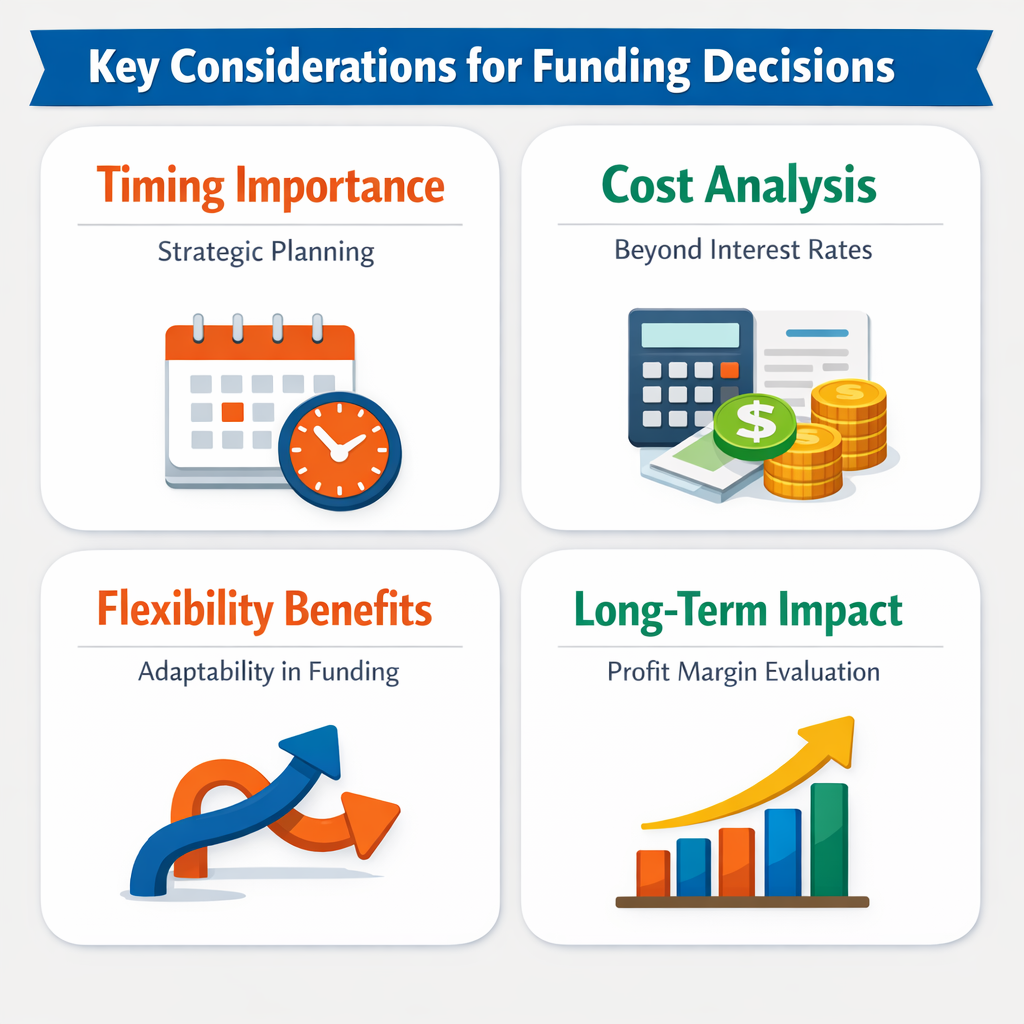
The difference between reactive and strategic funding decisions often determines a business's trajectory. What experienced business owners consider before funding encompasses timing, cost transparency, flexibility, and long-term margin impact. These aren't just abstract concepts but practical filters that help protect profitability while fueling growth.
By planning funding needs in advance rather than waiting for cash crunches, business owners can leverage opportunities instead of scrambling under pressure. By looking beyond surface-level rates to understand true costs, they avoid agreements that seem manageable initially but become burdensome over time. By prioritizing flexibility, they maintain the agility needed to navigate uncertain markets and unexpected challenges.
Perhaps most importantly, by evaluating how funding affects profit margins and strategic plans over the long haul, experienced owners ensure that capital serves as a tool for sustainable growth rather than a source of ongoing strain. These considerations don't guarantee success, but they significantly improve the odds of making funding decisions you won't regret down the road.
Whether you're seeking your first business funding or your tenth, adopting this experienced mindset can help you choose options that truly support your goals. The right funding at the right time, structured in the right way, can accelerate your success. The wrong funding can create obstacles that take years to overcome. The difference lies in asking the right questions before you commit.