
.png)

When cash flow tightens or unexpected opportunities arise, knowing the best 7 ways to use short-term funding strategically can make all the difference between seizing the moment and missing out. For small-business owners, short-term funding isn't just about plugging holes in the budget. It's a versatile financial tool that, when used thoughtfully, can stabilize operations, accelerate growth, and position your business for long-term success.
Poor cash flow management is linked to a significant portion of business failures, with some estimates suggesting that 82% of closures stem from this challenge. That's why understanding how to deploy short-term capital effectively matters so much. Whether you're facing a sudden expense, seasonal fluctuation, or a chance to invest in high-return opportunities, strategic use of short-term funding can help you navigate these situations with confidence.
In this guide, we'll walk through seven proven strategies for making the most of short-term financing. From emergency use and gap coverage to fast ROI spending and repayment planning, you'll learn how to align your funding decisions with your business goals and cash flow realities.
Cover Cash Flow Gaps During Slow Seasons
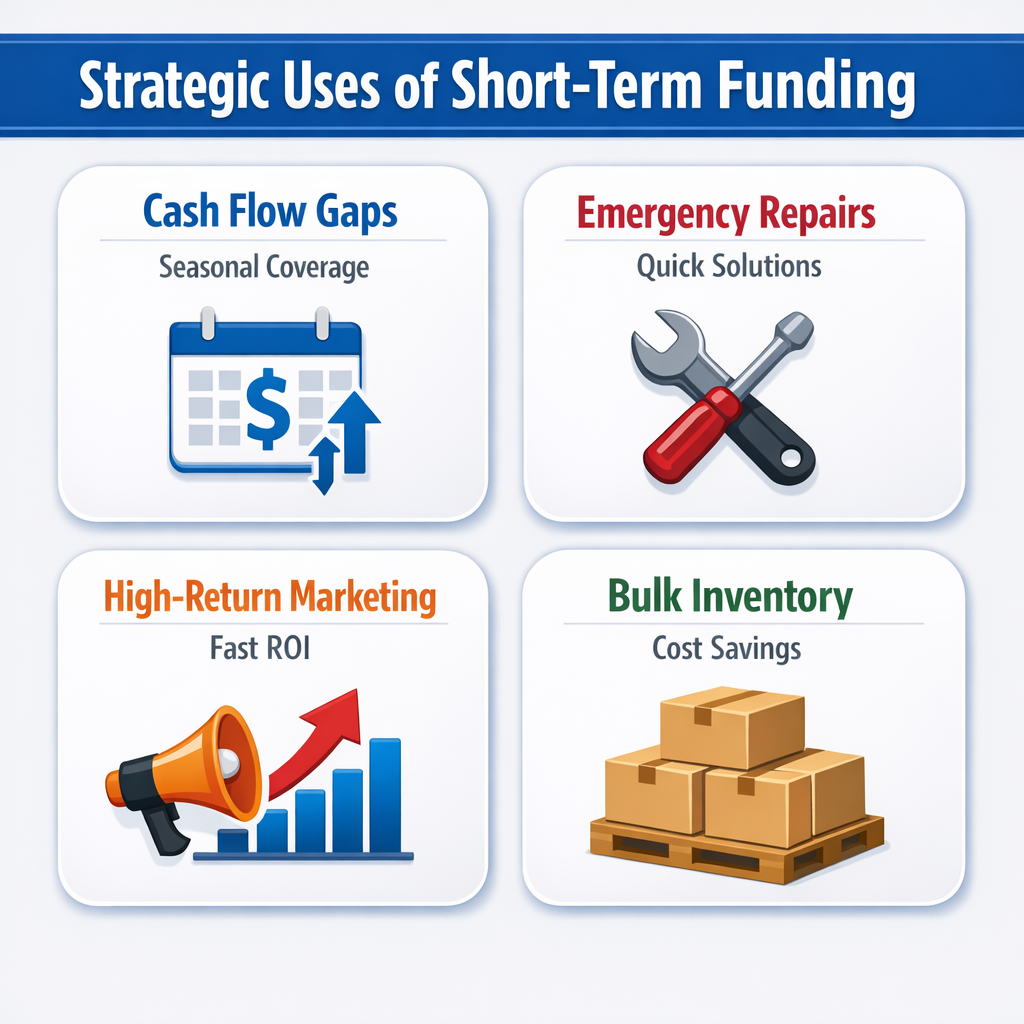
Covering cash flow gaps during slow seasons is one of the most practical applications of short-term funding. Many businesses experience predictable fluctuations in revenue throughout the year, whether due to seasonal demand, industry cycles, or customer buying patterns. During these quieter periods, bills still need to be paid, employees still expect paychecks, and suppliers still require timely payments.
Short-term funding can help bridge the gap between expenses and incoming revenue, ensuring your operations continue smoothly without disruption. This type of gap coverage allows you to maintain inventory levels, meet payroll obligations, and keep your doors open while waiting for the next busy season to arrive.
- Maintain consistent operations even when sales dip temporarily
- Preserve employee morale by ensuring reliable payroll during lean months
- Avoid late fees or damaged relationships with vendors and suppliers
- Keep inventory stocked so you're ready when demand picks up again
By using short-term funding to smooth out these seasonal ups and downs, you can focus on long-term growth rather than constantly worrying about making it through the next slow period. This approach typically works best when you have a clear understanding of your business cycles and can anticipate when revenue will return to normal levels.
Handle Unexpected Expenses and Emergency Repairs
Handling unexpected expenses and emergency repairs is another critical way to use short-term funding strategically. No matter how well you plan, surprises happen. Equipment breaks down, leases come up for renewal at higher rates, technology fails, or regulatory requirements change suddenly. These unforeseen costs can derail your budget and threaten your ability to serve customers if you're not prepared.
Having access to short-term funding means you can address these emergencies quickly without draining your operating capital or delaying critical repairs. This emergency use of funding helps you maintain business continuity and prevents small problems from becoming major crises.
- Repair essential equipment before breakdowns lead to lost revenue
- Address safety or compliance issues promptly to avoid fines or shutdowns
- Replace outdated technology that's slowing down operations
- Respond to facility emergencies like plumbing or electrical failures
When emergencies strike, speed often matters just as much as the money itself. Short-term funding options can typically provide capital more quickly than traditional financing, allowing you to act fast when time is of the essence. This rapid access to funds can help minimize downtime and keep your business running while you deal with the unexpected challenge.
Invest in High-Return Marketing Campaigns
Investing in high-return marketing campaigns represents a strategic approach to fast ROI spending using short-term funding. Marketing can be one of the most powerful drivers of business growth, but it often requires upfront investment before you see results. Whether you're launching a new product, entering a new market, or simply trying to increase brand awareness, well-executed marketing campaigns can generate significant returns.
Short-term funding allows you to capitalize on time-sensitive marketing opportunities without depleting your cash reserves. The key is to focus on campaigns where you can reasonably expect to see returns within a timeframe that aligns with your repayment schedule.
- Launch seasonal promotions when customer demand is highest
- Test new advertising channels with proven potential for your industry
- Boost inventory before a major marketing push to fulfill expected orders
- Invest in digital marketing campaigns with trackable, measurable results
The strategic advantage here lies in matching your funding terms with the expected return timeline. If you anticipate that a marketing campaign will generate increased sales within three to six months, short-term funding can provide the capital you need while ensuring your repayment obligations align with your incoming revenue. This approach may help maximize your marketing impact while maintaining healthy cash flow throughout the process.
Purchase Inventory at Bulk Discounts
Purchasing inventory at bulk discounts is a smart way to use short-term funding for fast ROI spending. Many suppliers offer significant discounts when you buy larger quantities or pay upfront rather than using credit terms. These savings can improve your profit margins considerably, but they require having cash on hand at the right moment.
Short-term funding can help you take advantage of these opportunities when they arise, allowing you to secure better pricing and improve your bottom line. This strategy works particularly well when you have confidence in your ability to sell the inventory within a reasonable timeframe.
- Identify suppliers who offer meaningful bulk discounts that exceed your funding costs
- Calculate the total savings compared to the cost of short-term funding to ensure profitability
- Assess your storage capacity and ability to manage larger inventory volumes
- Project your sales timeline to confirm you can move the inventory before repayment comes due
This approach typically makes the most sense when the discount you receive is greater than the cost of your funding. For example, if a supplier offers a 15% discount for bulk purchases and your short-term funding costs 8%, you could potentially net a 7% improvement in your margins. These savings can add up quickly, especially for businesses with high inventory turnover.
Manage Repayment Planning with Revenue Alignment
Managing repayment planning with revenue alignment is crucial when using short-term funding strategically. One of the biggest mistakes business owners make is borrowing money without a clear plan for how they'll repay it. Effective repayment planning means matching your funding terms with your expected cash flow patterns and revenue cycles.
Before taking on short-term funding, you should have a realistic projection of when and how you'll generate the revenue needed to meet your repayment obligations. This forward-looking approach helps you avoid cash flow crunches and ensures that your funding supports growth rather than creating new problems.
- Map out your expected revenue over the repayment period based on historical patterns and planned initiatives
- Build in a buffer for unexpected slowdowns or expenses that might affect your ability to repay
- Choose funding terms that align with your business cycle rather than working against it
- Monitor your actual performance against projections and adjust operations if needed to stay on track
This disciplined approach to smart repayment planning can help you use short-term funding confidently while minimizing financial stress. When you know exactly how the funding will be repaid before you accept it, you're positioning your business for success rather than taking unnecessary risks. Many business owners find that this careful planning also improves their overall financial management and decision-making processes.
Seize Time-Sensitive Business Opportunities
Seizing time-sensitive business opportunities represents one of the most valuable applications of short-term funding. In business, timing can be everything. A competitor might go out of business, creating an opening to acquire their customer base. A supplier might have excess inventory they're willing to sell at a steep discount. A commercial space in your ideal location might become available unexpectedly.
These opportunities often come with tight deadlines. If you can't act quickly, someone else will. Short-term funding provides the agility you need to capitalize on these moments without lengthy approval processes or depleting your working capital reserves.
- Acquire competitor assets or customer lists when businesses close or consolidate
- Secure favorable lease terms on prime locations before other tenants claim them
- Purchase equipment or technology at auction or liquidation prices
- Respond quickly to partnership or collaboration opportunities with financial commitments
The strategic value here lies in recognizing which opportunities truly offer strong potential returns and which ones simply look appealing in the moment. Not every time-sensitive opportunity deserves funding. The best approach involves quickly evaluating the potential ROI, understanding the risks, and determining whether the opportunity aligns with your broader business strategy before committing resources.
Understanding the best 7 ways to use short-term funding strategically can transform how you manage your business finances. From covering cash flow gaps and handling emergencies to investing in high-return opportunities and planning smart repayments, short-term funding offers flexibility that traditional financing often can't match.
The key to success lies in using this financial tool thoughtfully and intentionally. Each of the strategies we've explored works best when aligned with your specific business needs, cash flow patterns, and growth objectives. Whether you're addressing seasonal fluctuations, seizing time-sensitive opportunities, or investing in initiatives with clear ROI timelines, strategic use of short-term funding can help stabilize operations and accelerate growth.
Remember that effective repayment planning should guide every funding decision you make. By matching your funding terms with your revenue cycles and maintaining realistic projections, you can use short-term capital confidently while minimizing financial stress. This disciplined approach helps ensure that your funding supports sustainable growth rather than creating new challenges.