.png)

The retail landscape has shifted dramatically, and boutique stores that once relied solely on foot traffic are now discovering the immense potential of digital commerce. For many small shop owners, the idea of a boutique store expanding online sales channels can feel both exciting and overwhelming. Where do you start? How do you balance physical and digital operations? What's the best way to fund this growth without overextending your resources?
The good news is that expanding your boutique store into online sales channels doesn't require a complete business overhaul. With the right approach to ecommerce setup, strategic marketing spend, and a solid funding strategy, you can create a seamless omnichannel experience that meets customers wherever they prefer to shop. This shift isn't just about survival, it's about thriving in a marketplace where flexibility and accessibility drive success.
In this guide, we'll walk through the essential steps boutique retailers need to take when moving into the digital space, from choosing the right platforms to managing the financial side of expansion.
Understanding the Omnichannel Opportunity for Boutique Stores
Understanding the omnichannel opportunity for boutique stores starts with recognizing that today's shoppers don't think in terms of separate channels. They browse on their phones, check inventory online, visit stores to touch products, and complete purchases wherever it's most convenient. For boutique retailers, this shift represents a chance to meet customers on their terms while building stronger relationships.
When a boutique store expanding online sales channels integrates physical and digital touchpoints, the benefits can be significant. Customers gain visibility into product availability, faster fulfillment options, and more ways to engage with your brand. Meanwhile, store owners can capture sales that might otherwise go to competitors with established online presence.
- Broader customer reach: Your boutique is no longer limited by geography. Online channels let you connect with shoppers across regions who share your aesthetic but can't visit in person.
- Enhanced customer loyalty: Shoppers who can interact with your brand both online and offline tend to become repeat customers. They appreciate the flexibility and often spend more over time.
- Improved operational efficiency: Integrating inventory and order management across channels helps you avoid stockouts, reduce waste, and make smarter purchasing decisions.
- Competitive advantage: Many small boutiques still operate offline only. By moving online early, you position yourself ahead of competitors who may be slower to adapt.
The key is starting with a clear understanding of which channels make sense for your particular boutique. Not every platform will suit your brand or customer base, and trying to be everywhere at once can stretch resources thin. Instead, focus on building a foundation that connects your physical store with one or two digital channels that align with your goals.
Essential Ecommerce Setup Steps for Small Boutiques
Essential ecommerce setup steps for small boutiques begin with selecting the right technology platform. The good news is that modern ecommerce platforms are designed with small businesses in mind, offering intuitive interfaces and integration capabilities that don't require a technical background to manage.
For boutique stores, the ecommerce setup process typically involves several foundational elements. You'll need a platform that can handle product listings with high-quality images, manage inventory in real time, process payments securely, and provide a smooth checkout experience. Many platforms also offer built-in tools for connecting additional sales channels, which can be valuable as you grow.
- Platform selection: Choose an ecommerce platform that fits your budget and technical comfort level. Look for systems that integrate with your existing point-of-sale setup if you have one, and that offer mobile-responsive designs since many customers will shop from their phones.
- Product catalog development: Transfer your inventory online with clear descriptions, accurate sizing information, and multiple photos from different angles. High-quality visuals are particularly important for boutique items where style and detail matter.
- Payment and shipping integration: Set up secure payment processing and determine your shipping strategy. Consider offering multiple options at different price points to accommodate various customer preferences.
- Inventory synchronization: If you're selling both in-store and online, ensure your system can track inventory across channels to prevent overselling and maintain accurate stock levels.
Getting the ecommerce setup right from the start saves headaches later. You might be tempted to rush through this phase, but taking time to configure settings properly, test the customer experience, and train your team will pay off when you launch. Remember, your online store is an extension of your brand, so the experience should reflect the same care and attention you bring to your physical location.
Choosing the Right Sales Channels for Your Boutique
Choosing the right sales channels for your boutique requires a strategic approach rather than simply adding every available option. Different channels serve different purposes, and the best mix depends on factors like your target customer, product type, operational capacity, and growth goals.
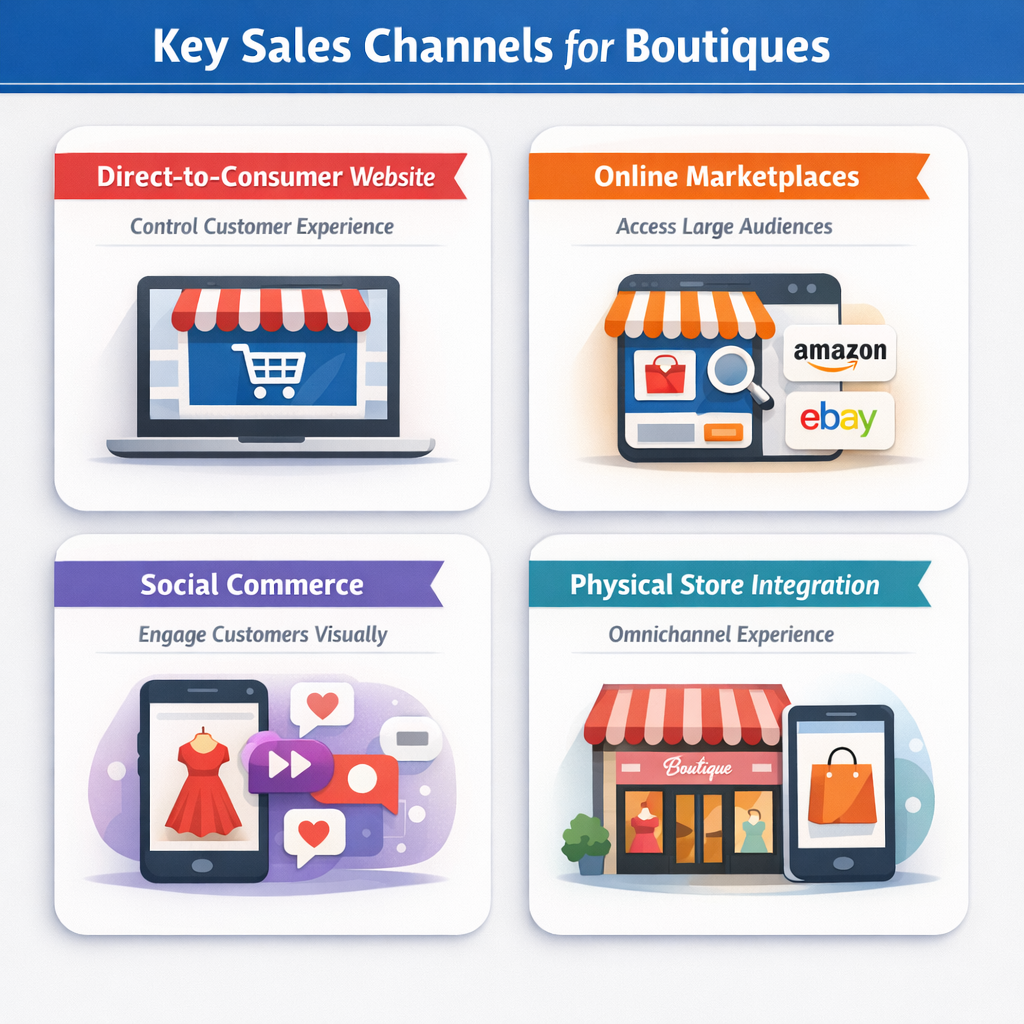
For a boutique store expanding online sales channels, the most common options include your own ecommerce website, online marketplaces, social media shopping features, and potentially mobile apps. Each channel has distinct advantages and considerations. Your own website gives you complete control over branding and customer data, while marketplaces provide immediate access to large audiences. Social platforms can drive discovery and engagement, particularly for visually appealing boutique products.
- Direct-to-consumer website: Building your own ecommerce site establishes a home base where you control the customer experience, collect valuable data, and avoid marketplace fees. This channel works well for boutiques with established brand recognition or unique offerings.
- Online marketplaces: These platforms bring massive traffic and built-in trust, which can help newer boutiques gain visibility. However, you'll typically pay listing or commission fees and have less control over how your brand is presented.
- Social commerce: Selling directly through social platforms lets customers discover and purchase without leaving apps they already use daily. This channel tends to work particularly well for boutiques with strong visual content and engaged followers.
- Physical store integration: Don't forget that your existing location is also a sales channel. Features like buy-online-pick-up-in-store can drive foot traffic while offering convenience, creating a true omnichannel experience.
The smartest approach for most boutiques is to start with one or two channels and expand gradually as you learn what resonates with your customers. Monitor performance across channels to understand where your efforts generate the best returns, and be prepared to adjust your strategy as you gather real-world data.
Strategic Marketing Spend for Online Channel Expansion
Strategic marketing spend for online channel expansion requires careful planning, especially for boutique stores working with limited budgets. Unlike large retailers with extensive marketing departments, small boutiques need to be selective about where they invest, focusing on tactics that deliver measurable results rather than spreading resources too thin.
When a boutique store expanding online sales channels allocates marketing spend, the goal is to drive awareness, attract qualified traffic, and convert browsers into buyers. Digital marketing offers advantages over traditional advertising because you can target specific audiences, track performance in real time, and adjust campaigns based on what's working. That said, it's easy to waste money if you don't have a clear plan.
- Start with organic content: Before pouring money into paid advertising, build a foundation of organic content through social media posts, email newsletters, and blog content that showcases your products and tells your brand story. This costs more in time than money but creates lasting value.
- Test paid advertising carefully: When you do invest in paid ads, start small with platforms where your target customers spend time. Run test campaigns with modest budgets, measure results closely, and scale up only what proves effective.
- Leverage email marketing: Building an email list and nurturing it with regular updates, exclusive offers, and personalized recommendations tends to deliver strong returns for boutiques. Email marketing platforms are relatively affordable and highly measurable.
- Collaborate with influencers: Micro-influencers who align with your brand aesthetic may be willing to promote your products in exchange for free items or modest fees, giving you access to engaged audiences without major marketing spend.
The key to smart marketing spend is treating it as an investment with expected returns rather than a fixed expense. Track metrics like cost per acquisition, customer lifetime value, and return on ad spend to understand which channels and tactics actually contribute to your bottom line. As you gather data, shift resources toward what works and cut what doesn't, continuously refining your approach.
Funding Your Online Expansion: Practical Steps Forward
Funding your online expansion requires a practical approach that matches your boutique's financial situation and growth timeline. Expanding into online sales channels typically involves upfront costs for technology, inventory, marketing, and potentially additional staff. While these investments can pay off handsomely, you need capital to bridge the gap between spending and revenue generation.
For boutique retailers, traditional bank financing isn't always the best fit. The application process can be lengthy, requirements may be strict, and approval isn't guaranteed. Fortunately, alternative funding options have emerged that may better suit small retailers looking to grow quickly without giving up equity or taking on restrictive debt terms.
- Assess your capital needs realistically: Before seeking funding, calculate what you actually need for ecommerce setup, initial inventory expansion, marketing spend, and operating expenses during the ramp-up period. Be specific about how you'll use the capital and what returns you expect.
- Explore revenue-based financing options: These funding arrangements provide capital in exchange for a percentage of future sales, which can align well with the variable nature of retail revenue. Repayment flexes with your sales volume, providing breathing room during slower periods.
- Consider merchant cash advances for quick access: When timing matters and you need capital quickly to capitalize on opportunities, advances based on your sales history can provide fast funding. These work particularly well for established boutiques with consistent revenue looking to scale up.
- Build relationships with alternative lenders: Financial institutions that specialize in small business funding often understand retail challenges better than traditional banks. They may offer more flexible terms and faster decisions, though you'll want to compare rates and structures carefully.
- Plan for sustainable growth: Whatever funding strategy you choose, ensure the repayment structure allows you to continue operating and growing rather than draining all your profits. The goal is fuel for expansion, not a burden that limits your ability to invest in inventory, marketing, and operations.
Remember that funding isn't just about accessing capital, it's about using that capital strategically to generate returns that exceed the cost. The best funding strategy supports your growth timeline, matches your cash flow patterns, and leaves you with flexibility to adapt as you learn what works in your new online channels.
Expanding your boutique store into online sales channels represents a significant opportunity in today's retail environment. While the transition requires thoughtful planning around ecommerce setup, strategic marketing spend, and smart funding decisions, the potential rewards make the effort worthwhile. Customers increasingly expect the flexibility to shop how and when they choose, and boutiques that meet this expectation position themselves for long-term success.
The key is approaching expansion systematically rather than trying to do everything at once. Start by understanding which channels align with your brand and customer base, invest in a solid ecommerce setup that can grow with you, allocate marketing spend carefully based on measurable results, and secure funding that supports rather than constrains your growth.