
.png)

Taking on debt might be necessary for growth, but there's a fine line between strategic financing and overextending your business. When you borrow more than your company can comfortably repay, you risk cash flow problems, stunted growth, and even closure. Understanding how to avoid overborrowing for your business is critical for maintaining financial stability and building a sustainable operation.
Many business owners face pressure to expand quickly or cover unexpected expenses, which can lead to hasty borrowing decisions. However, smart business financing starts with a clear understanding of what you actually need versus what lenders might offer. The difference between thriving and struggling often comes down to thoughtful planning, realistic assessments, and disciplined borrowing practices.
In this guide, we'll walk through practical strategies that help you borrow only what you need and can afford to repay. From conducting thorough needs assessments to building solid repayment plans, these approaches can protect your business from the dangers of excessive debt while still giving you access to the capital you need for genuine opportunities.
Essential Tips for Strategic Borrowing
Strategic borrowing begins with understanding your business's true financial position and capabilities. When you approach financing with a clear-eyed view of what you can afford, you're much less likely to take on debt that becomes a burden rather than a tool for growth.
- Borrow only what you can afford to repay. This fundamental principle means calculating your monthly payment capacity before signing any agreement. Look at your typical cash flow patterns and ensure you can cover payments even during slower months without sacrificing operational needs.
- Thoroughly understand all financing terms before committing. Every financing product comes with specific conditions, including repayment schedules, factor rates or interest rates, and potential fees. Taking time to read and understand these terms helps you avoid surprises that could strain your finances later.
- Match the financing type to your specific business need. Different situations call for different financing solutions. Short-term working capital needs might require one approach, while equipment purchases or expansion projects might benefit from another. Choosing the right product for your situation helps ensure the debt serves its intended purpose efficiently.
These foundational tips form the backbone of responsible borrowing. When you follow these principles consistently, you create a framework that naturally prevents overborrowing while still allowing your business to access necessary capital for legitimate opportunities and needs.
Conducting a Real Needs Assessment
A real needs assessment is perhaps the most important step in preventing overborrowing. This process involves taking a hard look at your business's actual capital requirements rather than simply accepting whatever amount a lender approves. Many businesses get into trouble by borrowing the maximum available instead of the minimum necessary.
- Identify the specific purpose for the funding. Write down exactly what you need the money for, whether it's inventory, equipment, marketing, payroll coverage, or expansion. Vague purposes like "general business needs" often lead to unfocused spending and wasted capital.
- Calculate the precise amount required. Get quotes, estimates, and concrete figures for your intended use. If you need equipment, know the exact cost. If it's for inventory, calculate based on actual orders or realistic sales projections. Adding a small buffer for unexpected costs is smart, but that buffer should be modest and justified.
- Evaluate how the funding will generate returns. Good debt typically pays for itself through increased revenue or cost savings. If you can't clearly explain how the borrowed capital will improve your bottom line enough to cover repayments plus profit, you might be considering unnecessary debt.
- Review your current financial obligations. Before taking on new debt, assess real funding needs. Your total debt service shouldn't consume so much of your revenue that you lack flexibility for operations or can't weather a temporary downturn.
This systematic approach to assessing funding needs helps ensure you're making decisions based on facts and projections rather than emotions or external pressure. When you know precisely what you need and why, you're far less likely to accept more funding than is truly beneficial for your business.
Key Strategies for Effective Repayment Planning
Repayment planning separates successful borrowers from those who struggle with debt. Before accepting any financing, you should have a clear picture of how you'll make every payment on time without disrupting your business operations or personal finances.
- Create detailed cash flow projections. Map out your expected income and expenses for the entire repayment period. Be realistic, even conservative, in your revenue projections. If your projections show tight margins or potential shortfalls during certain months, you might need to reconsider the amount you're borrowing or look for more flexible repayment terms.
- Build a repayment buffer into your budget. Don't plan for repayments that consume 100% of your available cash. Businesses face unexpected expenses and revenue fluctuations, so maintaining a cushion helps ensure you can meet obligations even when things don't go exactly as planned.
- Prioritize debt repayments in your financial hierarchy. Decide where debt payments fall in your expense priorities. Generally, they should come after critical operational costs but before discretionary spending. This hierarchy helps you make consistent decisions about cash allocation when money gets tight.
Solid repayment planning isn't just about math. It's about honestly assessing your business's capacity and creating systems that make timely payments automatic rather than stressful. When repayment is built into your financial foundation from the start, you avoid the scramble that leads many businesses to borrow again just to cover existing debt, which creates a dangerous cycle.
Implementing Smart Risk Control Measures
Risk control in business borrowing means recognizing warning signs early and taking action before debt becomes unmanageable. Even with careful planning, circumstances change, and staying vigilant helps you adapt before small problems become major crises.
- Monitor your debt-to-income ratio regularly. This metric shows how much of your revenue goes toward debt service. While acceptable ratios vary by industry, if you notice this percentage climbing, it might signal that you're approaching your borrowing capacity limit.
- Watch for signs that debt is becoming excessive. These might include consistently using one form of financing to pay another, missing or delaying other business payments to cover debt obligations, or feeling constant anxiety about upcoming payment dates. These symptoms suggest you may have overborrowed.
- Establish clear borrowing criteria for future decisions. Create written guidelines for when borrowing makes sense for your business. These might include minimum expected returns, maximum acceptable payment terms, or specific circumstances that justify taking on debt. Having predetermined criteria reduces impulsive borrowing decisions.
- Seek professional guidance when uncertainty arises. Financial advisors, accountants, or business consultants can provide objective perspectives on your borrowing decisions. They often spot issues you might miss and can suggest alternatives you haven't considered.
Risk control isn't about avoiding all debt. It's about maintaining awareness and control so that financing serves your business rather than constraining it. These measures help you stay within safe borrowing limits while still accessing capital when genuine opportunities arise.
Building a Structured Debt Management Strategy
A structured debt management strategy provides the framework for handling both current obligations and future borrowing needs. This approach turns debt from a potential threat into a managed tool that supports your business objectives without creating undue risk.
- Inventory all existing debt obligations. Create a comprehensive list showing each debt source, balance, payment amount, payment frequency, and payoff date. This complete picture helps you understand your total obligations and identify opportunities for consolidation or refinancing.
- Develop a prioritized repayment sequence. If you have multiple debts, decide which to focus on first. Some businesses prioritize the highest-cost debt to minimize interest payments, while others focus on smallest balances for psychological wins. Choose an approach that fits your situation and stick with it.
- Set specific financial milestones. Create targets for debt reduction, such as paying off a certain amount within six months or reducing total debt by a specific percentage within a year. These milestones give you concrete goals and help maintain momentum.
- Review and adjust your strategy quarterly. Business conditions change, and your debt management approach should adapt accordingly. Regular reviews help you stay on track and make necessary adjustments before small issues become major problems.
This structured approach transforms debt management from a reactive scramble into a proactive business function. When you treat debt strategically, you maintain control over your financial future and avoid the trap of borrowing without clear purpose or plan.
Maximizing Cash Flow to Support Debt Capacity
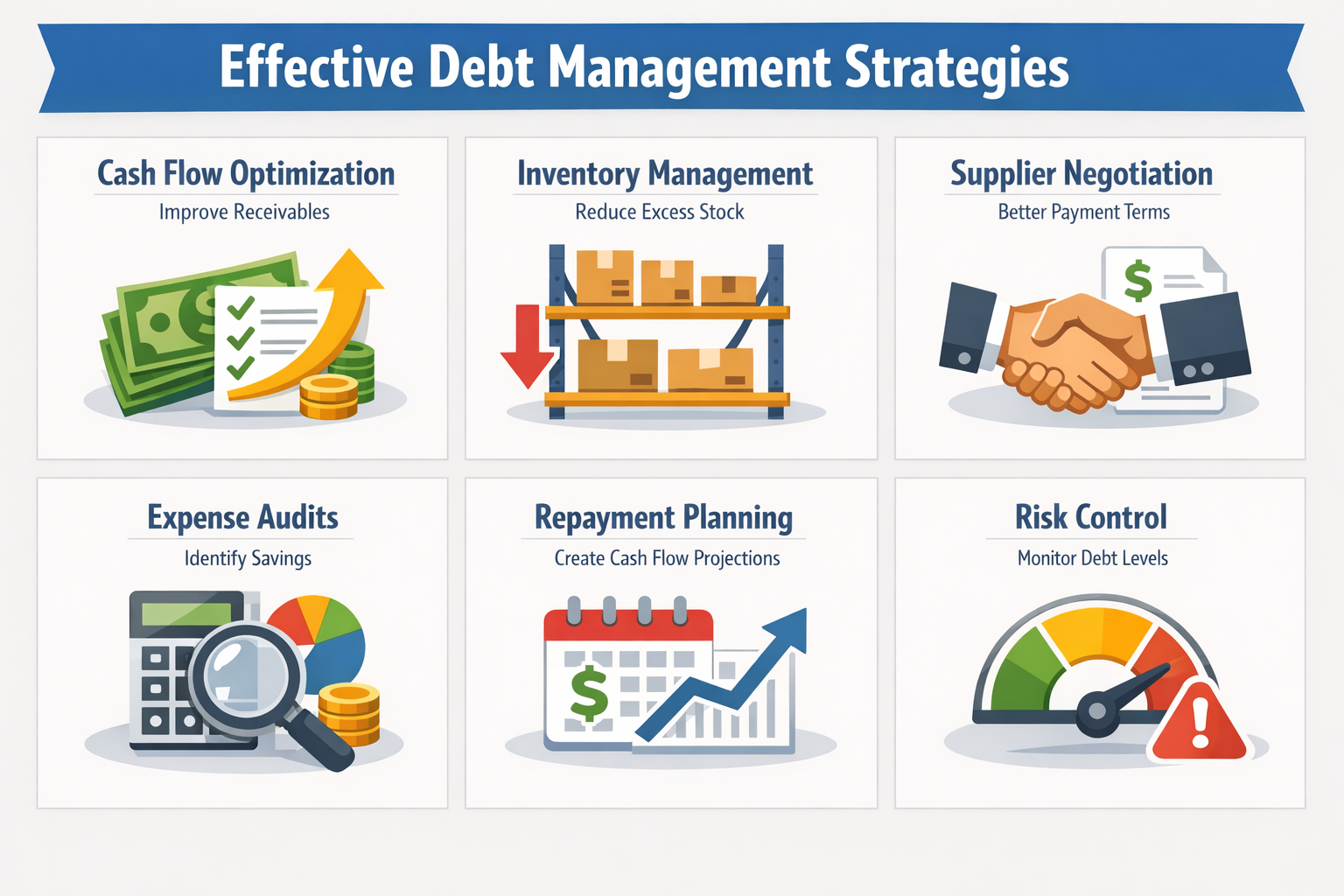
Strong cash flow is your best defense against overborrowing. When your business generates healthy, predictable cash flow, you naturally have more capacity to service debt comfortably. Conversely, weak cash flow often leads to desperate borrowing just to keep operations running, which typically makes the situation worse.
- Accelerate receivables collection. The faster customers pay you, the more cash you have available for both operations and debt service. Consider offering small discounts for early payment, tightening payment terms, or implementing more aggressive collection procedures for overdue accounts.
- Optimize inventory management. Money tied up in excess inventory is money that can't be used for debt payments or other needs. Review your inventory levels regularly and adjust purchasing to match actual demand patterns rather than over-ordering based on optimistic projections.
- Negotiate better payment terms with suppliers. If you can extend payment terms from 30 to 45 or 60 days, you effectively create more working capital without borrowing. This breathing room can make the difference between comfortable and strained debt service.
- Identify and eliminate unnecessary expenses. Regular expense audits often reveal subscriptions, services, or costs that no longer provide value. Redirecting these savings toward debt payments or building reserves strengthens your financial position.
Improved cash flow doesn't just help you avoid overborrowing. It also means you need to borrow less in the first place and can repay what you do borrow more quickly. This creates a positive cycle where financial strength builds on itself rather than the negative spiral that comes from excessive debt.
Learning how to avoid overborrowing for your business is one of the most valuable skills you can develop as a business owner. The strategies we've covered, from conducting thorough needs assessments to building structured repayment plans and implementing risk controls, work together to keep your borrowing within safe, productive limits.
Remember that the goal isn't to avoid debt entirely. Strategic financing can fuel growth, help you seize opportunities, and smooth out cash flow fluctuations. The key is approaching each borrowing decision with clear eyes, realistic assessments, and disciplined planning. When you borrow only what you truly need and can comfortably repay, debt becomes a tool that serves your business rather than a burden that constrains it.