
.png)

Growing an online store isn't just about having great products anymore. In today's competitive landscape, ecommerce business scaling paid advertising has become a critical skill for merchants who want to expand their reach and boost revenue. Yet, many small business owners find themselves stuck at a certain spending level, unsure how to push past their current ad budget without risking their bottom line.
The challenge isn't simply spending more money on ads. It's about understanding how to strategically increase your investment while maintaining or even improving your return. Whether you're just starting to explore paid channels or you've hit a plateau with your current campaigns, mastering the fundamentals of ad spend growth can open new doors for your business. This article will walk you through practical strategies that can help you scale your advertising efforts effectively while keeping customer acquisition costs in check.
Essential Elements for Successful Ad Campaigns
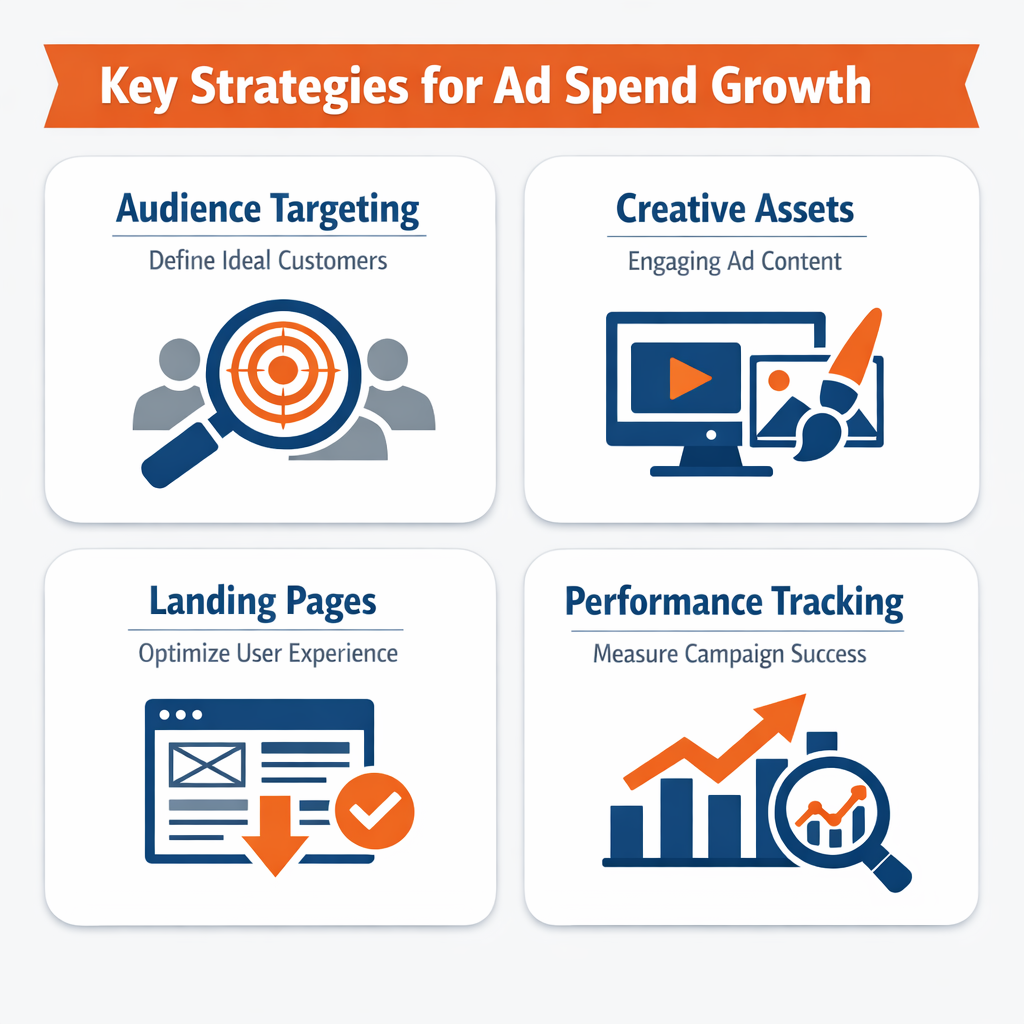
Essential elements for successful ad campaigns form the foundation of ecommerce business scaling paid advertising. Before you can grow your spending effectively, you need to ensure that your core advertising infrastructure is solid and ready to scale.
- Clear audience targeting: Understanding who your ideal customers are helps you avoid wasting ad dollars on people unlikely to buy. Defining your target audience based on demographics, behaviors, and interests can significantly improve campaign performance.
- Compelling creative assets: Your ads need to stand out in crowded feeds and search results. High-quality images, engaging copy, and clear value propositions tend to drive better engagement and conversion rates.
- Optimized landing pages: Sending traffic to well-designed pages that match your ad messaging can improve conversion rates. A seamless experience from ad click to checkout typically reduces friction in the buying process.
- Performance tracking systems: You can't improve what you don't measure. Setting up proper analytics and conversion tracking allows you to see which campaigns deliver results and which need adjustment.
These foundational elements work together to create campaigns that are ready for scaling. Without them, increasing your ad spend might just mean losing money faster rather than growing profitably.
Breaking Through Your Ad Spend Ceiling
Breaking through your ad spend ceiling requires a strategic approach that balances growth with profitability. Many merchants hit a point where they're hesitant to increase their advertising budget, worried that additional spending won't generate proportional returns.
- Test incrementally: Rather than doubling your budget overnight, consider increasing spend by 10-20% at a time. This approach lets you monitor performance changes and adjust before committing larger sums.
- Diversify your channels: If you've been relying heavily on one platform, exploring additional advertising channels might unlock new customer segments. Different platforms often reach different audiences at varying costs.
- Analyze performance by segment: Not all campaigns perform equally. Identifying your best-performing audiences, products, or ad formats allows you to allocate more budget to what's working while cutting what isn't.
- Adjust based on customer lifetime value: Understanding how much a customer is worth over time can justify higher acquisition costs. If your customers make repeat purchases, you may be able to spend more upfront to acquire them.
The key to scaling paid media effectively often lies in strategic patience. Rushing to increase spending without proper testing and analysis can lead to diminished returns and wasted resources.
Data-Driven Strategies for ROI Tracking
Data-driven strategies for ROI tracking are essential when you're focused on ecommerce business scaling paid advertising. Without accurate measurement, you're essentially flying blind, unable to determine which efforts are profitable and which are draining your resources.
- Set clear attribution models: Understanding which touchpoints contribute to sales helps you allocate credit appropriately. Multi-touch attribution can reveal how different ads work together to drive conversions.
- Monitor key metrics consistently: Tracking metrics like cost per acquisition, return on ad spend, and customer lifetime value provides a comprehensive picture of campaign health. Regular review of these numbers helps catch issues early.
- Use modern analytics tools: Advanced platforms can provide deeper insights into campaign performance, helping you understand not just what happened but why. These tools may reveal patterns and opportunities you'd otherwise miss.
Effective ROI tracking isn't just about collecting data. It's about turning that information into actionable insights that guide your spending decisions and help you optimize campaigns over time.
Step-by-Step Approach to Customer Acquisition
A step-by-step approach to customer acquisition can help you systematically improve your paid advertising results. Following a structured process ensures you're building on proven tactics rather than guessing.
- Define your ideal customer profile: Start by clearly documenting who you're trying to reach. Include demographic information, pain points, and buying behaviors that characterize your best customers.
- Choose appropriate channels: Select advertising platforms where your target audience spends time. Different businesses may find success on different channels depending on their products and customers.
- Develop targeted messaging: Craft ad copy and creative that speaks directly to your audience's needs and desires. Personalized messaging typically outperforms generic approaches.
- Test and refine continuously: Launch campaigns with multiple variations to see what resonates. Use the results to inform future creative and targeting decisions.
- Scale what works: Once you've identified winning combinations of audience, creative, and offer, gradually increase investment in those areas while continuing to test new approaches.
This systematic approach to customer acquisition helps reduce waste and improve efficiency as you optimize ad spend growth efforts.
Optimizing Your Advertising Budget Allocation
Optimizing your advertising budget allocation is crucial for merchants who want to maximize results from every marketing dollar. Smart allocation ensures you're investing in the areas that deliver the strongest returns.
- Analyze historical performance: Review past campaign data to identify which strategies, channels, and audiences have delivered the best results. Past performance can guide future allocation decisions.
- Balance prospecting and retargeting: Allocate budget between finding new customers and re-engaging people who've already shown interest. Both are important for sustainable growth.
- Reserve funds for testing: Set aside a portion of your budget specifically for experimenting with new approaches, audiences, or creative concepts. Innovation often comes from testing.
- Adjust based on seasonality: Recognize that optimal budget allocation might shift throughout the year. Peak shopping seasons may warrant increased investment, while slower periods might call for more conservative spending.
Budget optimization isn't a one-time task. It requires ongoing attention and adjustment as market conditions, competition, and your own business priorities evolve.
The Role of Funding Strategy in Scaling Ads
The role of funding strategy in scaling ads often gets overlooked, but it can make or break your growth plans. Even when you've identified profitable campaigns, you need sufficient capital to invest in expanding them before you see returns.
Many ecommerce businesses face a cash flow challenge when scaling paid advertising. You might need to spend money on ads today but won't see the revenue from those customers for weeks or even months. This timing gap can limit your ability to grow, even when your campaigns are performing well.
Exploring financing options specifically designed for ecommerce businesses can provide the working capital needed to fuel your ad spend growth. Revenue-based financing, for example, may allow you to access funds based on your sales performance, with repayment tied to your revenue. This approach can be particularly useful for merchants with proven advertising strategies who simply need more capital to scale.
Having access to flexible funding means you can seize opportunities when they arise, whether that's capitalizing on a successful campaign, preparing for seasonal peaks, or testing new channels without depleting your cash reserves. A solid funding strategy essentially removes financial constraints as a barrier to your advertising growth, allowing your campaign performance to determine your scale rather than your available cash.
Successfully scaling your ecommerce business through paid advertising requires more than just increasing your budget. It demands a strategic approach that combines solid fundamentals, careful testing, robust tracking, and smart financial planning. By implementing the strategies outlined in this article, you can move beyond your current advertising limitations and unlock new growth potential.
Remember that ecommerce business scaling paid advertising is an ongoing process, not a one-time project. Markets change, competition evolves, and customer preferences shift. The merchants who succeed are those who remain committed to continuous improvement, data-driven decision-making, and strategic investment in their advertising efforts.
Whether you're just beginning to explore paid channels or you're ready to break through your current ad spend ceiling, the path forward involves combining smart strategy with adequate resources. With the right approach and sufficient capital to fuel your growth, you can transform your advertising from a cost center into a powerful engine for sustainable business expansion.