
.png)

Running a successful business means staying ahead of financial challenges, and one of the most pressing issues many owners face is recognizing when their company isn't getting the capital it needs. Learning how to identify funding gaps in your business can mean the difference between smooth operations and sudden disruptions that stall growth.
A funding gap occurs when the money coming into your business doesn't match what's needed to cover expenses, invest in opportunities, or manage day-to-day operations. These shortfalls often creep up quietly, masked by busy seasons or temporary wins. By the time the problem becomes obvious, you might already be dealing with delayed payments to suppliers, missed opportunities, or stress that affects your entire team.
The good news? You don't have to wait for a crisis. There are clear warning signs and practical tools that help you spot potential funding issues early. When you understand what to look for and how to respond, you can take control of your financial situation and keep your business moving forward with confidence.
Common Warning Signs of Cash Shortages
Common warning signs of cash shortages often appear gradually, making them easy to overlook until they become urgent problems. Recognizing these indicators early gives you time to adjust your strategy and secure the resources you need.
- Struggling to pay bills on time: When you find yourself delaying payments to vendors or negotiating extended terms more frequently, it's a red flag that available funds aren't keeping pace with obligations.
- Dipping into reserves regularly: If you're consistently pulling from savings or emergency funds to cover routine expenses, your operating cash flow might not be sufficient for daily needs.
- Declining cash reserves: A steady decrease in your cash balance over weeks or months, even during normal business periods, typically signals that outflows are exceeding inflows.
- Increased reliance on credit: Using credit cards or lines of credit more often to bridge gaps between receivables and payables can indicate a mismatch in your cash cycle.
These patterns often point to deeper issues like delayed payments from customers, rising operational costs, or seasonal fluctuations that haven't been properly planned for. Addressing cash shortages quickly helps prevent more serious disruptions down the line.
How Delayed Payments Impact Your Cash Flow
How delayed payments impact your cash flow can be more severe than many business owners expect. When customers or clients pay late, the ripple effects touch every part of your operation, from payroll to inventory management.
- Creates immediate liquidity problems: Late payments reduce the cash you have on hand right when you need it most, making it difficult to meet your own financial commitments.
- Forces difficult prioritization: You might have to choose which bills to pay first, potentially damaging relationships with suppliers or service providers who depend on timely payment.
- Limits growth opportunities: Without predictable cash inflows, you may miss chances to invest in new equipment, hire staff, or take advantage of bulk purchasing discounts.
- Increases financing costs: To cover the gaps created by late payments, you might need to seek short-term funding options that come with fees or interest charges.
The challenge becomes even more complicated when multiple customers delay payment simultaneously. This scenario can quickly turn a manageable situation into a cash flow crisis. Implementing strategies to encourage prompt payment and building buffer funds can help mitigate the effects of delayed payments on your operational needs.
Understanding Financial Gap Analysis
Understanding financial gap analysis is essential when you want to get a clear picture of where your business stands financially and where it needs to be. This analytical approach helps you compare your current resources against what you'll need to achieve your goals.
- Evaluates current vs. required resources: Gap analysis systematically compares the funding you have available with the capital necessary to meet operational needs and strategic objectives.
- Identifies specific shortfalls: Rather than just sensing something is wrong, this method pinpoints exactly where and when funding deficits might occur, allowing for targeted solutions.
- Supports strategic planning: By revealing potential gaps before they become problems, you can make informed decisions about funding sources, expense management, and growth timing.
- Enables proactive responses: When you know a gap is coming, you have time to explore financing options, adjust budgets, or modify plans before cash shortages disrupt operations.
Conducting a financial gap analysis doesn't require complex financial expertise. Many businesses use straightforward methods to project income and expenses over the coming months, then identify periods where the two don't align. This simple exercise can uncover issues that might otherwise catch you off guard and give you the lead time needed to address them proactively.
Steps to Conduct Your Own Funding Gap Analysis
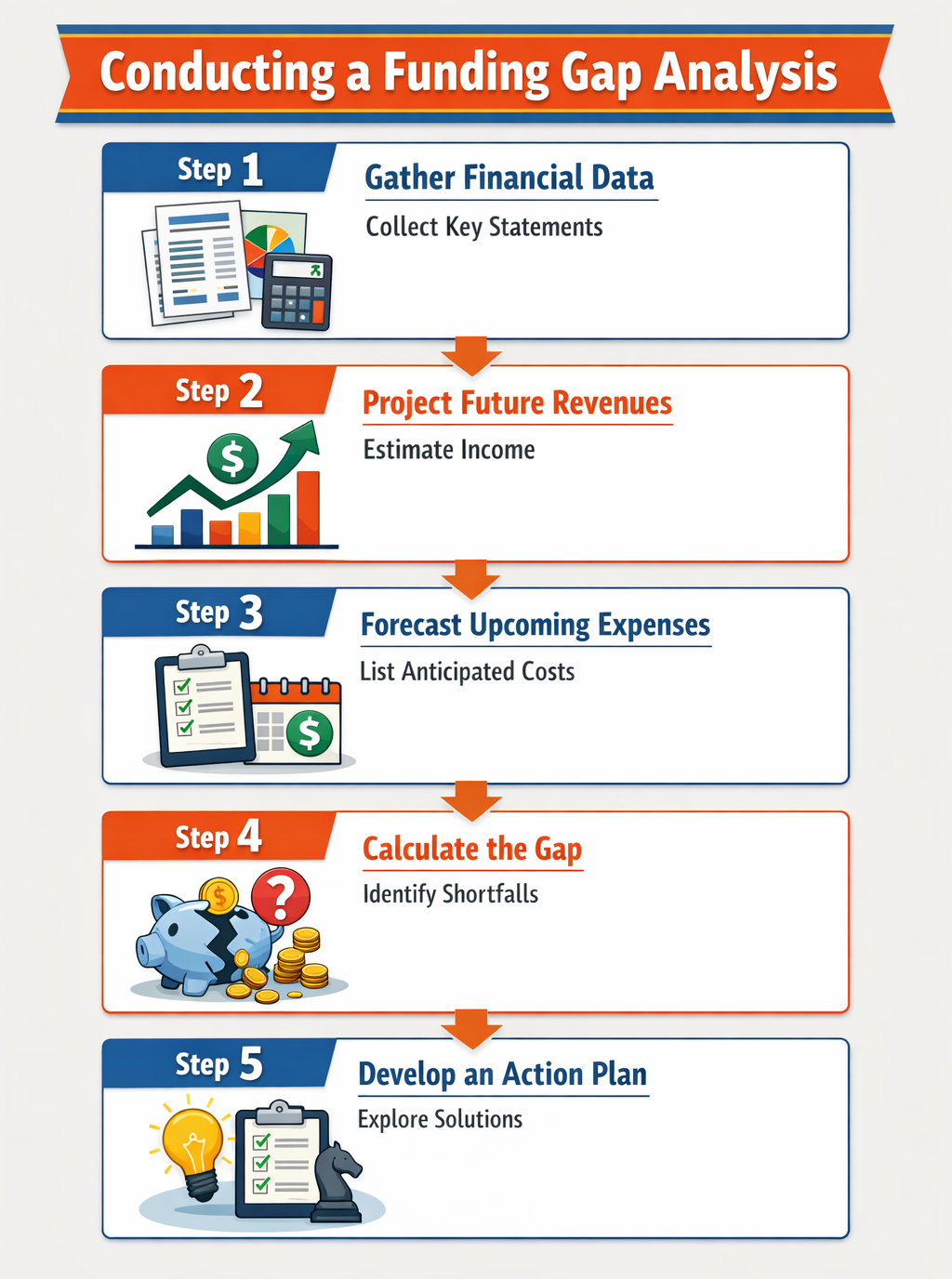
Steps to conduct your own funding gap analysis follow a logical sequence that any business owner can implement. This process helps you systematically evaluate your financial position and plan for future needs.
- Gather your financial data: Collect recent financial statements, including income statements, balance sheets, and cash flow reports. Having accurate baseline information is crucial for meaningful analysis.
- Project future revenues: Estimate your expected income over the next 6 to 12 months, accounting for seasonal patterns, pending contracts, and realistic growth assumptions. Be conservative rather than overly optimistic.
- Forecast upcoming expenses: List all anticipated costs, including fixed expenses like rent and payroll, variable costs tied to production or sales, and any planned investments or purchases.
- Calculate the gap: For each month or quarter, subtract projected expenses from expected revenues. Periods where expenses exceed income represent potential funding gaps that need attention.
- Develop an action plan: Once you've identified when and where gaps might occur, explore solutions such as adjusting spending, accelerating receivables, or securing additional funding to bridge the shortfall.
Repeating this analysis quarterly helps you stay ahead of changing conditions and adjust your strategy as needed. The effort invested in regular funding gap analysis typically pays off by preventing costly surprises and keeping your business financially stable.
Key Operational Needs That Signal Funding Requirements
Key operational needs that signal funding requirements often emerge when your business is growing or changing. Recognizing these needs early allows you to secure capital before operations are affected.
- Inventory expansion: When customer demand increases or you need to stock up for busy seasons, the upfront cost of inventory can create temporary cash flow pressure that requires additional funding.
- Equipment upgrades or repairs: Aging equipment may need replacement or repair at unexpected times. These necessary investments can strain your available cash if not planned for in advance.
- Staffing increases: Hiring new employees involves costs beyond just salaries, including training, benefits, and onboarding expenses that can add up quickly and impact cash reserves.
- Marketing and expansion initiatives: Growing into new markets or launching promotional campaigns requires upfront spending that may take months to generate returns, creating a funding need in the interim.
- Seasonal fluctuations: Businesses with predictable slow periods may need funding to cover expenses during months when revenue naturally decreases but fixed costs remain constant.
These operational needs aren't problems in themselves. They're normal parts of running and growing a business. The key is anticipating them through careful planning and ensuring you have access to the capital required to meet these needs without disrupting other aspects of your operations.
Taking Action When You Spot a Funding Gap
Taking action when you spot a funding gap means moving quickly but thoughtfully to address the shortfall before it affects your operations. Once you've identified a potential problem, several practical strategies can help you close the gap and maintain stability.
First, review your current expenses to identify areas where you might reduce or delay spending without harming core operations. Sometimes simple adjustments to timing or priorities can free up enough cash to bridge a temporary gap. Next, look at your receivables and consider ways to accelerate incoming payments, such as offering early payment discounts or following up more actively on outstanding invoices.
If adjusting expenses and accelerating income isn't enough, exploring external funding options becomes important. Various financing solutions exist to help businesses manage cash flow challenges, from traditional term financing to more flexible options designed for companies with variable revenue patterns. The right choice depends on your specific situation, timeline, and repayment capacity. Working with financial partners who understand business funding can help you find solutions that fit your operational needs and position you for continued success without unnecessary strain on your resources.
Understanding how to identify funding gaps in your business puts you in control of your financial future. Rather than reacting to crises, you can spot warning signs early, conduct regular analyses, and take proactive steps to ensure your operations run smoothly.
Cash shortages, delayed payments, and unmet operational needs don't have to derail your progress. With the right awareness and tools, you can recognize potential problems before they become urgent and explore solutions that keep your business moving forward. Regular financial reviews, honest projections, and a willingness to address issues head-on make all the difference.